“Non-comedogenic” carries no legal definition. Not in the United States, not in the EU. No agency polices it, no study has to be run before it goes on a carton, and there’s no threshold a formula must clear. A brand can add the words on a Tuesday and ship the box on a Wednesday. That’s the entire approval process.
So shopping by that phrase sorts nothing out. Our editors worked through dozens of washes the slower way instead, reading complete ingredient lists, cross-referencing surfactant and emollient research, and aggregating verified-buyer feedback from people whose skin congests easily. It’s the same screening behind our wider best cleanser research. Five of them earned a place here.
Quick answer: CeraVe Renewing Salicylic Acid Cleanser is our top pick for congestion-prone skin. Aveeno Calm + Restore suits reactive skin, Cetaphil Gentle Cleanser works for dry or post-procedure phases, Amazon Basics Hydrating Facial Cleanser covers the fragrance-free basics, and HARUHARU wonder Black Rice Cleansing Oil handles sunscreen removal.

Pros
- Non-abrasive BHA exfoliation for sensitive skin types
- Ceramide complex supports barrier function during cleansing
- Hydrating actives counter typical salicylic acid dryness
Cons
- No concentration of salicylic acid disclosed
- Foaming action may require adjustment period
Pros
- Non-abrasive BHA exfoliation for sensitive skin types
- Ceramide complex supports barrier function during cleansing
- Hydrating actives counter typical salicylic acid dryness
Cons
- No concentration of salicylic acid disclosed
- Foaming action may require adjustment period
- Salicylic acid chemically exfoliates while niacinamide and vitamin D calm irritation, making this suitable for dry, rough, or psoriasis-prone skin without the harshness of physical scrubs.
- Gel-to-foam texture rinses clean without residue; use morning or night before serums, and pair with a barrier repair moisturizer to maximize ceramide benefits.
- Salicylic Acid (BHA): dissolves dead surface cells and may improve appearance of rough texture.
- Ceramides 1, 3, 6-II: lipid molecules that help reinforce skin's natural moisture barrier during cleansing.
- Hyaluronic Acid: humectant that binds water to skin, preventing tightness after rinsing.
- Niacinamide: vitamin B3 that supports barrier function and visibly calms redness.

Pros
- Gentle formula won't disrupt compromised skin barriers
- Hydrating texture leaves no tight or dry feeling
- Hypoallergenic and tested for sensitive skin types
Cons
- Milky consistency may require double cleanse for sunscreen
- Pump bottle design not travel-friendly for carry-on
Pros
- Gentle formula won't disrupt compromised skin barriers
- Hydrating texture leaves no tight or dry feeling
- Hypoallergenic and tested for sensitive skin types
Cons
- Milky consistency may require double cleanse for sunscreen
- Pump bottle design not travel-friendly for carry-on
- Prebiotic oat and feverfew work together to cleanse without compromising the moisture barrier, making this suited for sensitive, dry, or eczema-prone skin that reacts to standard foaming formulas.
- Milky gel texture rinses clean without film, works morning or night, and pairs well with hydrating serums but avoid layering with strong actives immediately after if skin is inflamed.
- Prebiotic Oat: helps support skin's microbiome and preserve the moisture barrier during cleansing.
- Feverfew Extract: supports visible calming and may help reduce the appearance of redness.
- Glycerin: humectant that draws moisture into skin to prevent post-cleanse tightness.

Pros
- Niacinamide and panthenol support barrier function
- Hypoallergenic formula minimizes irritation risk
- Hydrates for 48 hours without rinsing
Cons
- No reviews available to verify performance claims
- May require wiping off for maximum hydration benefit
Pros
- Niacinamide and panthenol support barrier function
- Hypoallergenic formula minimizes irritation risk
- Hydrates for 48 hours without rinsing
Cons
- No reviews available to verify performance claims
- May require wiping off for maximum hydration benefit
- Niacinamide (vitamin B3) and panthenol (vitamin B5) work with glycerin to hydrate and support barrier integrity in dry to normal sensitive skin types prone to reactivity.
- Gentle milky texture can be wiped off for maximum hydration or rinsed, suitable for AM and PM use before serums or moisturizers without disrupting subsequent product absorption.
- Niacinamide (Vitamin B3): supports skin barrier function and helps visibly calm sensitive skin.
- Panthenol (Vitamin B5): humectant that attracts moisture and may improve skin hydration levels.
- Glycerin: binds water to skin surface, helping maintain hydration for extended periods.

Pros
- Ceramides and hyaluronic acid support hydration
- Non-comedogenic and fragrance-free minimizes sensitivity
- Glycerin and vitamin E add moisture
Cons
- No concentration data provided for actives
- Limited texture or finish details specified
Pros
- Ceramides and hyaluronic acid support hydration
- Non-comedogenic and fragrance-free minimizes sensitivity
- Glycerin and vitamin E add moisture
Cons
- No concentration data provided for actives
- Limited texture or finish details specified
- Ceramides and sodium hyaluronate work together to reinforce the moisture barrier while drawing water into dry skin, making this suitable for normal to dry types that need gentle hydration without tightness.
- Apply to wet skin in circular motions morning or evening before serums, and pair with a moisturizer immediately after to lock in the humectant benefits from hyaluronic acid.
- Ceramides: lipid molecules that help restore the skin barrier and prevent moisture loss in dry complexions.
- Sodium Hyaluronate: smaller form of hyaluronic acid that penetrates to attract and bind water for plumping hydration.
- Glycerin: humectant that draws moisture from air into skin to support softness and suppleness.
- Vitamin E: antioxidant that helps protect skin from environmental stressors while supporting moisture retention.
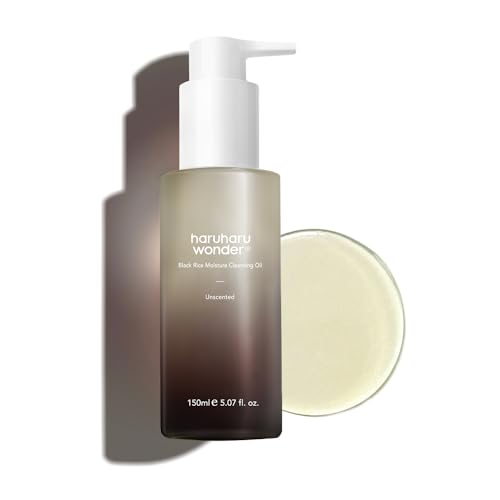
Pros
- Removes heavy makeup while keeping skin soft
- Silky oil texture rinses clean without residue
- Formulated to support skin hydration after cleansing
Cons
- May require follow-up cleanser for thorough removal
- Limited user review data available for verification
Pros
- Removes heavy makeup while keeping skin soft
- Silky oil texture rinses clean without residue
- Formulated to support skin hydration after cleansing
Cons
- May require follow-up cleanser for thorough removal
- Limited user review data available for verification
- Black rice extract and naturally derived oils work to dissolve makeup and impurities while supporting skin's moisture barrier, making it appropriate for normal to dry skin types that need thorough cleansing without tightness.
- Lightweight, silky oil texture emulsifies on contact with water and rinses clean, designed as the first step in a double cleanse routine, best followed by a water-based cleanser for complete removal.
- Black Rice Extract: Antioxidant-rich ingredient that helps maintain skin hydration during the cleansing process.
- Naturally Derived Oils (95%+ formula): Lipid-soluble ingredients that dissolve waterproof makeup, sunscreen, and sebum without disrupting skin barrier.
- Non-Comedogenic Oil Blend: Formulated to cleanse thoroughly while minimizing risk of clogged pores or breakouts.
How We Evaluated These Cleansers
Sixty seconds is all a cleanser gets, and that number reframes the whole category. Comedogenicity was studied as a prolonged-exposure problem, and a wash gets about sixty seconds on your face before it’s gone down the drain. So cleansers rarely plug anything. When a wash breaks you out, the mechanism is almost always irritation from a harsh surfactant system, or a film of emollient that survived the rinse. That shifted our screening. We judged these on what they leave behind, not on what the front of the bottle claims.
From there the work got mechanical. We compared full ingredient lists instead of front-label claims, flagged heavy coconut-derived esters and thick waxes that can outlast a rinse, and checked surfactant research on barrier disruption. Verified-buyer feedback counted by pattern, so a few hundred people reporting tightness matters and one furious outlier doesn’t. We weighed cost per use, required real in-stock availability, and insisted the labeling match the formula. Anything sold on a claim we couldn’t trace back to an ingredient came off the shortlist.
CeraVe Renewing Salicylic Acid Cleanser — Best for congestion-prone skin
Salicylic acid is oil-soluble, so it gets into the follicle rather than sitting on top of it. That’s the reason this one leads: it targets the actual mechanism people blame their cleanser for. The surfactant base is sodium lauroyl sarcosinate with cocamidopropyl hydroxysultaine, both mild synthetic detergents, and ceramides plus niacinamide offset the stripping that BHA washes often cause. The carton prints “non-comedogenic,” which proves nothing, but the formula does back it up: no fragrance, no heavy esters, and it rinses without slip. The catch is exfoliation math. Sixty seconds of BHA contact can’t replace a leave-on acid.
Aveeno Calm + Restore Oat Cleanser — Best for reactive skin
Colloidal oatmeal isn’t marketing filler. It’s a recognized skin protectant, and the avenanthramides in it have research behind them for calming itch and redness. This wash is built around that, fragrance-free, with a low-foam cream texture that doesn’t announce itself. Reactive skin that flares at almost every new product tends to tolerate it. It isn’t a strong cleanser, though. If you’ve got a full face of mineral sunscreen, one pass won’t shift it, and people who want the squeaky finish will think it did nothing at all.
Cetaphil Gentle Cleanser — Best for dry and post-procedure skin
This is the honest counterexample on the list. Cetaphil’s classic wash is barely a wash: a low-surfactant lotion you can use with or without water, and it leaves a faint conditioned film by design. That film is why dermatologists reach for it after procedures and during retinoid adjustment. It’s also the one formula here with a defensible residue argument, since cetyl and stearyl alcohol are meant to stay put. Reformulated versions add niacinamide and panthenol, which help. If you’re congesting around the chin and jaw, this isn’t your wash. For a stripped, stinging barrier, it’s the obvious pick.
Amazon Basics Hydrating Facial Cleanser — Best fragrance-free basic
Here’s the label problem in one bottle. “Non-Comedogenic” appears right on the front, with no published study behind it, no protocol, and nobody checking. The formula happens to earn it anyway: glycerin, ceramides, a mild syndet base, no fragrance, nothing heavy left on the skin. It reads as a close copy of the ceramide washes it sits beside on the shelf, which is exactly the appeal for anyone tired of paying brand tax on a basic. Two caveats. White-label formulas can shift between production runs, and like most creamy hydrating washes it won’t clear sunscreen on its own.
HARUHARU wonder Black Rice Cleansing Oil — Best for sunscreen removal
An oil cleanser sounds like the wrong answer in an article about clogged pores. It isn’t, provided you emulsify it properly. Rice bran lipids and the fermented black rice extract give this one a lighter feel than the thick balms in the category, and it lifts mineral sunscreen and long-wear makeup that a cream wash slides over. The risk is user error, not the formula. Rush the rinse and you leave the exact residue this whole page argues about, which is why an oil step belongs in a proper double cleanser routine and never on its own.
What to Look For in a Non Comedogenic Cleanser
Start with the surfactant system. The names worth recognizing are the mild synthetic detergents: sodium lauroyl sarcosinate, sodium methyl cocoyl taurate, cocamidopropyl hydroxysultaine, decyl glucoside, coco-glucoside. What you’re avoiding sits at the other end, sodium lauryl sulfate high in the list, or true saponified soap like sodium palmate, which pushes pH toward 9 or 10 and leaves the barrier alkaline for hours. A wash that lands near skin’s own pH, roughly 4.5 to 5.5, gives the barrier less to recover from. Irritation is a far more common breakout trigger than any ester.
Ignore the comedogenic rating charts. Those numbers people quote online descend from the rabbit-ear assay, where single ingredients were applied to rabbit ear canals and follicular plugging was graded. It over-predicted badly for human skin, it scored raw ingredients rather than finished formulas, and modern dermatology treats those old scales as unreliable. Nobody ran those grades on a rinse-off base at realistic use levels, which is the only scenario that matters here. Coconut oil rated a 4 somewhere tells you nothing about a cleanser where a coconut derivative sits third from the bottom of the list.
Move the comedogenicity question to your leave-on steps. That’s the reframe worth keeping. Judge your moisturizer, your sunscreen, and your serums on whether they clog, because those sit on skin for hours. Judge your cleanser on how it leaves your barrier: no tightness, no squeak, no slippery film. Skip fragrance if you react to it, and if a wash needs a second rinse before your skin feels normal, the formula is leaving too much behind. Give a new one two weeks, and change nothing else while you do.
Frequently Asked Questions
Does “non-comedogenic” mean anything on a cleanser label?
Legally, no. There’s no definition, no required study, and no threshold in US or EU regulation, so any brand can print it. Some companies do run internal screening, but the protocols differ, the results usually aren’t published, and a wash almost never gets evaluated the way a leave-on cream would.
Can a cleanser actually clog pores?
Rarely, and that surprises people. Pore-plugging needs sustained contact with the follicle, and a wash gets about a minute before it’s rinsed off. Breakouts blamed on a cleanser usually trace to irritation from a stripping surfactant, or to a conditioning film left on the skin, not to comedogenesis.
Which cleanser ingredients have a real residue argument?
The heavy esters, mainly isopropyl myristate and isopropyl palmitate, plus thick coconut-derived waxes and butters sitting high in a balm. These are formulated to stay on skin, so they can genuinely survive a rinse. Fatty alcohols like cetyl and stearyl alcohol also leave a film, though most skin handles them fine.
Is a cleansing oil a bad idea if I’m acne-prone?
Not if it emulsifies. An oil that turns milky under water and rinses clean behaves nothing like an oil you leave on. Where it gets tricky is malassezia-driven bumps, since those yeasts feed on certain fatty acids and esters. If that’s your pattern, keep the oil step short and follow with a low-foam second wash.
My skin still breaks out on a non-comedogenic wash. Now what?
Look past the sink. Your moisturizer, sunscreen, hair products, and pillowcase all get hours of contact, and any one of them outweighs a sixty-second cleanse. Change one leave-on product at a time and give it six to eight weeks, because a full comedone cycle takes that long to show whether the swap helped.
Bottom Line
Buy the label sceptically and the formula carefully. CeraVe’s Renewing Salicylic Acid Cleanser is the pick for most congestion-prone skin, because it works on the follicle instead of promising not to block it. Aveeno Calm + Restore is for skin that reacts to everything, Cetaphil Gentle Cleanser for dry or freshly treated barriers, Amazon Basics for a plain fragrance-free daily wash, and HARUHARU wonder’s cleansing oil for nights with sunscreen to remove. Judge those two words where they matter, on what you leave on.