

The best oil for double cleansing is the one that leaves nothing behind, and that turns out to be a formulation question rather than a question about which oil a brand chose. Any oil dissolves sunscreen and sebum. Only an oil built with the right emulsifiers lets water lift the whole mixture off your face afterward.
That single property sorted this category faster than anything else. Our editors compared full ingredient lists, cross-referenced how each base behaves on oily and reactive skin, and weighed aggregated verified-buyer feedback about residue and breakouts over single reviews. The five below earned their spots. For where this step sits in a routine, double cleanser covers the method itself.
Quick answer: DHC Deep Cleansing Oil is the pick for most people, with the most reliable emulsification of the group. SKIN1004 is the lightest option for reactive skin, ANUA suits oily congested skin, ma:nyo is the blackhead-focused choice, and medicube is the newest formula aimed at pores.
Pros
- Removes makeup effectively without multiple cleansing steps
- Lightweight formula rinses off without greasy residue
- Safe for daily use on sensitive skin
Cons
- No review data available to confirm performance
- Ingredient list not specified in product details
Pros
- Removes makeup effectively without multiple cleansing steps
- Lightweight formula rinses off without greasy residue
- Safe for daily use on sensitive skin
Cons
- No review data available to confirm performance
- Ingredient list not specified in product details
- Six plant-based oils combine with Madagascar Centella extract to dissolve makeup, sunscreen, and sebum buildup while maintaining skin's moisture barrier, suitable for normal to oily skin.
- Lightweight oil texture emulsifies on contact with water for easy rinsing, use as first step in PM double-cleanse routine before water-based cleanser.
- Madagascar Centella Extract: helps visibly calm redness and supports skin's recovery from environmental stress.
- Six Plant-Based Oils: blend dissolves oil-based impurities including makeup and sebum without stripping natural oils.
- Lightweight Oil Base: emulsifies quickly with water to rinse clean without leaving residue or comedogenic film.

Pros
- Heartleaf extract helps soothe skin after cleansing
- No stinging around eyes, safe for contact lens wearers
- Lightweight texture suitable for oily and combination skin
Cons
- Requires follow-up water-based cleanser for complete cleanse
- No ingredient list provided to verify actives concentration
- Heartleaf extract soothes skin while the oil base dissolves sebum and makeup without stripping, making it suitable for sensitive, breakout-prone, and combination skin types seeking gentle pore care.
- Lightweight oil texture emulsifies on contact with water, leaving no slippery residue. Use as first step in PM double-cleanse routine, follow with foam or gel cleanser.
- Heartleaf Extract: Helps soothe and maintain skin comfort during and after the cleansing process.
- Oil Base (type not specified): Dissolves sebum, sunscreen, and makeup without leaving greasy residue on skin.
- Emulsifying Agents: Allow formula to mix with water for clean rinse and thorough removal of impurities.

Pros
- Plant oil blend nourishes while removing makeup
- Non-irritating formula tested for sensitive skin
- Removes sunscreen and blackheads effectively
Cons
- Requires second cleanser for complete routine
- Oil texture may not suit oily skin preferences
Pros
- Plant oil blend nourishes while removing makeup
- Non-irritating formula tested for sensitive skin
- Removes sunscreen and blackheads effectively
Cons
- Requires second cleanser for complete routine
- Oil texture may not suit oily skin preferences
- The 14 plant-based oil blend dissolves oil-based impurities like sunscreen and sebum while delivering nutrients to dry or sensitive skin without triggering breakouts.
- Lightweight oil texture emulsifies with water and rinses clean, used as the first step in PM double cleansing before a water-based cleanser.
- 14 Plant-Based Oils: dissolve makeup and sebum while hydrating and nourishing the skin barrier.
- Oil-Soluble Cleansing Agents: emulsify waterproof formulas and sunscreen without stripping natural moisture.
- Nutrient-Rich Botanical Extracts: support skin during cleansing to minimize irritation in sensitive types.


How We Evaluated These Cleansing Oils
Emulsification eliminated more candidates than any other filter. An oil without adequate emulsifiers dissolves your sunscreen perfectly and then sits on your face as a film that a water-based cleanser has to fight through, which is how people end up convinced double cleansing causes breakouts. So the first thing each formula got checked for was the presence of a proper emulsifying system, usually a PEG-glyceryl ester, polysorbate or sorbitan compound, high enough in the list to do real work. The rinse behaviour reported by buyers backed up or contradicted what the label suggested.
Then the base oil itself, because that’s where skin type actually enters. Mineral oil and squalane are inert and don’t feed the yeast involved in fungal acne, while most plant oils and mid-chain esters do, which matters enormously to a specific group of people and not at all to everyone else. Lighter esters shift makeup less effectively but feel better on oily skin. Heavier plant oils clear waterproof formulas in one pass and take more rinsing. We also discounted claims about pore size, since a cleansing oil clears a follicle and never narrows it.
DHC Deep Cleansing Oil — Best overall
Japan has sold this by the millions for decades and the reason is boring and important: it emulsifies properly. Add water and it turns milky and rinses off completely, with no film left for your second cleanser to deal with, and the olive-derived base clears waterproof mascara and mineral sunscreen in a single pass. Vitamin E rounds it out. The base is the one caveat worth taking seriously, because olive oil esters are among the ones malassezia metabolises, so anyone who gets fungal acne on the forehead and chest should choose a mineral-oil formula instead.
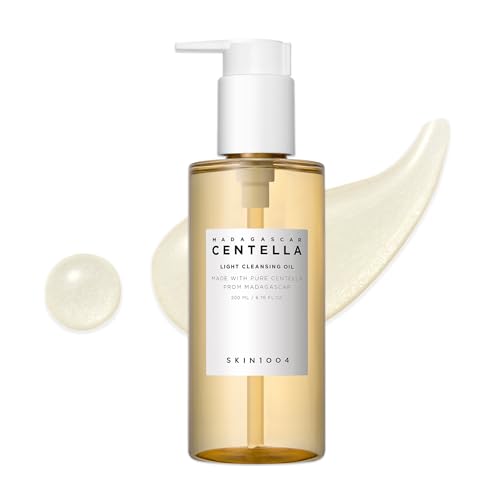
SKIN1004 Madagascar Centella Light Cleansing Oil — Best for reactive skin
Centella asiatica is one of the few soothing botanicals with real research behind it for irritated skin, and pairing it with the lightest texture in this group makes this the pick for faces that flush during cleansing. The oil spreads thin, needs very little massaging, and rinses without the heaviness that puts oily-skinned people off the format entirely. Light comes with a cost. On a full face of long-wear foundation and waterproof eye makeup, you’ll be working at it longer than with the DHC, and possibly twice.
ANUA Heartleaf Pore Control Cleansing Oil — Best for oily congested skin
Heartleaf extract is ANUA’s whole platform and it’s a reasonable one for oily, easily inflamed skin, where the goal is degreasing without provoking a reaction. This is the formula to use if your T-zone is genuinely oily and most cleansing oils feel like adding fuel; it emulsifies cleanly and leaves skin matte rather than cushioned. Take the “pore control” part with scepticism. Clearing a follicle of sebum makes the opening look smaller and doesn’t change its diameter, which is anatomical and largely inherited.
ma:nyo Pure Cleansing Oil — Best for blackheads
The blackhead ritual is why this one has a following: people massage it over the nose and chin for a minute or two and watch softened sebum plugs lift out. That effect is real, because oil dissolves the oxidised sebum a blackhead is mostly made of, and this formula is fluid enough to work into the follicle. The danger is the ritual itself. Long, forceful massaging inflames skin and can leave you with irritation that lasts longer than the blackheads did. Ninety seconds, light pressure, and stop.
medicube Cleansing Oil Zero Pore Blackhead — Newest pore-focused formula
medicube has built momentum on texture-focused products, and this is the brand applying that to the first cleansing step, aimed squarely at blackheads and congestion. It’s a sensible option if you already use their range and want the layering to be predictable, and the format follows the same clear-the-follicle logic as the ma:nyo. It’s also the least proven thing here. There’s far less accumulated buyer history than the DHC has, and no disclosed reason to prefer it over the cheaper options if you’re starting from scratch.
What to Look For in a Cleansing Oil
Check that it emulsifies before you judge anything else. Wet your hands and add water to the oil on your face; a well-built formula turns milky and rinses without a slick. If it doesn’t, the film left behind is what your second cleanser has to remove and what your moisturiser then sits on top of. Emulsifiers appear as PEG-glyceryl esters, polysorbates or sorbitan compounds on the list.
Match the base oil to your skin, especially for fungal acne. If you get uniform small bumps on the forehead, hairline and chest that don’t respond to acne treatment, that’s likely malassezia, and it metabolises most plant oils and mid-chain esters. Mineral oil and squalane are the safe bases. For everyone else, plant oils are fine and often more effective on stubborn makeup.
Only double cleanse when there’s something to remove. Sunscreen, makeup and heavy occlusives need an oil first because they’re designed to resist water. On a day you wore none of them, one gentle cleanse is correct and a second one strips lipids your skin spent the day making. Follow with a water-based cleanser, then moisturise while skin is still damp.
Frequently Asked Questions
Do I have to follow the oil with a second cleanser?
Yes, and skipping it is the most common reason people decide oil cleansing broke them out. The oil holds dissolved sunscreen, sebum and makeup in suspension, and the water-based cleanse is what carries all of that off the skin along with the emulsifiers. Without it you’ve redistributed the mixture rather than removed it.
Will a cleansing oil clog my pores?
The oil itself rinses off, so the risk comes from residue rather than from the oil being on your face for sixty seconds. Poor emulsification and skipping the second cleanse are the actual causes. The exception is malassezia-related bumps, where the base oil genuinely matters and a mineral-oil formula is the safer choice.
Can I use a cleansing oil on wet skin?
Dry skin works better. Oil and water don’t mix, so applying to a wet face means the oil can’t make proper contact with the sunscreen and sebum you’re trying to dissolve. Apply to dry skin, massage briefly, then add water to emulsify and rinse.
Is a cleansing balm better than an oil?
It’s the same chemistry in a different texture. Balms are solid until body heat melts them, which makes them tidier to travel with and easier to control around the eyes, while oils spread faster and suit a quick routine. Emulsification quality matters far more than which format you pick.
Should I use one every night?
Only on nights you wore sunscreen, makeup or a heavy occlusive, which for most people is most days. If you spent the day bare-faced indoors, a single gentle water-based cleanse is enough. Over-cleansing produces the tight, squeaky feeling people mistake for clean skin, and that’s barrier damage.
Bottom Line
DHC Deep Cleansing Oil is the one we’d hand most people, because decades of use have proven the thing that matters most in this category: it rinses completely. SKIN1004 is the lightest option for reactive skin, ANUA suits genuinely oily faces, ma:nyo is the choice if blackheads are the target, and medicube is the newer pore-focused formula. Check that whatever you buy emulsifies, always follow with a water-based cleanse, and pick a mineral-oil base if fungal acne is part of your history.


