Rough upper arms don’t get smoother because you moisturized harder. That bumpy, sandpapery feel is dead cells cemented over follicles, and a cream that only adds water sits on top of the problem. Glycolic acid dissolves the bonds holding that build-up in place, which is why it changes body texture when a plain lotion can’t.
The shelf is confusing, though. Half the bottles labeled glycolic hide a token dose behind a marketing claim, and almost nobody publishes pH, which decides whether the acid works at all. Our editors compared full ingredient lists, cross-referenced the research, and read through aggregated verified-buyer feedback, weighing formulation quality alongside what long-term users actually report. The five below earned their spots. If acids aren’t your thing, best body lotion with retinol covers the other route.
Quick answer: Alpha Skin Care Revitalizing Body Lotion is the best all-round glycolic pick at 12% in a fragrance-free base. Naturium suits beginners, Glytone is the strongest, Advanced Clinicals pairs glycolic with lactic for dry skin, and Village 11 Factory is the lightest for summer.

Pros
- High glycolic concentration for effective exfoliation
- Paraben-free and fragrance-free clean formula
- Works on arms, legs, and décolletage
Cons
- Requires daily sunscreen due to AHA sensitivity
- Patch test recommended for first-time users
Pros
- High glycolic concentration for effective exfoliation
- Paraben-free and fragrance-free clean formula
- Works on arms, legs, and décolletage
Cons
- Requires daily sunscreen due to AHA sensitivity
- Patch test recommended for first-time users
- 12% glycolic acid at pH 4.0 works at skin's surface to encourage gentle exfoliation and cell turnover, making it suitable for all skin types addressing rough texture and dullness.
- Hydrating lotion texture absorbs without rinsing, safe for morning or evening use, but must be followed with sunscreen during the day as AHAs increase photosensitivity.
- Glycolic Acid 12%: Alpha hydroxy acid that encourages cell turnover and helps visibly smooth skin texture.
- Vitamins: Nourish skin and support its natural renewal process during exfoliation.
- Antioxidants: Help replenish and protect skin while locking in moisture for softness.

Naturium The Smoother Glycolic Acid Body Lotion with 10% Glycolic Acid for Texture and Tone
Pros
- 10% glycolic acid concentration for effective exfoliation
- Shea butter helps maintain skin moisture barrier
- Addresses both texture and uneven tone concerns
Cons
- May increase sun sensitivity, requires daily SPF use
- No review data available to verify results
Pros
- 10% glycolic acid concentration for effective exfoliation
- Shea butter helps maintain skin moisture barrier
- Addresses both texture and uneven tone concerns
Cons
- May increase sun sensitivity, requires daily SPF use
- No review data available to verify results
- The 10% glycolic acid works to gently resurface skin and help decrease the appearance of discoloration, while shea butter provides nourishing moisture, making it suitable for dry, aging, and combination skin types.
- This exfoliating body lotion delivers a smoothing treatment texture and should be applied in evening routines, followed by SPF during the day and for a week after discontinuing use.
- Glycolic Acid 10%: Alpha hydroxy acid that helps resurface skin and visibly reduce discoloration and rough texture.
- Shea Butter: Emollient that helps boost moisture levels and support skin barrier health.
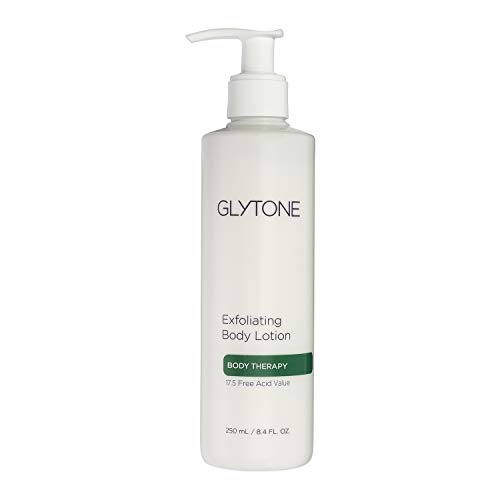
Glytone Exfoliating Body Lotion with 17.5% Glycolic Acid for Keratosis Pilaris and Dry Skin
Pros
- High glycolic acid concentration exfoliates effectively without irritation
- Allantoin soothes while AHA smooths rough bumps
- Fragrance-free formulation suitable for reactive or sensitive skin
Cons
- 17.5% glycolic acid may cause initial tingling or sensitivity
- Rich texture may feel heavy in humid climates
Pros
- High glycolic acid concentration exfoliates effectively without irritation
- Allantoin soothes while AHA smooths rough bumps
- Fragrance-free formulation suitable for reactive or sensitive skin
Cons
- 17.5% glycolic acid may cause initial tingling or sensitivity
- Rich texture may feel heavy in humid climates
- 17.5% free acid value glycolic acid exfoliates dead skin cells to refine texture, visibly reduce keratosis pilaris bumps, and support smoother skin on arms, legs, and body, suited for normal to dry skin types.
- Rich lotion texture absorbs with light hydration, best applied PM after showering on damp skin, pair with broad-spectrum SPF during the day as AHAs increase photosensitivity.
- Glycolic Acid 17.5% PFAV: exfoliates dead cells, refines rough texture, supports cell turnover for smoother skin.
- Allantoin: soothes and calms skin while supporting moisture retention and barrier function.
- AHA Blend: works synergistically with glycolic acid to enhance exfoliation and hydration without irritation.

Advanced Clinicals 10% Glycolic Acid + Lactic Acid Body Lotion for Rough, Uneven Skin Texture
Pros
- High glycolic acid concentration for visible exfoliation
- Hydrating formula balances acids with moisture-binding ingredients
- Large 16 oz size for body application
Cons
- Natural ingredient scent may be noticeable initially
- Best used at night, limits routine flexibility
Pros
- High glycolic acid concentration for visible exfoliation
- Hydrating formula balances acids with moisture-binding ingredients
- Large 16 oz size for body application
Cons
- Natural ingredient scent may be noticeable initially
- Best used at night, limits routine flexibility
- The 10% glycolic acid and lactic acid combination helps visibly refine rough, crepey-looking areas on arms, legs, neck, and body while licorice root supports more even-toned appearance.
- Velvety body cream texture absorbs without greasy finish, recommended for nighttime use only and should not be layered with retinol or additional exfoliating acids.
- Glycolic Acid 10%: Alpha hydroxy acid that helps visibly exfoliate and smooth rough, uneven skin texture.
- Lactic Acid: Gentler AHA that supports exfoliation while helping maintain skin moisture levels.
- Hyaluronic Acid: Humectant that helps skin retain hydration during the exfoliation process.
- Licorice Root Extract: Botanical that may help improve the appearance of uneven skin tone.

Pros
- High AHA concentration for persistent body texture
- Addresses multiple concerns in one step
- Hydrating formula prevents post-exfoliation tightness
Cons
- May require gradual introduction for AHA-sensitive skin
- Limited review data to confirm long-term results
Pros
- High AHA concentration for persistent body texture
- Addresses multiple concerns in one step
- Hydrating formula prevents post-exfoliation tightness
Cons
- May require gradual introduction for AHA-sensitive skin
- Limited review data to confirm long-term results
- Glycolic acid at 12% concentration works to dissolve dead skin buildup that causes keratosis pilaris, strawberry legs, and uneven tone on arms, legs, and body, suited for normal to resilient skin types comfortable with chemical exfoliation.
- Lotion texture absorbs without heavy residue, best applied at night after showering on dry skin, pairs well with gentle cleansers but avoid layering with other strong acids or retinoids initially.
- Glycolic Acid 12%: Alpha hydroxy acid that helps dissolve dead skin cells to visibly smooth rough texture and keratosis pilaris bumps.
- Hydrating Agents: Support moisture retention to balance the drying effect of chemical exfoliation and maintain skin comfort.
- Pore-Clearing Actives: Help reduce the appearance of clogged follicles that contribute to strawberry legs and uneven skin texture.
How We Evaluated These Body Lotions
One screening criterion eliminated more products than everything else combined: the actual glycolic percentage. Dozens of body lotions market themselves on glycolic acid while listing it near the bottom of the ingredient deck, below the preservative, at a dose that does nothing for texture. Anything that couldn’t demonstrate a meaningful leave-on concentration got cut on the spot. That one filter took the pool from several dozen candidates down to roughly a dozen, before formulation quality entered the picture at all.
From there we compared full ingredient lists, looking for the humectants and lipids that keep an acid from stripping skin, and we noted which brands state a pH or free acid value and which stay quiet. Verified-buyer feedback got read in bulk, weighting repeated patterns over single dramatic reviews, and ordinary application stinging was separated from genuine irritation reports. We weighed cost per use rather than sticker price, since these get spread over large areas. Every pick had to be in stock and honestly labeled about its acid load.
Alpha Skin Care Revitalizing Body Lotion — Best Overall
Twelve percent glycolic in a plain, unfussy base is the whole pitch, and it’s the right pitch. There’s no fragrance, no essential oil blend, nothing extra to react to, which matters when you’re spreading an acid across both legs rather than a coin-sized patch of face. Alpha has sold this formula for years without diluting it to chase gentler positioning. The texture runs thin, closer to a milk than a cream, so dry skin in winter will want a bland moisturizer layered over the top once it’s absorbed. Start every other night.
Naturium The Smoother Glycolic Acid Body Lotion — Best for Beginners
Ten percent glycolic sits in a genuinely comfortable base here, and comfort is why this one works for people who’ve bounced off acids before. It spreads like a normal body lotion, absorbs without tack, and doesn’t announce itself with a sting on night one. That’s the trade, though: it’s the least aggressive of the five, and if you’ve already been using acids below the neck for a year, you’ll find it maintains your texture rather than changing it. A sensible starting point for arms and thighs. Not the one to buy if stubborn dark knees and elbows are the actual target.
Glytone Exfoliating Body Lotion — Strongest Formula
This is the outlier of the group. Glytone works at a 17.5% free acid value, and free acid value is the number that genuinely predicts what an AHA does once it’s on skin, rather than the total percentage on the front. On built-up keratosis pilaris, thickened elbows, or heels that have been rough for a decade, it moves in three weeks about as far as a 10% product moves in six. It also stings, and it will let your legs burn faster in sun. Night use only, sunscreen the next day, and don’t make this your first body acid.
Advanced Clinicals 10% Glycolic Acid + Lactic Acid Lotion — Best for Dry Skin
Pairing glycolic with lactic acid is the smart approach for skin that’s rough and dry at the same time. Lactic is a larger molecule, so it stays higher in the stratum corneum and holds water there while the glycolic handles deeper resurfacing, and the hyaluronic acid in the base pulls in the same direction. If your arms flake after every acid you’ve owned, this combination is the one to reach for first, and if you’re weighing acids in general, mandelic acid vs glycolic acid is worth a read. The caveat is speed. Two actives at moderate strength work slower than one at full strength.
Village 11 Factory Relax Day AHA 12% Body Lotion — Lightest Texture
Twelve percent AHA in a lotion light enough to wear under clothes in July, which is the practical problem most glycolic body products ignore. Heavier formulas leave you standing around waiting to get dressed. This one sinks in quickly, so it fits a routine where you apply at night and go straight to bed. It’s the most cosmetically pleasant of the group and also the most scented, and that’s the catch. Fragrance on freshly exfoliated body skin is a common trigger for stinging, so reactive or eczema-prone skin should choose one of the unscented options above.
What to Look For in a Glycolic Body Lotion
Concentration, and the number behind the number. Eight to fifteen percent is the useful band for a leave-on body lotion. Below 8% you’re buying a moisturizer with a claim printed on the front. But percentage alone doesn’t tell you enough, because pH decides how much of that acid exists in its active free form. A 15% glycolic lotion formulated at pH 5.5 does less work than a 10% one at pH 3.8. Most brands won’t publish pH, so a stated free acid value is a real advantage when you find it.
Supporting ingredients decide whether you keep using it. An acid on its own can leave body skin tight and flaky, and that’s why people quit after two weeks. Glycerin, ceramides, or a lactic acid partner buffer that. For keratosis pilaris specifically, glycolic paired with urea or salicylic acid outperforms glycolic alone, since you’re softening the keratin plug and clearing the follicle at the same time. Skip heavy fragrance loads and essential oil blends if your skin flares easily.
Application, and the sun problem you can’t opt out of. Glycolic reduces the dead-cell layer it’s working on, so treated skin burns sooner. Facial skin gets sunscreen out of habit. Legs and arms usually don’t, and that’s the genuine risk with body acids in summer. Apply at night, then put sunscreen on any limb you’ll be showing. Wait a full day after shaving, keep it off broken skin, and start every other night. Real texture change takes four to six weeks.
Frequently Asked Questions
Will a glycolic body lotion cure keratosis pilaris?
No. KP is genetic, tied to how your follicles handle keratin, and no lotion rewrites that. What consistent glycolic use does is keep those plugs cleared so the bumps are far less visible, and the surrounding redness usually settles too. Stop for a month and it drifts back. Treat it as maintenance rather than a fix.
Do I really need sunscreen on my legs while using this?
Yes, if those legs see daylight. Glycolic thins the layer of dead cells that scatters some UV, so you’ll burn sooner than expected. Night application cuts the direct exposure but doesn’t erase the sensitivity, which carries into the next day. Sunscreen on exposed arms and legs, or long sleeves. Not optional in summer.
Glycolic or lactic acid for body texture?
Glycolic is the smallest AHA molecule, so it penetrates furthest and hits rough texture, bumps, and dark knees harder. Lactic is gentler and draws in water, which suits dry or easily irritated skin. Body skin has a thicker stratum corneum than your face, so it tolerates glycolic well. Below the neck, glycolic is usually the better first choice.
Why does it sting on my bikini line but not my legs?
Thinner skin, and more of it recently shaved. The bikini line, inner arms, and the backs of knees all have a thinner surface layer, so the acid reaches living tissue faster. A brief sting there is normal placement sensitivity, not a defective bottle. Burning that lasts more than a couple of minutes means rinse it off.
Does glycolic help strawberry legs or marks from body acne?
Often, yes. Strawberry legs is usually clogged, dilated follicles rather than a pigment problem, and clearing the follicle opening is exactly what glycolic does. Post-inflammatory marks from body breakouts fade more slowly, typically across two to three months of regular use. Dark knees and elbows respond as well, just slowest of all.
Bottom Line
Alpha Skin Care is the bottle to buy for most people. Twelve percent glycolic, no fragrance, no pretense of being a luxury product. Naturium suits anyone easing in, Glytone is for skin that’s already tolerant and needs more force, Advanced Clinicals handles rough-and-dry together, and Village 11 Factory is the summer-weight choice. Whichever you land on, apply at night, keep sunscreen on your limbs during the day, and give it six full weeks before you judge it.