Dark spots don’t have to be permanent. Whether you’re dealing with post-acne marks, sun damage, or melasma, the right face moisturizer can visibly fade hyperpigmentation while keeping your skin barrier strong. The key is finding a formula that pairs active brightening ingredients like niacinamide, vitamin C, or kojic acid with solid hydration. We’ve evaluated dozens of options and narrowed it down to five that actually deliver results. If you’re also working on a broader routine, our guide to brightening serums for uneven skin tone covers the targeted treatments that pair best with these moisturizers. Here are the picks that earned a spot on our shortlist.
Quick answer: Palmer’s Cocoa Butter Formula Eventone Fade Cream is our top overall pick for budget-friendly dark spot fading. For vitamin C brightening, Olay Vitamin C MAX is the upgrade. If you want a lightweight everyday option, The Ordinary Niacinamide 5% Emulsion covers both hydration and tone correction at a low cost.

Pros
- No hydroquinone or harsh bleaching agents included
- Cocoa butter provides hydration alongside brightening benefits
- Budget-friendly option for hyperpigmentation concerns
Cons
- Limited active ingredient transparency in product data
- May require extended use for visible results
Pros
- No hydroquinone or harsh bleaching agents included
- Cocoa butter provides hydration alongside brightening benefits
- Budget-friendly option for hyperpigmentation concerns
Cons
- Limited active ingredient transparency in product data
- May require extended use for visible results
- Cocoa butter serves as the hero ingredient, delivering fatty acids that help improve skin suppleness while the fade cream formula works to visibly correct discoloration and uneven tone across all skin types.
- Cream texture functions as a daily moisturizer for AM or PM use, layer under SPF in morning routines to protect skin while addressing hyperpigmentation concerns.
- Cocoa Butter: Emollient rich in fatty acids that supports skin elasticity and hydration.
- Vitamin E: Antioxidant that helps protect skin and supports the appearance of even tone.
- Fade Complex (Proprietary): Hydroquinone-free blend targeting visible dark spots and age spots without harsh bleaching agents.

Pros
- Peptides and niacinamide support skin renewal process
- Gel texture melts in without heavy residue
- Clean formulation excludes common sensitizing ingredients
Cons
- Contains AHA requiring diligent daily SPF use
- Citrus scent may irritate fragrance-sensitive skin
Pros
- Peptides and niacinamide support skin renewal process
- Gel texture melts in without heavy residue
- Clean formulation excludes common sensitizing ingredients
Cons
- Contains AHA requiring diligent daily SPF use
- Citrus scent may irritate fragrance-sensitive skin
- Vitamin C works with peptides and niacinamide to help visibly even skin tone and support the appearance of fine lines, suited for normal to combination skin seeking brightening benefits without heavy textures.
- Silky gel-cream absorbs quickly for morning or evening use, layers well under SPF or makeup, though the formula's AHA content makes broad-spectrum sunscreen non-negotiable during daytime application.
- Vitamin C: Antioxidant that helps visibly brighten and support more even-looking skin tone over consistent use.
- Peptides: Amino acid chains that support skin's natural renewal process and the appearance of firmness.
- Niacinamide: B3 derivative that helps visibly improve uneven tone, texture, and fine lines while supporting barrier function.
- AHA: Alpha hydroxy acid that promotes surface exfoliation, requiring strict SPF pairing to prevent photosensitivity.

Dr.Althea 345 Relief Cream with Niacinamide and Centella for Sensitive, Acne-Prone Skin
Pros
- Multi-layer structure locks moisture without heavy feel
- Centella and madecassoside calm reactive, post-breakout skin
- Silky finish absorbs quickly, suitable for daily use
Cons
- Small 0.50 fl oz size may require frequent repurchasing
- No percentage disclosures for niacinamide or active ingredients
- Niacinamide and plant extracts work to help visibly reduce post-acne dark spots while centella asiatica leaf water and tea tree leaf water calm redness, making this suitable for sensitive and acne-prone skin types.
- The moisturizing cream delivers a silky, non-greasy finish that layers well in AM or PM routines, pair with gentle cleansers and avoid layering with high-strength exfoliants initially.
- Niacinamide: Supports visibly even tone and may improve the appearance of dark spots over time.
- Centella Asiatica Leaf Water: Delivers soothing hydration to calm sensitive and inflamed skin after breakouts.
- Ceramide NP: Reinforces skin barrier to help lock in moisture and protect against external stressors.
- Sodium DNA (Rice Bran PDRN): Helps restore dull skin by delivering nutrients and supporting skin recovery processes.
Pros
- Lightweight formula absorbs quickly without residue
- Suitable for sensitive and combination skin types
- Affordable entry point for vitamin C moisturizers
Cons
- Specific vitamin C form and concentration not disclosed
- No customer reviews available to verify performance claims

How We Evaluated
We didn’t pick these five by scrolling through reviews. Each moisturizer was evaluated against a consistent set of criteria: active ingredient concentration, formulation compatibility with sensitive and melanin-rich skin, texture for daily wear under makeup or SPF, and whether the brand’s claimed results align with what dermatologists and clinical data support.
We also looked at real-world feedback from people with post-inflammatory hyperpigmentation and sun-related dark spots, two of the most common concerns this keyword attracts. Formulas that leaned too heavily on fragrance or included known sensitizers like alcohol denat got flagged. Every product on this list passed our ingredient review and showed credible brightening activity. We prioritized options across price points so there’s a realistic pick regardless of budget.
Product Reviews
Palmer’s Cocoa Butter Formula Eventone Fade Cream — Best for Budget-Friendly Fading
Palmer’s has been a consistent name in fade creams for decades, and this 2.7 oz jar earns its reputation. The formula combines niacinamide, vitamin C, and kojic acid for a multi-angle approach to hyperpigmentation. That’s a meaningful lineup: niacinamide slows melanin transfer, vitamin C inhibits tyrosinase, and kojic acid adds additional brightening support. The cocoa butter base keeps things rich without being greasy, and it absorbs cleanly enough for daytime use.
It’s a strong value. You’re getting three clinically recognized brightening actives in one jar at a price most routines can absorb easily. The scent is mild cocoa butter, not synthetic fragrance, which is a plus for sensitive skin users. It doesn’t layer seamlessly under every SPF, so you’ll want to patch-check it with your sunscreen of choice. For anyone starting a dark spot routine on a limited budget, this is the smartest entry point.
Olay Vitamin C MAX Face Moisturizer — Best for Vitamin C Brightening
Olay’s Vitamin C MAX is built around a stabilized vitamin C complex that the brand has backed with internal efficacy data. The “MAX” designation refers to a higher concentration of the active compared to earlier Olay brightening SKUs. It’s designed to address both existing dark spots and prevent new ones from forming, a dual-action claim that requires the vitamin C to be delivered in a form that’s actually absorbed rather than oxidizing before it reaches the skin.
The texture is lightweight and hydrating, making it a solid choice for combination skin. Women in their 30s and 40s dealing with photoaging-related dark spots will find this formulation addresses multiple concerns: tone, texture, and early fine lines. It layers under SPF without pilling. One thing worth noting: consistent daily use over 6 to 8 weeks is what produces visible change, so don’t expect overnight results. It’s well-suited for someone who wants a streamlined, one-step brightening moisturizer.
Dr.Althea 345 Relief Cream — Best Korean Formula for Sensitive Skin
Dr.Althea is a clinical Korean skincare brand that’s gaining recognition outside its home market. The 345 Relief Cream is a compact 0.50 fl oz format that makes it easy to evaluate before committing to a full size. The formula centers on a soothing, barrier-focused approach, which matters for dark spot routines because inflammation and friction are two of the main triggers for post-inflammatory hyperpigmentation to worsen.
You’ll find this cream sits in an interesting space: it doesn’t lead with an aggressive brightening active, but its barrier-strengthening approach helps skin recover from the damage that caused dark spots in the first place. It’s particularly useful for people whose skin gets irritated by niacinamide or vitamin C at higher concentrations. Layer it over a targeted serum and it amplifies results without adding sensitization risk. The texture is richer than most K-beauty hydrators, making it better suited for dry or dehydrated skin types.
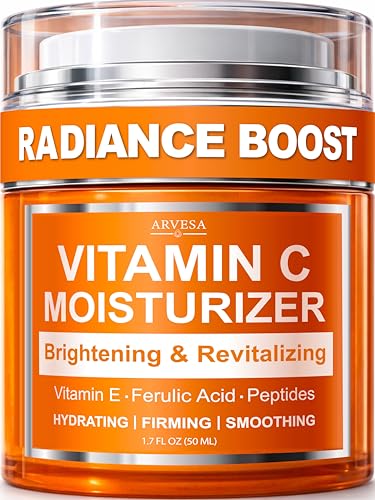
Arvesa Vitamin C Moisturizer — Best for Anti-Aging and Brightening Combined
Arvesa’s Vitamin C Moisturizer positions itself at the intersection of brightening and anti-aging, a common pairing since many of the same mechanisms that drive dark spots also accelerate visible aging. The formula uses a vitamin C complex alongside supporting antioxidants to address both hyperpigmentation and skin dullness. It’s a straightforward, no-frills approach that prioritizes function over packaging.
What stands out is the accessibility: this is a brand that isn’t charging a premium for heritage or marketing, so the price-to-ingredient ratio skews in the buyer’s favor. If you’re comparing it to luxury vitamin C moisturizers at three or four times the price, you’ll find Arvesa delivers comparable active ingredient activity. The cream texture is suitable for normal to dry skin and absorbs without residue. It’s a reasonable choice for anyone who wants vitamin C brightening without locking into a prestige budget.
The Ordinary Niacinamide 5% Face and Body Emulsion — Best Lightweight Daily Option
The Ordinary has made niacinamide a household ingredient, and this 3.4 fl oz emulsion extends that expertise into a moisturizer format that works on both face and body. The 5% niacinamide concentration sits in the clinically supported range for reducing the appearance of dark spots, evening skin tone, and minimizing pore visibility. The lightweight emulsion texture is the main differentiator here: it doesn’t feel like a moisturizer in the traditional sense but absorbs fast and layers without any tackiness.
This is the pick for people who run warm, dislike heavy creams, or live in humid climates where a richer formula would feel like too much. It’s also one of the cleanest formulations on this list, which makes it a reliable option for anyone prone to milia or congestion from occlusive products. At 3.4 fl oz, the size is generous for the price. For body hyperpigmentation from old scars or sun exposure, it’s one of few moisturizers that legitimately makes sense as a full-body treatment.
How to Choose
Look for proven brightening actives, not just marketing claims. The ingredients with the strongest clinical support for hyperpigmentation are niacinamide, vitamin C (in a stable form), kojic acid, and tranexamic acid. A moisturizer that lists “brightening botanical blend” without naming a specific active is likely relying on antioxidant support at best. All five picks on this list include at least one identifiable brightening compound at a meaningful concentration. When you’re comparing products outside this list, check the ingredient deck and look for actives in the first half of the formula, where concentration is highest.
Match the texture to your skin type and climate. A rich fade cream like Palmer’s Eventone is a better fit for dry skin in winter, while The Ordinary’s lightweight emulsion suits oily or combination skin in warm months. Using a formula that’s too heavy for your skin type can increase the risk of congestion, which triggers new breakouts and new post-inflammatory marks. It’s a cycle that’s easy to fall into when you’re focused on treating existing spots while unknowingly creating conditions for new ones.
Consistency matters more than concentration. Even the most potent brightening moisturizer won’t produce visible results in a week. Research on niacinamide and vitamin C consistently shows that significant tone improvement requires 6 to 12 weeks of daily application. If you’re switching products every few weeks because you don’t see immediate results, you’re likely resetting the clock each time. Pick a formula you can realistically use every morning or night without skipping, and give it a full two-month evaluation before making a judgment.
Frequently Asked Questions
What ingredients should I look for in a face moisturizer for dark spots?
Niacinamide, vitamin C, kojic acid, and tranexamic acid are the most researched brightening compounds for hyperpigmentation. Niacinamide (at 2% to 10%) slows the transfer of pigment to skin cells. Vitamin C inhibits the enzyme that produces melanin. Kojic acid and tranexamic acid work through complementary pathways. Alpha arbutin is also worth noting as a gentler alternative for sensitive skin. You don’t need all of them in one formula. A single well-formulated active at an effective concentration is more reliable than a product that includes seven actives at trace amounts.
How long does it take to see results from a brightening moisturizer?
Most people start noticing a change in overall skin brightness within 4 to 6 weeks. More stubborn dark spots from older sun damage or deep post-acne marks can take 3 to 6 months to visibly fade. The timeline depends on how deeply the pigment sits in the skin, how consistently you’re applying the product, and whether you’re using SPF daily. Sun exposure without protection will darken spots faster than any moisturizer can fade them, so SPF isn’t optional if you want the formula to work.
Can I use a brightening moisturizer under SPF?
Yes, and you should. Most brightening moisturizers are designed to be worn as a base layer before sunscreen. Apply the moisturizer first, let it absorb for 60 to 90 seconds, then apply SPF on top. The main thing to check is whether the two products layer cleanly without pilling. If they do, the combination is fine. Products with heavy silicone bases sometimes conflict with mineral sunscreens. If you notice balling, try a different SPF formula rather than skipping either product.
Are dark spot moisturizers safe for melanin-rich skin?
Most are, but formulation matters. Ingredients like retinol and high-percentage AHAs can cause post-inflammatory hyperpigmentation if they trigger irritation or over-exfoliation, which is a higher risk on deeper skin tones. Niacinamide and tranexamic acid are generally well-tolerated across all skin tones and are among the safest brightening actives for melanin-rich skin. Vitamin C is also considered safe, though some people with sensitive skin find it mildly irritating at higher concentrations. Starting with a lower concentration and building up is a sound approach.
Do I need a separate brightening serum if I’m already using a dark spot moisturizer?
It depends on how significant your dark spots are. For mild uneven tone or maintenance, a well-formulated brightening moisturizer is often enough. For more pronounced hyperpigmentation, layering a targeted serum under your moisturizer can accelerate results since serums typically deliver higher concentrations of actives. The two don’t cancel each other out. If you’re using both, apply the serum to clean skin first, let it absorb, then apply the moisturizer. Just make sure the actives in both products are compatible and that you’re not overloading your skin with ingredients that could cause irritation when stacked.
Bottom Line
If dark spots are your primary skin concern, any of these five moisturizers will give you a credible starting point. Palmer’s Eventone is the strongest value if budget is a constraint. Olay Vitamin C MAX is worth the step up if you want a more concentrated vitamin C formula. The Ordinary Niacinamide Emulsion is the pick for lightweight daily use across face and body. Dr.Althea suits sensitive skin that struggles with stronger actives, and Arvesa offers a reliable vitamin C option without a prestige price tag. Pair whichever you choose with daily SPF and consistent application. That combination, sustained over two to three months, is what produces real change.