

TL;DR: Vitamin C is a potent antioxidant and tyrosinase inhibitor — best for sun damage, dullness, and antioxidant defense. Niacinamide regulates sebum, supports the barrier, and inhibits melanin transfer — best for redness, congestion, and sensitivity. The old “you can’t combine them” warning has been debunked; they pair cleanly in the same routine.
This used to be one of skincare’s hottest controversies — for years, beauty editors warned readers never to mix vitamin C and niacinamide because they would supposedly cancel each other out. The published research shows that warning was wrong. Both ingredients earn space in modern routines for different reasons.
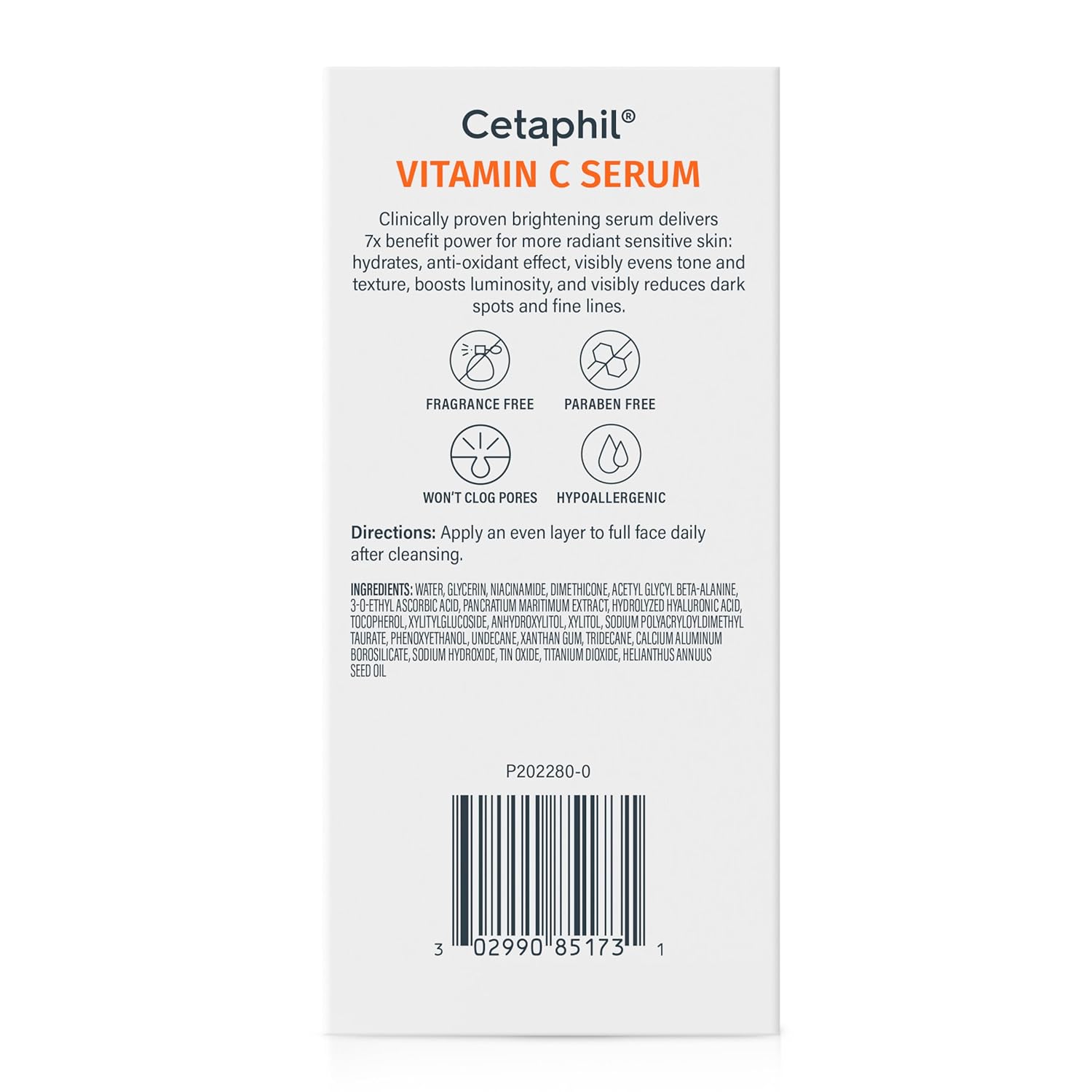
The hero pick.
Side-by-side at a glance
| Vitamin C | Niacinamide | |
| Type | L-ascorbic acid or derivatives | Vitamin B3 |
| Primary action | Antioxidant + tyrosinase inhibition | Barrier support + sebum regulation + brightening |
| Best for | Sun damage, dullness, environmental protection | Redness, oily skin, sensitive skin, congestion |
| Strength OTC | 10–20% | 4–10% |
| Irritation risk | Moderate (L-ascorbic stings) | Very low |
| Time of day | AM preferred (UV defense) | AM or PM |
| Pregnancy-safe | ✓ Yes | ✓ Yes |
| Combine? | Yes — myth debunked | Yes |
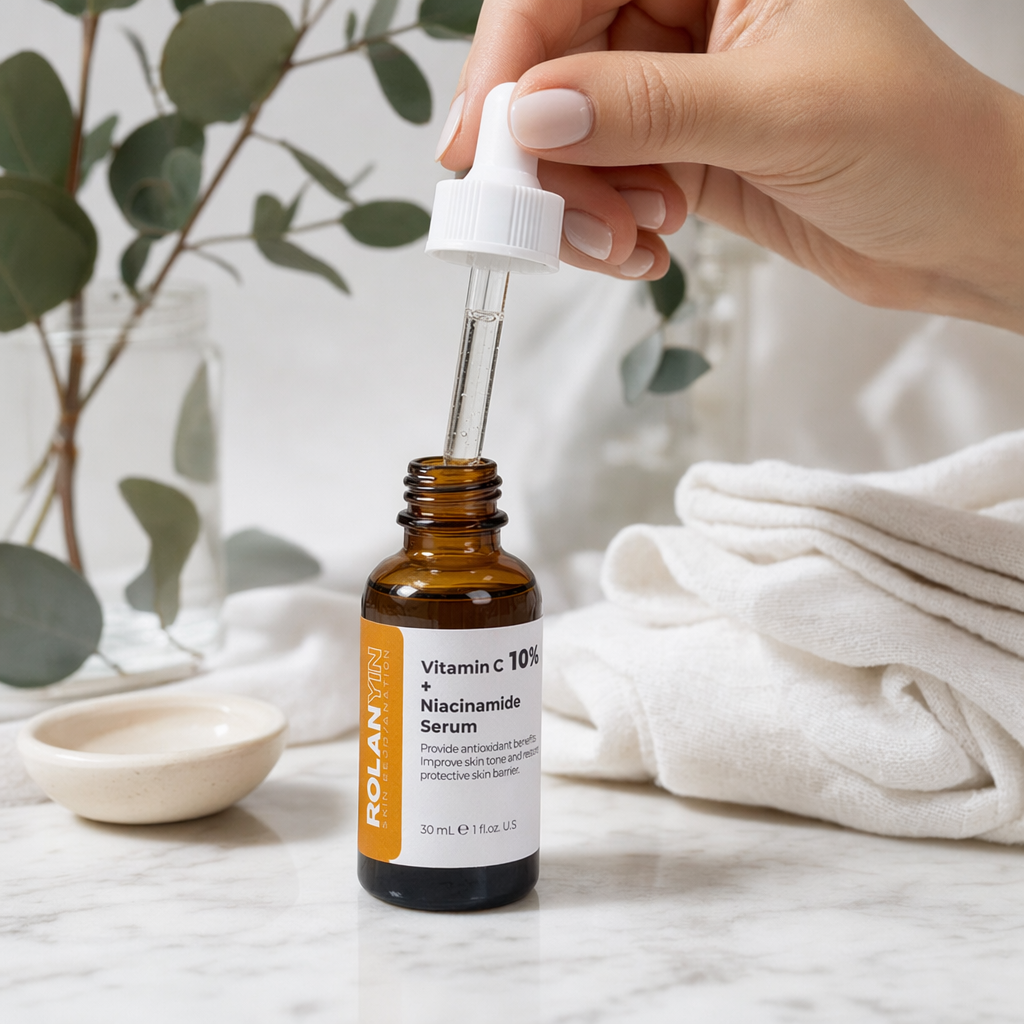
Consistency over weeks produces visible results.
The “can’t combine” myth
The old warning was based on a 1960s study using uncomplexed niacin (nicotinic acid) and vitamin C at very high concentrations and elevated temperatures. Modern cosmetic-grade niacinamide is the amide form of niacin, which does not undergo the conversion reaction the old study described. Multiple modern dermatology studies have confirmed both can be applied in the same routine without canceling effects.
The one practical caveat: at very high concentrations both wet-on-wet (no waiting between layers), users with sensitive skin sometimes report a brief flush — caused by histamine release from niacinamide, not by ingredient interaction. The fix is the 30-second gap between layers.
What each one does
Vitamin C (L-ascorbic acid)
Acts as a topical antioxidant — neutralizes free radicals from UV and pollution before they damage collagen and DNA. Also inhibits tyrosinase to fade sun-driven pigmentation and supports collagen synthesis at higher concentrations. Best paired with vitamin E and ferulic acid for stability and synergy.
Niacinamide
Hits a wider range of pathways: increases ceramide synthesis (barrier support), reduces sebum production, inhibits melanosome transfer (a different brightening mechanism than vitamin C), and modulates inflammatory cytokines. The result is broader, gentler action — slower brightening than vitamin C but more comprehensive skin health benefits.
When to pick which
Pick vitamin C if:
- You have sun spots, hyperpigmentation, or visible photo-damage.
- You want strong antioxidant defense paired with SPF.
- Your skin tolerates moderate actives without irritation.
Pick niacinamide if:
- You have redness, rosacea, or sensitive skin.
- Your skin is oily or congested.
- You want barrier support alongside brightening.
- You can’t tolerate vitamin C’s stinging.
Use both if:
- You have multiple concerns: dullness + oiliness + barrier issues.
- You want layered antioxidant + barrier support.
- Common: AM vitamin C + PM niacinamide, or both AM with 30-second gap.
How to combine them
AM: cleanser → vitamin C → wait 30 seconds → niacinamide (or include it in the same serum) → moisturizer → SPF.
PM: niacinamide alongside retinoid or peptides.
Product picks at a glance

Pros
- 10% Vitamin C concentration clearly disclosed by brand.
- Fragrance-free and paraben-free formula suits sensitive skin.
- Fast-absorbing texture layers cleanly under makeup.
Cons
- No full ingredient list available to verify formulation.
- Zero reviews make real-world performance unconfirmed.

Pros
- Stable Vitamin C suits sensitive skin daily.
- Triple Cica Complex soothes and brightens simultaneously.
- Panthenol supports barrier moisture after each use.
Cons
- No concentration data available for key actives.
- Zero customer reviews to validate claimed results.
Pros
- Stable Vitamin C suits sensitive skin daily.
- Triple Cica Complex soothes and brightens simultaneously.
- Panthenol supports barrier moisture after each use.
Cons
- No concentration data available for key actives.
- Zero customer reviews to validate claimed results.
- Stable Vitamin C paired with Madecassoside and Asiaticoside targets dark spots and uneven tone, making it suitable for sensitive skin prone to irritation from traditional ascorbic acid.
- Designed for both AM and PM use, this serum layers well under SPF in the morning; avoid pairing with additional strong acids to prevent potential sensitivity.
- Stable Vitamin C: Helps visibly reduce dark spots and may improve the appearance of uneven skin tone.
- Triple Cica Complex (Centella Asiatica, Madecassoside, Asiaticoside): Supports skin soothing while reinforcing the skin barrier.
- Panthenol: Helps maintain moisture barrier, leaving skin softer and more comfortable.
- Adenosine: Supports skin hydration and a smoother-looking surface over time.

Pros
- Fragrance-free formula minimizes irritation risk for reactive skin
- Lightweight texture absorbs without clogging pores or heaviness
- Combines brightening actives with hydration in single step
Cons
- No specified vitamin C concentration or derivative type listed
- Limited user review data available for performance verification
- Vitamin C and niacinamide work to visibly even tone and texture while antioxidants help defend against environmental stressors, formulated without fragrance or parabens for sensitive and reactive skin types.
- Lightweight serum texture layers easily under moisturizer in morning or evening routines, pairs well with SPF during daytime application to maximize antioxidant protection against UV-generated free radicals.
- Vitamin C: Antioxidant that helps visibly brighten skin and support even tone over time.
- Niacinamide: Helps visibly reduce dark spots and supports the skin's moisture barrier function.
- Hydrating Complex: Provides 24-hour hydration to maintain skin moisture and prevent dryness-related sensitivity.

Pros
- Niacinamide and vitamin C target visible dullness.
- Squalane and hyaluronic acid layer for lasting hydration.
- Gel-cream texture suits those who prefer non-heavy moisturizers.
Cons
- No concentration levels disclosed for any active ingredient.
- Not recommended alongside retinol in the same routine step.

Pros
- Five actives in one lightweight, fast-absorbing serum.
- Fragrance-free and suitable for sensitive, oily skin.
- Compatible with AM or PM routines, all skin types.
Cons
- Retinol and salicylic acid together may cause initial sensitivity.
- No concentrations listed for any active ingredients.
Pros
- Five actives in one lightweight, fast-absorbing serum.
- Fragrance-free and suitable for sensitive, oily skin.
- Compatible with AM or PM routines, all skin types.
Cons
- Retinol and salicylic acid together may cause initial sensitivity.
- No concentrations listed for any active ingredients.
- Vitamin C, retinol, salicylic acid, and niacinamide work together to address oily, acne-prone skin, helping visibly reduce dark spots, refine pores, and smooth uneven texture over time.
- The lightweight, non-comedogenic formula absorbs quickly without residue, fitting into AM or PM routines; avoid layering with other exfoliating acids to reduce irritation risk.
- Vitamin C: Supports more even skin tone and may help fade post-acne discoloration.
- Retinol: Supports skin renewal, helping reduce the appearance of fine lines and texture.
- Salicylic Acid: Oil-soluble exfoliant that helps clear pores and reduce visible blemishes.
- Niacinamide: Helps manage excess oil, refine pores, and calm uneven skin tone.
Frequently asked questions
Should I worry about niacinamide flushing?
Most users do not flush from cosmetic-grade niacinamide. Oral niacin (a different molecule) causes the famous flush. If you do flush from topical niacinamide at 10%, drop to 5% and wait 30 seconds between layers — the flush is histamine-mediated and goes away with gentler application.
Which one is better for melasma?
Niacinamide for the surface, in combination with azelaic acid or tranexamic acid for the underlying pigment activity. Vitamin C helps protect against UV-driven worsening but does not address the hormonal/inflammatory drivers of melasma the way niacinamide + azelaic does.
Can I use them with retinoid?
Yes. Standard PM stack: hydrator → retinoid → niacinamide → moisturizer. Vitamin C stays AM.




Write Your Review
No reviews yet. Be the first to share your experience!