

The vitamin C serum aisle is the noisiest shelf in skincare, and that’s especially true once you cross into the “luxury” category. Spend ten minutes on r/SkincareAddictionLux and you’ll see the same debate cycle every few months: SkinCeuticals C E Ferulic vs. dupes, L-ascorbic vs. derivatives, gold-standard vs. whatever’s trending on TikTok. This guide cuts past the hype.
The picks that follow are the best luxury vitamin C serum candidates that hold up when you actually evaluate them on what matters: form of vitamin C, concentration, pH, packaging, and how the serum behaves on real skin during the awkward first two weeks. Several are flagship luxury, one is a pharmacy-luxury crossover that derms keep quietly recommending, and one is the workhorse cheap option that earns a place on every “no, really, this works” Reddit thread.
What luxury actually means for a vitamin C serum
L-ascorbic acid — the gold-standard form of vitamin C — is famously unstable. It oxidizes when exposed to light, heat, or air, turning the serum yellow and then brown, at which point it does nothing for your skin and can mildly irritate it. The most expensive vitamin C serums on the market all spend their R&D budget on the same problem: how to keep L-ascorbic stable for 6+ months in the bottle without sacrificing the 10–20% concentration that drives results.
Luxury packaging — opaque bottles, air-restrictive droppers, individual ampoules — is one half of the answer. The other half is formulation chemistry: pairing L-ascorbic with vitamin E and ferulic acid (which extends stability and synergizes the antioxidant network), or substituting derivatives like sodium ascorbyl phosphate, magnesium ascorbyl phosphate, or ethyl ascorbic acid that trade some efficacy for dramatically better shelf life.
The vitamin C serum that wins is whichever one you actually finish before it oxidizes. A $180 bottle that browns at week 8 has lost the math to a $40 bottle you finish in 12.
r/SkincareAddictionLux, paraphrased
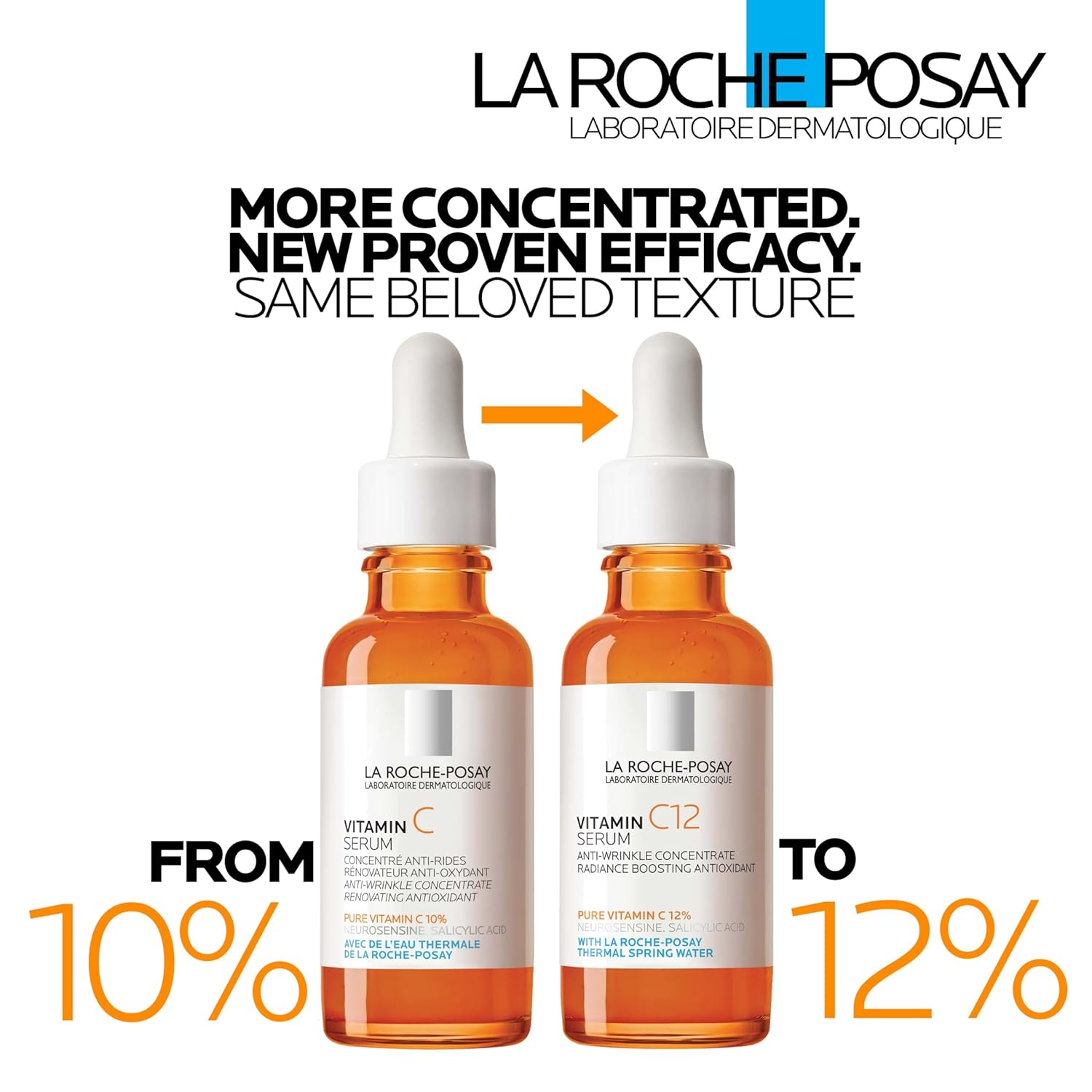
La Roche-Posay 10% Pure Vitamin C — the dermatologist-handed sensitive-skin vitamin C.
The 5 best luxury vitamin C serums at a glance

Pros
- Stable vitamin C form maintains potency over time
- Hydrating base with hyaluronic acid and jojoba oil
- Cruelty-free, dermatologist tested, made in USA
Cons
- Zero verified customer reviews to confirm real-world performance
- Sodium Ascorbyl Phosphate converts slower than direct ascorbic acid
- Sodium Ascorbyl Phosphate works as a stable vitamin C derivative to support collagen and help visibly reduce uneven tone and dark spots over consistent use, suited for sensitive and combination skin that reacts to harsher ascorbic acid formulas.
- Lightweight serum texture layers well under moisturizer in morning routines, pair with broad-spectrum SPF since vitamin C supports but does not replace sun protection for pigmentation concerns.
- Sodium Ascorbyl Phosphate: stable vitamin C derivative that helps fight free radicals and supports brighter-looking skin with less irritation.
- Hyaluronic Acid: humectant that draws moisture into skin to help balance hydration and support the barrier during active treatment.
- Vitamin E: antioxidant that works synergistically with vitamin C to enhance free radical defense and stability.
- Jojoba Oil and Aloe Vera: emollients that help calm and condition skin while enhancing comfort during daily brightening use.
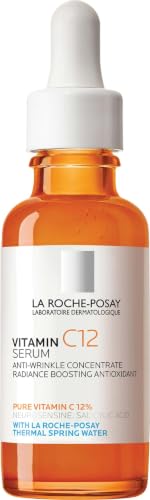
La Roche-Posay 12% Vitamin C Face Serum with Hyaluronic Acid for Brightness and Texture
Pros
- High vitamin C concentration with hydrating hyaluronic acid
- Salicylic acid addition addresses texture and clarity
- Designed specifically for sensitive skin types
Cons
- May yellow with air exposure, though efficacy persists
- Salicylic acid requires caution with other exfoliants
Pros
- High vitamin C concentration with hydrating hyaluronic acid
- Salicylic acid addition addresses texture and clarity
- Designed specifically for sensitive skin types
Cons
- May yellow with air exposure, though efficacy persists
- Salicylic acid requires caution with other exfoliants
- The 12% pure vitamin C works with salicylic acid to visibly reduce fine lines and support brightness, while hyaluronic acid maintains hydration for sensitive skin without irritation.
- Apply mornings after cleansing before moisturizer and sunscreen, pair with gentle hydrators and avoid layering with additional acids or retinoids in the same routine.
- Vitamin C 12%: Antioxidant that helps visibly reduce wrinkles and supports skin brightness and clarity.
- Hyaluronic Acid: Humectant that binds water to skin, providing hydration and plumping appearance.
- Salicylic Acid: Beta hydroxy acid that refines texture and supports clarity by gently exfoliating surface.

Pros
- Stable 5% triple-form Vitamin C minimizes irritation risk.
- Supports collagen formation and visible tone improvement.
- Compatible with other Sturm serums and creams.
Cons
- Concentration capped at 5%, lower than some alternatives.
- No independent review data available to assess real-world results.

Pros
- Pure L-ascorbic acid in protective packaging
- Ceramides support barrier health during vitamin C use
- Non-comedogenic gel texture layers under moisturizer
Cons
- No reviews available to confirm oxidation stability
- Thin application required may extend product learning curve
Pros
- Pure L-ascorbic acid in protective packaging
- Ceramides support barrier health during vitamin C use
- Non-comedogenic gel texture layers under moisturizer
Cons
- No reviews available to confirm oxidation stability
- Thin application required may extend product learning curve
- 10% L-ascorbic acid targets uneven tone and supports antioxidant defense, while hyaluronic acid draws moisture into skin, suited for normal, combination, and oily types seeking brightening without heaviness.
- Gel texture absorbs quickly without grease, apply in AM before moisturizer and SPF, allow full absorption before layering to prevent pilling with subsequent products.
- 10% L-Ascorbic Acid: pure vitamin C helps visibly brighten and defend against environmental stressors.
- Hyaluronic Acid: humectant draws moisture into skin to support plump, hydrated texture.
- Ceramides 1, 3, 6-II: lipid blend helps restore barrier integrity and reduce moisture loss.
Pros
- Stable vitamin C derivative resists oxidation better than L-ascorbic acid
- Lightweight texture absorbs without heaviness or residue
- Hyaluronic acid provides supplemental moisture alongside brightening actives
Cons
- No concentration percentages disclosed for key actives
- Limited long-term user feedback with zero verified reviews
- 3-O Ethyl Ascorbic Acid, a stable vitamin C derivative, works with ferulic acid and vitamin E to help visibly brighten skin and support the appearance of even tone, suitable for normal to combination skin seeking radiance without irritation.
- Lightweight serum texture melts in quickly for AM or PM use, layers well under sunscreen or moisturizer, and pairs effectively with niacinamide but avoid direct layering with strong retinoids in the same routine.
- 3-O Ethyl Ascorbic Acid: stable vitamin C derivative that helps visibly enhance radiance and even skin tone over time.
- Hyaluronic Acid: humectant that draws moisture into skin, supporting plumpness and smoothness throughout the day.
- Ferulic Acid: antioxidant that works synergistically with vitamin C to help improve the appearance of fine lines.
- Vitamin E: conditioning antioxidant that supports skin barrier function and nourishes while protecting against environmental stress.
Detailed picks
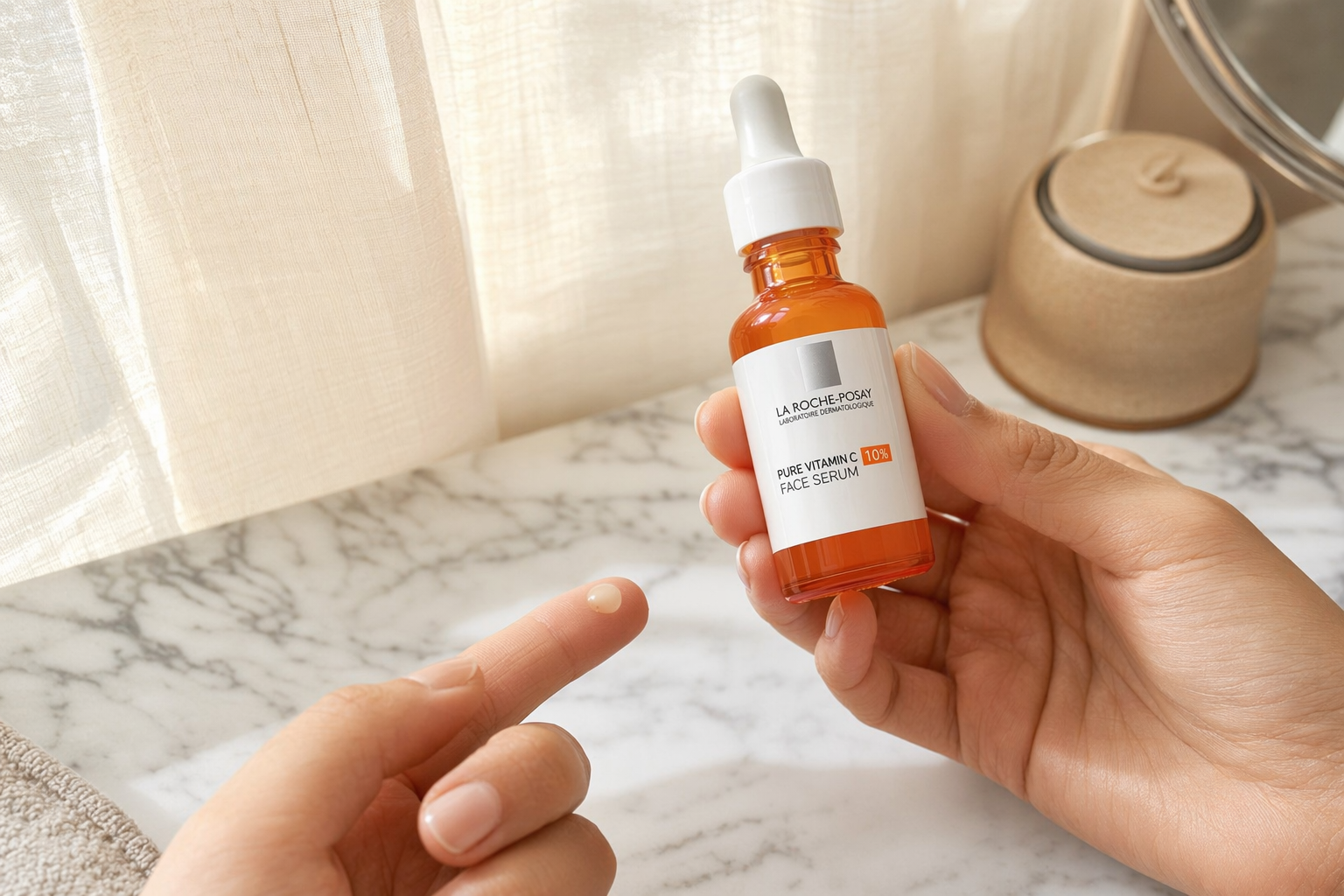
Apply vitamin C to clean, fully dry skin in the morning — a single drop on the fingertip is enough to cover one cheek.
1. The Good C Vitamin C Serum — True Luxury Tier ($160)
At $160, The Good C sits in the same price bracket as SkinCeuticals C E Ferulic — and that’s by design. The formula uses tetrahexyldecyl ascorbate, a stable lipid-soluble vitamin C derivative that penetrates the stratum corneum better than water-based L-ascorbic, paired with a brightening complex aimed at hyperpigmentation. Texture is silky and slightly emollient rather than the dry-down characteristic of pure L-ascorbic.
This is the pick for readers who’ve tried L-ascorbic serums and found them too irritating, or who simply want a vitamin C they can layer right before sunscreen without pilling. Twelve weeks of consistent AM use is when most users report visible tone evening; if you’re a faster judge, you’ll see hydration improvement in the first two weeks.
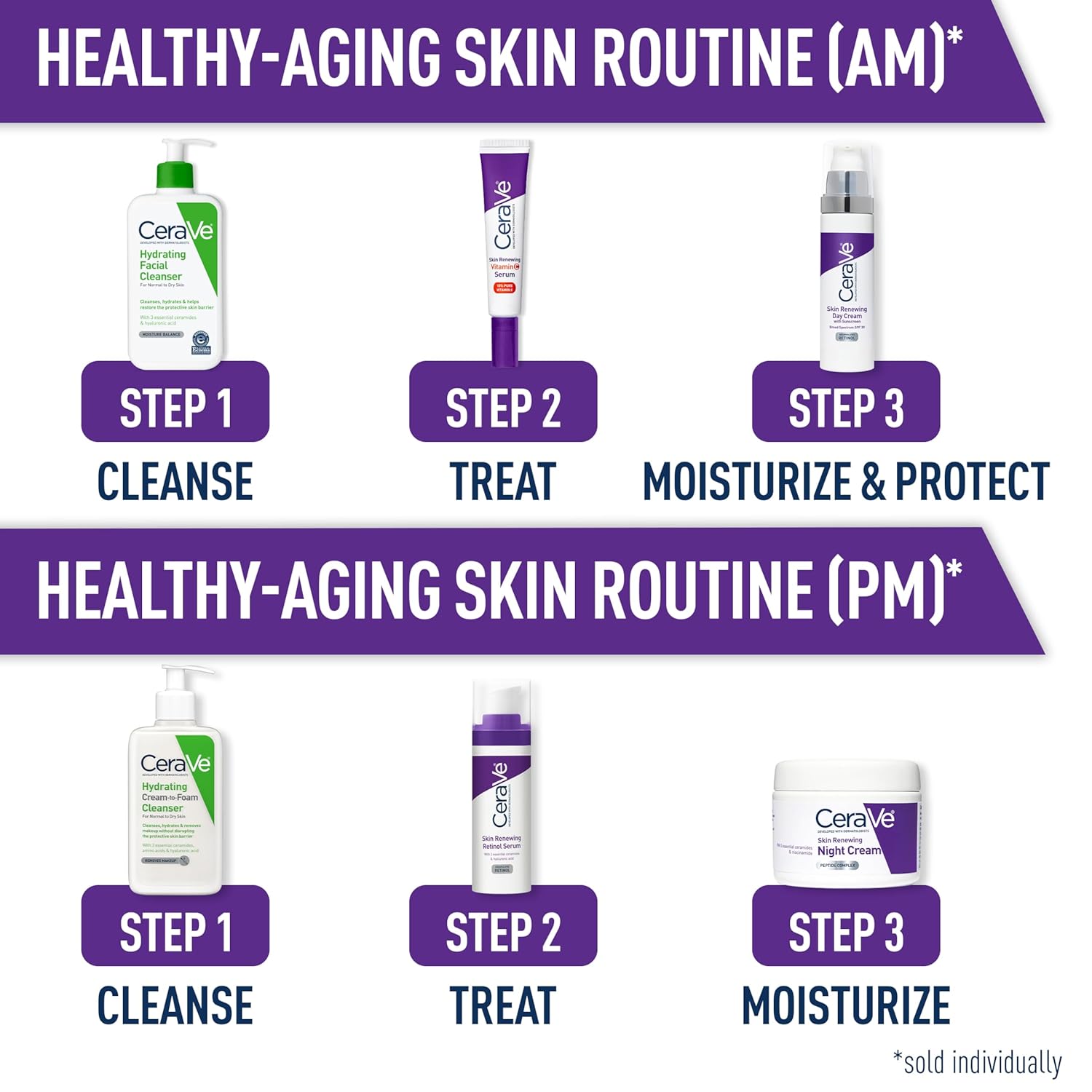
CeraVe positions its Vitamin C Serum as an entry-tier antioxidant step — barrier-friendly enough for daily AM use.
2. La Roche-Posay Pure Vitamin C Serum — Pharmacy-Luxury Crossover ($37.99)
La Roche-Posay’s French pharmacy version is the answer to “what do dermatologists prescribe for sensitive-skin patients who can’t handle SkinCeuticals?” It’s a 10% pure L-ascorbic formulation in a sensitive-skin base with neurosensine (a calming peptide LRP uses across their range) and salicylic acid for mild exfoliation. Lower concentration than department-store luxury, but the supporting formula does more for irritation-prone skin.
Pair this with their Toleriane moisturizer or any ceramide-based barrier cream and you have a vitamin C routine that works for skin types that have given up on the category. The trade-off: at 10%, results compound more slowly than a 15-20% L-ascorbic, so plan on 12-16 weeks for visible brightening rather than 8.
3. TruSkin Vitamin C Serum — The r/SkincareAddiction Bestseller ($38.99)
TruSkin is the serum that shows up on every “what should I actually buy” Reddit thread despite being neither French pharmacy nor department-store prestige. The formula pairs 20% sodium ascorbyl phosphate (a stable derivative) with hyaluronic acid, vitamin E, and aloe — a more forgiving combination than pure L-ascorbic for first-time vitamin C users.
The honest assessment: sodium ascorbyl phosphate is not as potent gram-for-gram as L-ascorbic at the same concentration. But TruSkin’s combination wins the practical math — readers actually use it daily, finish the bottle, and reorder. A consistently-used 20% derivative beats an intermittently-used 15% L-ascorbic for cumulative effect.
4. CeraVe Vitamin C Serum 10% — Best Barrier-Friendly Option ($23.86)
When a dermatologist tells a patient with rosacea or barrier-compromised skin to “start with vitamin C,” CeraVe’s version is what gets handed across the counter. The 10% L-ascorbic concentration is moderate, the inclusion of ceramides and hyaluronic acid supports the barrier rather than challenging it, and the silicone dimethicone gives it a slip that makes layering effortless. It’s the entry-level vitamin C for skin types that have failed others.
If you’re transitioning from no actives at all, or recovering from a retinoid overuse incident, this is the safest place to start. For brightening specifically aimed at dark spots, you may eventually want to graduate to a higher concentration — but starting here protects the runway.
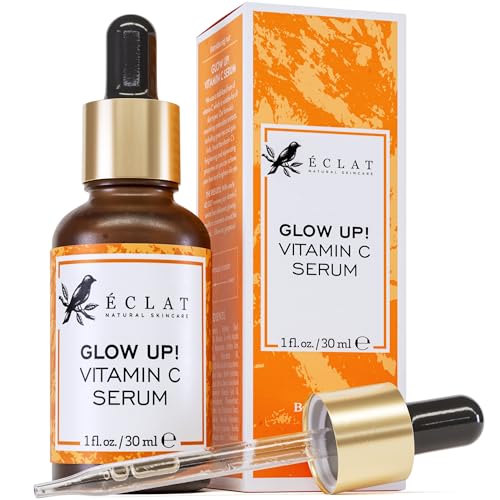
5. Eclat Skincare Vitamin C Serum — Budget Buy That Punches Up ($9.99)
At under $10, Eclat shouldn’t be on a “luxury” list — and yet it keeps appearing in Lux subreddit discussions specifically because readers compare it side-by-side with $50+ serums and report comparable results. The formula combines sodium ascorbyl phosphate, hyaluronic acid, and vitamin E in a simple, no-fragrance base. There’s no proprietary stabilization technology or peptide complex; it just gets the basic vitamin C job done.
Treat this as a “trial run” pick if you’ve never used vitamin C before and aren’t sure your skin will tolerate it, or as a body-skin option for hands, neck, and chest where you want antioxidant coverage without spending department-store money.
How to actually use a luxury vitamin C serum
The morning sequence that doesn’t waste product
Apply vitamin C to clean, fully dry skin — water on the face dilutes L-ascorbic and reduces penetration. Wait 60–90 seconds before the next step. Then moisturizer, then sunscreen. Vitamin C and SPF are a multiplicative pair: the antioxidant neutralizes free radicals that even high-SPF sunscreen lets through, and the SPF protects your investment in vitamin C from breaking down on the skin’s surface.
Don’t combine vitamin C with niacinamide in the same step — the two are fine in the same routine but can flush slightly when applied wet-on-wet at high concentrations. Don’t combine with AHA/BHA acids (the pH conflict reduces L-ascorbic activity). Don’t apply over retinoid — retinoid is a PM step.
What to expect, week by week
Weeks 1–2: Hydration improvement, maybe slight tingling on first application (normal for L-ascorbic at 15%+). Weeks 3–6: Skin tone starts to even, particularly the post-inflammatory marks from old breakouts. Weeks 8–12: Sun-spot lightening becomes visible, overall radiance improves, makeup applies more smoothly. Past 12 weeks the curve flattens — vitamin C is a maintenance active, not a constant-acceleration one.
If you see no change at 12 weeks of daily use, the most likely cause is oxidation (check the bottle — is it brown or amber?). Replace it.
Frequently asked questions
L-ascorbic vs. derivatives — which should I buy?
L-ascorbic acid is more potent gram-for-gram, but only when fresh and at the right pH (3.5 or below). If you’re disciplined about finishing serums within 3 months and your skin tolerates the dry-down, go L-ascorbic. If you forget about bottles in your cabinet or have sensitive skin, a derivative (tetrahexyldecyl, sodium ascorbyl phosphate, ethyl ascorbic acid) trades efficacy for stability and is the smarter buy.
What concentration of vitamin C is best?
Published research finds the efficacy curve plateaus around 20% L-ascorbic — going higher doesn’t add benefit and increases irritation. For most users, 10–15% is the sweet spot. Derivatives behave differently and shouldn’t be compared concentration-to-concentration with L-ascorbic.
Should I use vitamin C in the morning or at night?
Morning. Vitamin C’s primary cosmetic benefit is antioxidant protection against environmental damage, which is a daytime exposure. There’s no harm in using it at night, but you’re paying for protection your skin doesn’t need then.
Is luxury vitamin C worth it over drugstore?
Sometimes. The price premium pays for: stable formulation chemistry (worth it), prestige packaging (mostly aesthetic), and proprietary supporting actives (sometimes meaningful, often marketing). The drugstore-vs-luxury difference is bigger here than in most categories because of vitamin C’s instability — a well-formulated luxury serum that stays stable for 6 months can genuinely outperform a poorly-stabilized cheaper option that oxidizes in 6 weeks.
Can vitamin C cause breakouts?
Rarely the vitamin C itself, but the supporting formulation (heavy oils, silicones, or fragrances) can. If you break out after starting a new vitamin C serum, switch formulations rather than abandoning the active.
How do I know if my vitamin C serum has gone bad?
Color is the most reliable indicator for L-ascorbic formulations. Fresh, properly stored L-ascorbic is clear, very pale yellow, or in colorless oil-based vehicles. Once the serum turns deep amber or brown, the oxidation is too far advanced and the product is no longer doing what it was designed to do — and at that point can mildly irritate skin rather than calm it. Derivatives like sodium ascorbyl phosphate don’t visibly change color, which is one of the reasons they earn shelf space in less-controlled home environments: you can’t see them failing, but they’re also not failing as quickly.
Should I take a break from vitamin C, or use it forever?
Vitamin C is a maintenance active, not a cycle-on-cycle-off active. The cumulative benefits — tone evening, antioxidant protection — build up and then need ongoing reinforcement. Stop using vitamin C for two months and the protective layer of antioxidant activity drops off; the dark spots you’d faded begin to creep back if you’re also being exposed to UV. Most dermatologists recommend daily use as long as your skin tolerates it.
Related reading
- Best vitamin C serum (broader category, all price tiers)
- Best skincare for dark spots — vitamin C is one piece of the puzzle
- Best hyaluronic acid serum — the layer to apply after vitamin C
- Best retinol serum — the PM counterpart to vitamin C






Write Your Review
No reviews yet. Be the first to share your experience!