Living with psoriasis means chasing relief from flaking, tightness, and that deep itch that shows up at the worst moments. The right cream won’t cure a plaque, but it can calm the surface, lock in water, and make your skin feel like yours again. We dug into formulas built for scaly, sensitive skin and narrowed the field to five that actually deliver. Some lean on salicylic acid to lift buildup, others rely on humectants and rich occlusives to rebuild the barrier. If your flares also creep into your hairline, our guide to a gentle scalp care routine pairs nicely with these picks. Below you’ll find honest notes on texture, ingredients, and who each one suits best, so you can match a cream to your skin without guesswork.
Quick answer: The CeraVe Psoriasis Cream is our top all-around pick thanks to salicylic acid plus barrier-repair ceramides, while the Cetaphil Restoraderm Lotion is the best gentle daily option for widespread dry, itchy skin.


Pros
- High-potency manuka honey with documented UMF rating
- Tallow-based formula rich in fat-soluble vitamins
- AIP-friendly formulation suitable for reactive skin
Cons
- Honey and tallow scent may not suit all preferences
- Thicker texture requires adjustment period for application
Pros
- High-potency manuka honey with documented UMF rating
- Tallow-based formula rich in fat-soluble vitamins
- AIP-friendly formulation suitable for reactive skin
Cons
- Honey and tallow scent may not suit all preferences
- Thicker texture requires adjustment period for application
- UMF 16+ manuka honey combined with grassfed tallow delivers fat-soluble vitamins and supports compromised skin barriers common in eczema and psoriasis presentations.
- Dense, ointment-like texture works best as a nighttime occlusive layer or spot treatment on dry patches, pairs well with hydrating serums underneath.
- Manuka Honey UMF 16+ (MGO 573+): supports antimicrobial activity and helps maintain skin moisture barrier integrity.
- Grassfed Tallow: supplies bioidentical fatty acids and fat-soluble vitamins A, D, E, K for skin nourishment.
- Avocado Oil: emollient rich in oleic acid, helps soften and condition compromised skin.
- Manuka Essential Oil: distilled from New Zealand manuka, included for additional skin-soothing properties.


How We Evaluated These Psoriasis Creams
We focused on the things that matter when your skin is inflamed and fragile. First came the ingredient list. We looked for proven soothers like salicylic acid for gentle exfoliation, ceramides and colloidal oatmeal for barrier support, and humectants like glycerin or hyaluronic acid to pull in moisture. We also flagged formulas that skip common irritants such as heavy fragrance and dyes, since reactive skin doesn’t forgive those easily.
Then we weighed real-world usability. A cream can have a flawless label and still flop if it’s greasy, stings, or vanishes in an hour. We reviewed texture, absorption, how well each one held up under clothing, and value per ounce. Customer feedback from people managing chronic plaques helped round out the picture. Our goal was simple: match each formula to the skin type and flare pattern it serves best, so you’re not paying for hype.
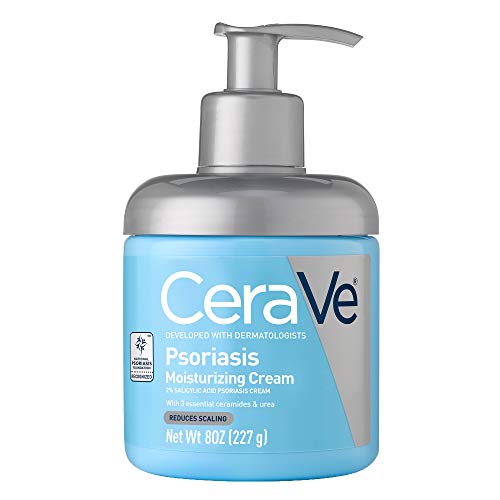
CeraVe Psoriasis Cream — Best For Scaly Plaques
CeraVe built this one around 2% salicylic acid, which gently loosens the thick, scaly buildup that defines a stubborn plaque. Pair that with lactic acid for extra smoothing and three essential ceramides, and you get a cream that exfoliates without stripping the barrier it’s trying to protect. The texture is thick but not waxy, and it sinks in faster than you’d expect for something this rich. It’s fragrance-free, so it rarely stings even on cracked patches. A few users find the acids a touch active for very raw skin, so start slow if you flare easily. For everyday management of flaking elbows, knees, and scalp edges, this is the workhorse most people reach for first.
KOPA HAIKU Face Cream — Best For Facial Flares
Psoriasis on the face is its own challenge, and this KOPA HAIKU cream is formulated for exactly that delicate zone. It targets seborrheic dermatitis and fungal-prone skin too, which makes it a smart pick if your flakes blur the line between conditions. The lightweight feel matters here since heavy creams look and feel wrong on cheeks and around the nose. It layers cleanly under sunscreen or makeup and doesn’t leave a greasy sheen. Some shoppers wish the jar were larger for the price, and results can take a couple of weeks to settle in. Still, for calming redness and flaking on the face, scalp, and chest, it fills a gap the bulkier body creams don’t cover well.
BALM OF GILEAD Honey Cream — Best For Sensitive Skin
If added actives tend to sting, this Manuka honey cream takes a softer route. Manuka honey brings natural soothing and humectant properties, and the formula leans on gentle moisturizers rather than exfoliating acids. That makes it a reassuring choice for reactive skin that flinches at salicylic acid. It works across eczema, dermatitis, and psoriasis, so it’s versatile if your skin can’t decide what it’s doing. The cream feels cushiony and calming on angry, itchy patches. Because it’s on the richer side, you’re best applying a thin layer and letting it absorb. It won’t lift heavy scale the way an acid-based cream does, but for comfort on tender, irritated skin, it’s a kind companion.
Wild Naturals Eczema Cream — Best For Whole-Family Use
Wild Naturals aimed this cream at both adults and kids, which is handy when psoriasis or eczema runs through a household. The formula centers on Manuka honey and aloe to hydrate and calm dry, itchy skin without harsh additives. Parents like that it’s gentle enough for children’s flare-prone patches, and the non-greasy finish means little ones don’t fuss about the feel. It spreads easily and a modest amount covers a lot of ground, so a tube lasts. The scent is mild and natural rather than perfumed. It’s more of a daily soother than a scale-buster, so pair it with an exfoliating option if you’re dealing with thick plaques. For shared, sensitive-skin relief, it earns its spot.
Cetaphil Restoraderm Lotion — Best For Daily All-Over Care
When you need to moisturize large areas every single day, the Cetaphil Restoraderm lotion makes it painless. Colloidal oatmeal and ceramides team up to relieve itch and reinforce a compromised barrier, and the 16 oz bottle means you won’t ration it across arms, legs, and torso. The lotion texture is lighter than the thick creams above, so it absorbs quickly and layers well morning and night. It’s fragrance-free and formulated for eczema-prone skin, which usually translates to calm results on psoriasis too. Because it’s lighter, very dense plaques may want something richer on top. But as the base layer of a daily routine, it’s affordable, gentle, and easy to stay consistent with, and consistency is what keeps flares quiet.
How to Choose a Psoriasis Moisturizer
Match the active to your flare. Thick, scaly plaques respond well to salicylic acid, which loosens buildup so moisture can actually reach the skin underneath. If your skin is raw, cracked, or easily irritated, skip the acids and lean on soothing formulas built around colloidal oatmeal, Manuka honey, or ceramides instead. There’s no single winner here, it’s about reading your own skin. Many people keep two creams on hand: an acid-based one for stubborn patches and a gentle barrier cream for daily upkeep everywhere else. Rotating them prevents over-exfoliation while still keeping scale under control.
Prioritize barrier repair. Psoriatic skin loses water fast, so the best creams don’t just add moisture, they help hold it. Look for ceramides, glycerin, and hyaluronic acid to draw in and seal hydration, plus occlusive elements that slow evaporation. A repaired barrier itches less and flakes less, which breaks the scratch-flare cycle that makes everything worse. Apply while your skin is still slightly damp from a shower to trap the most water. Thicker balms work overnight, while lighter lotions suit daytime layering under clothes and sunscreen without feeling heavy or sticky.
Avoid needless irritants. Fragrance, essential oils, and dyes are common triggers for reactive skin, and they add nothing your barrier needs. Fragrance-free formulas are the safer default when you’re managing chronic inflammation. If you want to try a new cream, apply a small amount to one patch first and watch it for a day or two before going all in. Cost matters too: you’ll use a lot of product over time, so a reasonably priced tub you’ll actually reapply beats a tiny luxury jar you hoard. Consistency, not price, drives real results.
Frequently Asked Questions
What ingredients help psoriasis the most?
Salicylic acid is the standout for lifting thick scale, since it softens and sheds the buildup that blocks moisture. For calming and barrier repair, ceramides, colloidal oatmeal, glycerin, and hyaluronic acid do the heavy lifting. Manuka honey adds gentle soothing for sensitive skin. Many effective creams combine a few of these. The right mix depends on your flare: acids for dense plaques, soothers for raw or reactive patches. If you’re unsure, start with a fragrance-free barrier cream and add an acid formula only where you need extra exfoliation.
Can I use these creams on my face?
Some, but not all. The KOPA HAIKU cream is formulated specifically for the face, scalp, and chest, so it’s the safest pick for delicate facial skin. Thicker, acid-heavy body creams can feel too strong or greasy on the face and may sting near the eyes and nose. If you’re treating facial flares, choose a lightweight, gentle formula and apply a thin layer. Always apply a small amount first to check how your skin reacts before using it more broadly across sensitive areas.
How often should I apply psoriasis moisturizer?
Most people benefit from applying at least twice a day, morning and night, and more often during an active flare. The best window is right after bathing while your skin is still slightly damp, since that traps extra water against the barrier. Lighter lotions like the Cetaphil work well for frequent daytime reapplication, while richer creams suit overnight use. Consistency beats intensity here. Daily moisturizing, even when your skin looks calm, is what keeps the itch-scratch-flare cycle from restarting.
Are natural or honey-based creams effective?
They can be, especially for sensitive skin that reacts to active ingredients. Manuka honey has natural humectant and soothing properties, which is why the BALM OF GILEAD and Wild Naturals creams rely on it. These formulas comfort itchy, irritated skin and help hold moisture, though they won’t exfoliate thick scale the way salicylic acid does. Think of them as gentle daily soothers rather than plaque-busters. If your psoriasis is mild or your skin is too reactive for acids, a honey-based cream is a genuinely useful option.
What’s the difference between a cream and a lotion for psoriasis?
Creams are thicker and richer, with more occlusive ingredients that seal in moisture and cushion dry, cracked patches, making them ideal for stubborn plaques and overnight use. Lotions, like the Cetaphil Restoraderm, are lighter and absorb faster, which makes them easier to apply over large areas every day. Neither is strictly better. Many people use both: a lotion as the everyday all-over layer and a cream spot-applied where skin is thickest. Choose based on how dense your patches are and how the product feels on your skin.
Bottom Line
Managing psoriasis comes down to matching a formula to your flare and using it consistently. For thick, scaly plaques, the CeraVe Psoriasis Cream is our top pick thanks to salicylic acid and barrier-building ceramides. The Cetaphil Restoraderm Lotion is the easiest daily choice for moisturizing large areas of dry, itchy skin. If your face flares, the KOPA HAIKU cream is built for that delicate zone, while the BALM OF GILEAD and Wild Naturals honey creams offer gentle relief for sensitive skin and shared family use. Pick the one that fits your skin, apply it while damp, and stay steady, that’s what keeps flares calm.