Your face doesn’t need sunscreen at eleven at night, and that single fact is what should make a night cream different from the lotion you use before work. No SPF competing for space in the formula. What you get instead is room for heavier occlusives that seal water in for eight uninterrupted hours, plus the actives that fall apart in daylight. Retinol is the obvious one. It’s unstable in light, which is why dermatologists say to save it for bedtime.
The trouble is that the drugstore aisle sells night cream the way it sells anti-aging in general, with claims that run well ahead of the evidence. A jar promising to rebuild collagen overnight is telling you a story. So our editors worked through dozens of options, comparing full ingredient lists, checking formulation quality against published research, and aggregating feedback from thousands of verified buyers. The five below earned their spots. If retinol strength matters more than price, our best night cream with retinol guide goes deeper.
Quick answer: For most people, CeraVe Night Cream is the best drugstore night cream, because it repairs the barrier instead of promising overnight wrinkle results. Eucerin Q10 suits sensitive skin, Neutrogena Triple Age Repair targets uneven tone, Olay Total Effects is the multitasker, and Arvesa pairs retinol with peptides.
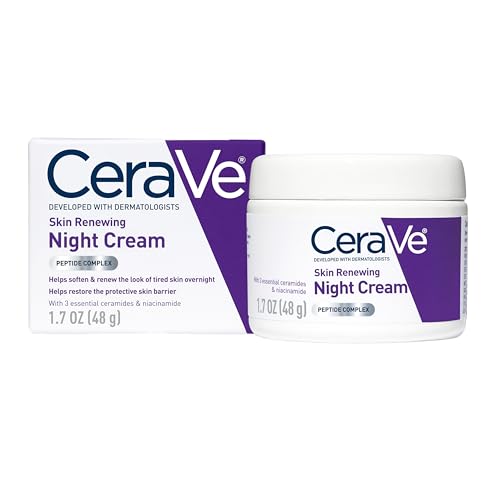
CeraVe Night Cream with Peptide Complex, Niacinamide & Ceramides for Overnight Skin Renewal
Pros
- Peptides and niacinamide target multiple aging concerns
- Ceramide trio supports compromised moisture barriers
- Non-irritating formulation developed with dermatologists
Cons
- No inner seal protection upon opening
- Limited reviews available to assess long-term efficacy
Pros
- Peptides and niacinamide target multiple aging concerns
- Ceramide trio supports compromised moisture barriers
- Non-irritating formulation developed with dermatologists
Cons
- No inner seal protection upon opening
- Limited reviews available to assess long-term efficacy
- Peptide complex and niacinamide work together to help visibly reduce fine lines while supporting skin elasticity and barrier function, making this suitable for dry and combination skin showing early signs of aging.
- Cream texture absorbs overnight without heavy residue, designed for PM use after serums and pairs well with retinoids or acids since ceramides help buffer potential irritation.
- Peptide Complex: helps visibly reduce the appearance of fine lines and wrinkles while supporting skin elasticity.
- Niacinamide: supports barrier function, helps improve skin texture, and works synergistically with ceramides for overnight renewal.
- Ceramides 1, 3, 6-II: lipid molecules that restore and maintain the skin's protective moisture barrier, preventing transepidermal water loss.
- Hyaluronic Acid: humectant that attracts and retains moisture in skin, providing sustained hydration throughout the night.

Pros
- Combines three actives for targeted anti-aging
- Fragrance-free for better tolerance
- Non-greasy feel suits humid climates or oily skin
- Simple overnight application fits busy routines
Cons
- Retinol strength may irritate sensitive or beginner skin
- Lighter hydration not ideal for very dry complexions
- Results build gradually, not overnight
This is a fragrance-free night cream formulated with retinol, peptides, and niacinamide, positioned as an anti-wrinkle and firming moisturizer. It targets those in their 30s and beyond with early signs of aging and normal to combination skin types that prefer lightweight overnight options over rich creams.
The trio of actives sets it apart from basic hydrators: retinol addresses texture and lines, peptides aid collagen support, and niacinamide refines pores and soothes. It performs stronger on maintenance for mild concerns than intensive repair, though the retinol means it is less forgiving for reactive skin compared to gentler peptide-only formulas.
Texture is non-greasy and fast-absorbing, making it easy to layer under or over serums without pilling. It slots neatly into PM routines, especially for oily or active lifestyles where heaviness disrupts sleep.
Limitations include potential tingling from retinol, so it may not suit very dry or barrier-compromised skin that needs richer emollients. Beginners might prefer starting with a milder retinol alternative before committing.
Consider this if you want a straightforward, active night cream for firmness without fragrance or grease. Skip it for sensitive skin or if you prioritize deep hydration over actives.
Retinol drives the anti-wrinkle action, best for gradual texture refinement. Peptides firm by supporting skin structure. Niacinamide balances oil and brightens mildly. The fragrance-free base keeps it tolerable for nightly use.
Pros
- Retinol alternative suitable for sensitive skin types
- Non-comedogenic formula won't congest pores overnight
- Free of fragrance, alcohol, and synthetic dyes
Cons
- Pro-retinol may work slower than prescription retinoids
- No concentration details provided for active ingredients
Pros
- Retinol alternative suitable for sensitive skin types
- Non-comedogenic formula won't congest pores overnight
- Free of fragrance, alcohol, and synthetic dyes
Cons
- Pro-retinol may work slower than prescription retinoids
- No concentration details provided for active ingredients
- Pro-retinol works as a gentler vitamin A derivative that helps visibly reduce fine lines over five weeks, while coenzyme Q10 supports antioxidant defense in sensitive, reactive skin.
- Creamy texture with macadamia nut oil absorbs during overnight wear without residue, best applied as final PM step after serums and before occlusive treatments.
- Pro-Retinol: Gentler vitamin A precursor that helps visibly soften fine lines with reduced irritation risk.
- Coenzyme Q10: Antioxidant that supports skin's natural defense against environmental stressors during overnight repair.
- Vitamin E: Lipid-soluble antioxidant that conditions skin and stabilizes the retinol-alternative formula.
- Macadamia Nut Oil: Emollient plant oil that delivers fatty acids for barrier support and smooth texture.

Pros
- Combines multiple actives for comprehensive nighttime repair
- Rich texture suits dry and mature skin
- Vitamin C formulation stable for night use
Cons
- Heavy consistency may overwhelm oily or combination skin
- Hexinol technology lacks independent clinical validation
Pros
- Combines multiple actives for comprehensive nighttime repair
- Rich texture suits dry and mature skin
- Vitamin C formulation stable for night use
Cons
- Heavy consistency may overwhelm oily or combination skin
- Hexinol technology lacks independent clinical validation
- Hexinol technology works with vitamin C and shea butter to support visible firmness, tone correction, and wrinkle reduction for mature and dry skin types experiencing multiple aging concerns.
- Rich cream texture absorbs slowly for overnight delivery, applied after cleansing on face and neck, avoid layering with additional retinoids or acids to prevent irritation.
- Hexinol Technology: proprietary complex claimed to boost skin's restorative appearance and visible firmness over four weeks.
- Vitamin C: antioxidant that helps visibly diminish dark spots and supports more even tone and radiance.
- Shea Butter: emollient that provides barrier support and deep moisture replenishment for dry skin.
- Glycerin: humectant that draws water into skin and maintains hydration levels throughout the night.

Pros
- Niacinamide and antioxidants target multiple aging concerns
- Fast-absorbing, non-greasy texture suits combination skin
- Oil-free formulation works for congestion-prone complexions
Cons
- No retinol or peptides for advanced firming
- Fragrance not disclosed in available product data
Pros
- Niacinamide and antioxidants target multiple aging concerns
- Fast-absorbing, non-greasy texture suits combination skin
- Oil-free formulation works for congestion-prone complexions
Cons
- No retinol or peptides for advanced firming
- Fragrance not disclosed in available product data
- VitaNiacin Complex II combines vitamin B3 (niacinamide) with antioxidants and vitamins to help visibly even tone, minimize pore appearance, and support barrier function in normal to combination skin types.
- Creamy, oil-free texture absorbs cleanly for PM use after cleansing and before heavier occlusives; layer under retinol if tolerated or use on alternating nights.
- Niacinamide (Vitamin B3): helps visibly brighten tone, refine pores, and strengthen skin barrier over time.
- Antioxidants: support defense against environmental stressors that contribute to visible aging signs.
- Vitamins: work with niacinamide to nourish and support healthy-looking, hydrated skin overnight.
How We Evaluated These Night Creams
The filter that knocked out the most candidates had nothing to do with price. It was fragrance sitting near the top of the ingredient list on a product designed to stay on skin, undisturbed, for eight hours. That’s a long exposure window for a known sensitizer. From there we read full ingredient lists in order, because the order tells you who’s doing the work. Ceramides, petrolatum, and dimethicone are the occlusive workhorses at this price, and when they show up below the fifth exotic-sounding extract, the marketing is running ahead of the chemistry.
We cross-referenced formulas against research rather than brand copy: retinol’s instability in light, which is why it belongs in a PM product; niacinamide’s well-supported range of roughly 4% to 5%. Then we aggregated verified-buyer feedback, weighting repeated patterns over single complaints. Two thousand people reporting pillowcase transfer is data. One broken jar lid isn’t. We also weighed cost per ounce, since a night cream is a nightly habit rather than an occasional splurge, and every pick had to be in stock and honestly labeled about what’s inside.
CeraVe Night Cream — Best Overall
This is the one we hand to people whose skin isn’t broken, just tight and flaky by morning. It carries the three ceramides your barrier actually uses, 1, 3, and 6-II, alongside niacinamide and hyaluronic acid in CeraVe’s slow-release MVE base, so hydration keeps arriving after you’ve fallen asleep. It’s fragrance-free, and the texture is rich but still sinks in. What it won’t do is treat wrinkles. No retinol, no acids, nothing that changes how a line looks in six weeks. If barrier repair is your goal, that restraint is the entire point.
Arvesa Night Cream with Retinol and Peptides — Best Active Combo
Reach for this if you want retinol and peptides working the same shift without buying two products. The base is rich enough that most people won’t need a separate moisturizer over it, which matters more than it sounds: retinol dries skin out, and pairing it with a thin lotion makes the flaking worse. Here’s the honest part. Arvesa doesn’t disclose its retinol percentage, and it has nothing like CeraVe’s clinical history behind it, so you’re buying on formula logic rather than decades of dermatology backing. Start at two nights a week and let your skin set the pace.
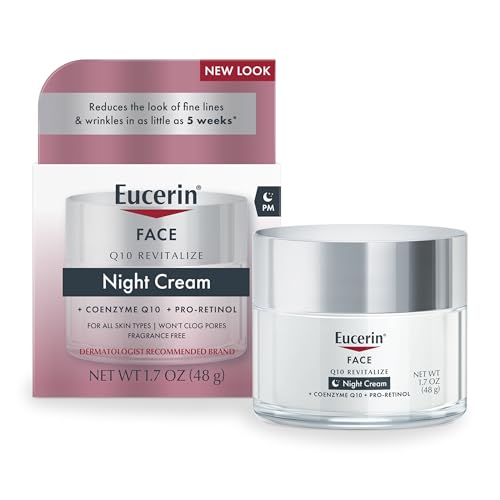
Eucerin Q10 Anti-Wrinkle Night Cream — Best for Sensitive Skin
Sensitive skin usually has to choose between retinol and comfort. Eucerin’s answer is pro-retinol, an ester that converts to active retinol on skin across several steps, which softens the irritation and the potency together. Add coenzyme Q10, an antioxidant skin produces less of with age, and you get a cream for faces that flush at the first sign of a real retinoid. That conversion is also the catch. A pro-retinol won’t deliver prescription-tier turnover, so if you’ve already tolerated straight retinol, this is a step down in strength. For reactive skin, it’s a trade worth making.
Neutrogena Triple Age Repair — Best for Dark Spots
The reason to choose this over the others is the pairing: retinol for texture and fine lines, plus vitamin C aimed at the pigment that often makes skin read as older than the wrinkles do. If your complaint is a blotchy, uneven surface rather than deep creases, that’s the more relevant target, and buyer feedback skews toward people watching sun spots on their cheeks. Two caveats. It’s fragranced, so reactive skin should look at the Eucerin instead, and retinol raises sun sensitivity, which makes a best drugstore sunscreen for face the non-negotiable other half of this routine.
Olay Total Effects Night Firming Cream — Best Multitasker
Olay’s night formula runs on its VitaNiacin blend, which is niacinamide doing most of the heavy lifting with vitamin E and green tea extract alongside it. Niacinamide is the sensible bet in this category. It has real support for barrier function and pigmentation, it rarely stings, and it layers with anything. The texture is thick and faintly tacky, fine at bedtime and unpleasant under foundation. The weakness is the premise itself. Seven benefits from one jar means no single one lands at treatment strength, so a focused formula beats a generalist when you have one specific problem.
What to Look For in a Night Cream
Skip the SPF, and don’t pay extra for it. A night cream with sunscreen in it is a day cream with confused branding. What you want overnight is occlusion, which means petrolatum, dimethicone, shea butter, or a ceramide blend that slows water loss while you sleep. At drugstore prices, those simple sealers are most of what you’re getting, and that’s fine. Barrier repair isn’t a technology problem, and the ingredients that solve it have been cheap for decades.
Photosensitive actives belong in this jar. Retinol degrades in UV light, so PM application is standard practice rather than a preference. Niacinamide at 4% to 5% is the other common inclusion and the best-supported one at this price point. What you should discount are the cosmeceutical claims, the stem cell extracts and proprietary complexes with names longer than their evidence base. Drugstore formulas are simpler than the packaging implies. Simple usually works.
Apply to damp skin, and use less than you think. An occlusive seals in water that’s already there, so patting cream on right after cleansing beats waiting until your face is bone dry. A thin layer, not a scoop. Too much and half of it ends up on your pillowcase. If you’re using a retinol night cream, leave the exfoliating acids for a different evening.
Frequently Asked Questions
Do I really need a separate night cream?
Not strictly. A good drugstore moisturizer at night works fine, and using your day cream after dark beats skipping moisturizer entirely. But the case for a dedicated one is real: it can be as heavy as your skin wants without wrecking makeup, and it’s where retinol should live. If you’re only buying one, make it a fragrance-free cream you can wear day or night, then add sunscreen each morning.
Should a night cream contain SPF?
No. There’s no UV exposure to protect against while you sleep, and sunscreen filters take up space that could go to hydrators instead. A night cream advertising SPF is a day cream being sold to you twice. Put that money toward a dedicated morning sunscreen you’ll actually reapply.
Can I use a drugstore retinol night cream every night?
Not at the start. Begin with two nights a week and work up as your skin tolerates it, which usually takes four to six weeks. Over-the-counter retinol is weaker than prescription tretinoin, but it still causes flaking and stinging if you rush the ramp-up. If irritation shows up, apply your moisturizer first and the retinol on top as a buffer.
Is an expensive night cream better than a drugstore one?
Usually not by much. The best over the counter night cream options use the same ceramides, niacinamide, glycerin, and dimethicone found in luxury jars, because none of those ingredients are patented or scarce. What the premium buys you is texture, scent, packaging, and sometimes a higher active percentage. A large gap in price rarely produces a matching gap in results.
Is a night moisturizer the same thing as a night cream?
Same product, different word. “Night moisturizer” and “night cream” are used interchangeably on drugstore shelves, and neither term is regulated or means anything specific about the formula. If there’s a real difference worth noticing, it’s texture: things labelled cream tend to be thicker and more occlusive, while a night moisturizer is sometimes a lighter lotion. Read the ingredient list rather than the noun.
How long before a night cream makes a visible difference?
Hydration and that tight morning feeling improve within a few nights. Barrier repair takes two to four weeks of consistent use. Retinol’s effect on fine lines and tone needs eight to twelve weeks, which is roughly two jars, so judge it across a season rather than a week.
Bottom Line
CeraVe Night Cream is the right call for most faces, because a repaired barrier does more visible good at this price than any overnight wrinkle claim. Sensitive skin should start with Eucerin Q10 and its gentler pro-retinol. Neutrogena Triple Age Repair is the one for uneven tone and sun spots, Olay Total Effects covers a bit of everything if you’d rather not think about it, and Arvesa makes sense when you want retinol and peptides in one jar and don’t mind a newer name. Whichever you pick, use it nightly, apply it damp, and put sunscreen on in the morning.