

This post contains affiliate links. We may earn a commission if you buy through them, at no extra cost to you.
Last updated: September 2026
Anti-Aging Serums for Your 50s: The 5 Worth Actually Buying
Most anti-aging serums are formulated for 35-year-olds worried about their first fine line. Skin in its 50s has different needs — slower cell turnover, thinner barrier, less collagen production — and the “bestseller” list rarely reflects that. The range here spans $7 to $65, covers retinol at two different strengths, a peptide-only option, and a multi-active blend worth considering if you’re not ready to commit to a single active. If you want a broader look at what actually moves the needle for mature skin, this guide to anti-aging products for mature skin is a useful starting point. These 5 were filtered for formula quality, not marketing spend.
How We Evaluated
Picks were filtered by active ingredient concentration, formulation quality relative to price, skin-type fit for 50s-specific concerns (barrier integrity, deep lines, uneven tone), and brand reformulation history. We excluded products that rely heavily on fragrance, use filler-heavy bases at premium price points, or make claims the formula can’t support. Price-per-ounce was factored in where the gap between products was significant.
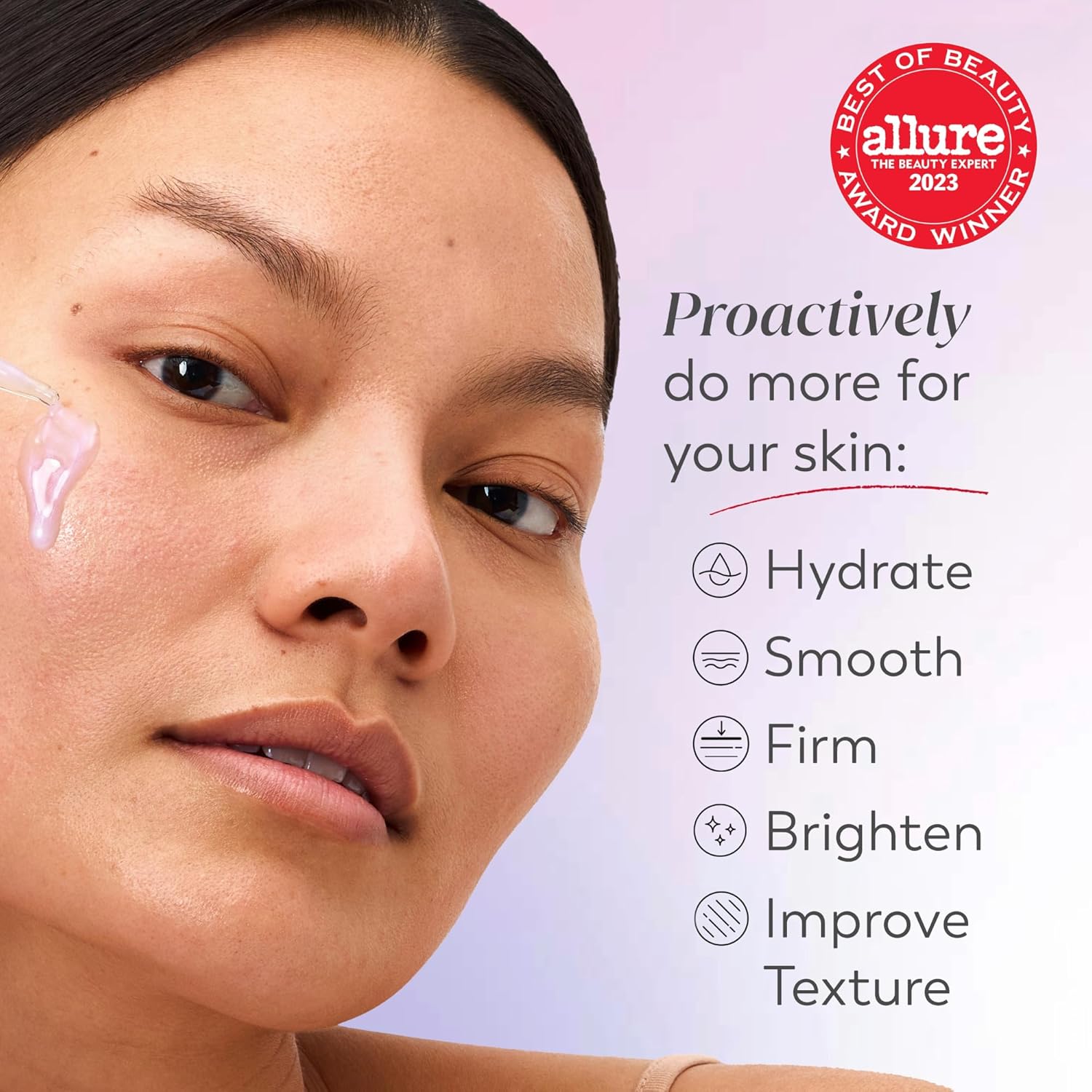
Olay Super Serum 5-in-1 Glow Serum — the hero pick in this roundup.
Quick Picks
Best Budget Peptide Pick — The Ordinary Matrixyl 10% + Hyaluronic Acid
At $10.90, this is the most cost-effective peptide serum in the category — and it earns that position on formula merit, not just price. Matrixyl 10% is a meaningful concentration for a product at this tier, and the hyaluronic acid base keeps application smooth without heaviness. The trade-off: no retinol, so it works best alongside a separate vitamin A step. Skip if you’re looking for a single serum to handle everything — this one is a support player, not a standalone.
Best High-Strength Retinol Under $10 — The Ordinary Retinol 1% in Squalane
$7.24 for 1% retinol in a squalane base is genuinely hard to argue with. The squalane carrier reduces the dryness and flaking that typically comes with high-strength retinol, making this more tolerable than its concentration suggests. It’s a PM-only formula. Skip if your skin is currently compromised, reactive, or new to retinol — 1% is not a beginner concentration, and this isn’t the place to start.
Best for Sensitive Skin — La Roche-Posay Pure Retinol Serum with Vitamin B3
La Roche-Posay built this around retinol plus niacinamide (vitamin B3), which is a smart pairing — the B3 helps offset the irritation retinol typically causes, particularly useful for skin that’s become more reactive in its 50s. Over 17,000 Amazon ratings at 4.6 stars is a signal worth taking seriously. The texture absorbs cleanly and doesn’t fight with moisturizer. Skip if your skin tolerates high-strength retinol without issue — there are more potent options at a similar price.
Best Multi-Active Blend — Olay Super Serum
Five actives in one formula sounds like marketing, but the combination here — niacinamide, vitamin C and E, collagen peptide, and AHA — is actually coherent for 50s skin that needs brightening and texture work simultaneously. Absorbs quickly, no strong scent. Skip if you prefer to layer targeted actives separately or have skin that reacts to AHA formulas.
Best Prestige Option — Kiehl’s Daily Micro-Dose Retinol Serum
The micro-dose delivery system and added ceramides make this the most barrier-conscious retinol on the list — relevant for 50s skin that’s more prone to over-stripping. At $65, it’s a deliberate purchase. Skip if budget matters at all; The Ordinary’s retinol does comparable work for a fraction of the price.
Product Reviews

Pros
- Niacinamide and vitamin C together visibly address dullness over consistent use
- Absorbs quickly with no sticky residue — slots into a morning routine without friction
- At drugstore pricing, the cost-per-ounce undercuts comparable multi-active serums significantly
Cons
- Contains fragrance, which limits suitability for reactive or rosacea-prone skin
- Five actives at moderate concentrations may underdeliver for targeted clinical concerns
- AHA inclusion means layering with a separate exfoliant risks over-exfoliation

Pros
- Effective at reducing wrinkles and sun damage
- Gentle enough for sensitive skin types
- Lightweight serum texture absorbs quickly
- Enriched with Vitamin B3 for added soothing
- High user satisfaction for visible glow and confidence
Cons
- Requires gradual introduction to prevent irritation
- Best used at night to avoid sun sensitivity
- Results may take weeks of consistent use
La Roche-Posay Pure Retinol Face Serum with Vitamin B3 is a targeted anti-aging serum ideal for those with sensitive skin seeking to combat fine lines, wrinkles, and sun damage. This lightweight formula combines pure retinol, a potent form of Vitamin A, with soothing Vitamin B3 to promote skin turnover while minimizing irritation, making it suitable for beginners.
Standout features include its ability to resurface and hydrate skin, delivering smoother texture and a radiant glow over time. Users report increased confidence from visible improvements in skin tone and firmness, especially when paired with the brand's complete routine of cleanser, moisturizer, and SPF.
The serum boasts a non-greasy, fast-absorbing texture that feels comfortable on all skin types. Its dermatologist-backed safety profile ensures broad appeal, though build quality emphasizes stability for nightly use.
Potential drawbacks include initial sensitivity requiring a slow start of one to two applications per week. Overall, this serum earns strong recommendation for effective, gentle anti-aging results.
Introduce retinol slowly: apply a pea-sized amount 1-2 times per week at night after cleansing, gradually increasing as tolerance builds. Follow with a moisturizer and always use broad-spectrum SPF during the day.
Integrate into the full routine: cleanse with Gentle Hydrating Cleanser, treat with this serum, moisturize with Double Repair, and protect with Anthelios Ultra SPF 60.

The Ordinary Retinol 1% in Squalane: High-Strength Anti-Aging Serum for Fine Lines & Smoother Skin
Pros
- Potent 1% retinol concentration delivers visible anti-aging benefits
- Oil-like texture blends seamlessly into PM skincare routines
- Free from alcohol, silicones, and gluten for broad compatibility
- Vegan formula appeals to ethical skincare enthusiasts
Cons
- May irritate sensitive skin, requiring patch tests and gradual use
- Increases sun sensitivity, mandating nighttime application and SPF
- Incompatible with direct acids, vitamin C, or other retinoids
The Ordinary Retinol 1% in Squalane is a high-strength, oil-like serum designed for advanced skincare users seeking to combat signs of aging like fine lines and uneven texture. It fits into the Treat stage of your evening routine, applied after water-based serums but before heavier creams, making it a powerhouse for those tolerant to potent retinoids.
Standout features include its 1% retinol concentration in a squalane base, which promotes smooth absorption without greasiness, while being water-free, alcohol-free, silicone-free, gluten-free, and vegan. Real-world performance targets aging concerns effectively for frequent or advanced users, outperforming lower-strength options like 0.2% or 0.5% retinol.
Build quality reflects The Ordinary's minimalist approach, with a straightforward dropper for precise dosing. However, its potency means it can irritate sensitive skin and heightens sun sensitivity, so patch testing and strict nighttime use with SPF are essential. Avoid pairing with acids, vitamin C, or other retinoids.
Overall, this serum earns high marks for dedicated anti-aging warriors ready to level up their routine, delivering smoother, more even skin with consistent use.
Choosing the right retinoid depends on your experience level. For first-time users, start with Retinol 0.2% in Squalane; occasional users suit Granactive Retinoid 2% or Retinol 0.5%; advanced users benefit from Retinol 1% in Squalane; experts should try Retinal 0.2% Emulsion, the strongest option.
All recommend nighttime use and SPF. This high-strength formula is water-free, alcohol-free, silicone-free (except where noted), vegan, and gluten-free, ensuring clean compatibility.

Pros
- Retinol delivery system meaningfully reduces flaking and redness during adjustment
- Absorbs without residue, sitting cleanly under moisturizer and SPF in a morning routine
- Fragrance-free formulation makes it a practical option for those who've been locked out of retinol serums before
Cons
- At roughly $1.30 per ml, it's expensive relative to comparable barrier-supportive retinol serums
- Retinol concentration is undisclosed — makes it difficult to benchmark potency against labeled competitors
- Experienced retinol users may find the gradual-release format too conservative for meaningful anti-aging progression

Pros
- Dual-peptide system is more mechanistically complex than single-peptide competitors at this tier
- Lightweight serum texture sits flat under SPF or moisturizer without pilling
- Among the most affordable entry points for a 10% Matrixyl concentration on the market
Cons
- Peptide actives require 8-12 weeks of consistent use before visible changes are realistic
- Hyaluronic acid content is secondary — not a substitute for a dedicated hydration serum
- Dropper packaging exposes formula to air with each use, raising oxidation concerns over time
The Ordinary Matrixyl 10% + HA — The Budget Peptide That Overdelivers
Peptide serums at this price usually apologize for themselves with weak concentrations or watery bases that feel like nothing. This one doesn’t. Matrixyl 10% is a high-dose peptide complex targeting collagen synthesis — the kind of ingredient you’d typically find in serums three times the price. The formula has a slightly gel-like consistency that absorbs within about 30 seconds, leaving skin smooth rather than tacky. No detectable scent, which matters if you’re layering it under other actives. Compared to standalone peptide serums in the $30-40 range, the functional difference is smaller than the price gap suggests. The Ordinary built its reputation on exactly this kind of formula — high-concentration actives, minimal filler, honest pricing. The limitation is scope: this addresses lines and firmness but doesn’t touch pigmentation or texture in the way a retinol or AHA would. Use it as part of a routine, not as the whole routine. Skip if you’re hoping one serum covers all your concerns.
The Ordinary Retinol 1% in Squalane
A 1% retinol concentration puts this at the high end of over-the-counter vitamin A — the kind of strength that produces visible results but also the kind that punishes skin that isn’t ready for it. The squalane base is the formula’s smartest decision: it slows absorption slightly, which reduces the acute irritation and peeling that straight retinol formulas cause, and it leaves a dry-oil finish that doesn’t interfere with moisturizer layering. Absorption is gradual rather than immediate — expect a 60-90 second window before it settles. The Ordinary has been refining its retinol lineup for years, and this particular formula sits at the more serious end of their range. At $7.24, it’s cheaper than almost every comparable retinol on the market. The catch: this is not a gentle introduction. Anyone starting retinol in their 50s should consider a lower concentration first — see the beginner retinol guide for a more graduated approach. Skip if your barrier is currently compromised or you haven’t used retinol before.
La Roche-Posay Pure Retinol Serum — Sensitive Skin’s Retinol
La Roche-Posay has spent decades formulating for reactive and post-procedure skin — that context matters here. The decision to pair retinol with vitamin B3 (niacinamide) isn’t cosmetic; niacinamide is well-documented for reducing the redness and irritation that retinol triggers, making this a more sustainable daily-use formula than most. The texture is lightweight and absorbs quickly — faster than the Kiehl’s option — without leaving a film. Faint, neutral scent. At $35.24, it sits between the budget The Ordinary picks and the Kiehl’s splurge, and for sensitive or reactive skin in its 50s, that middle ground is justified. Compared to The Ordinary Retinol 1%, the concentration here is lower, which is a feature rather than a flaw for anyone whose skin has become less tolerant with age. The trade-off is that results come more gradually. Skip if your skin already handles high-strength retinol without issue — you’re paying partly for the gentleness buffer you don’t need.
Kiehl’s Daily Micro-Dose Retinol Serum (If Price Isn’t the Deciding Factor)
At $65, this needs to justify the gap over the La Roche-Posay and The Ordinary options. Partly it does: the micro-dose encapsulated delivery is designed to release retinol gradually rather than all at once, and the added ceramides actively support barrier repair alongside the retinol — a combination that makes more sense for 50s skin than retinol alone. The formula absorbs at a medium pace, sits comfortably under moisturizer, and has no detectable fragrance. Skin feels smoother rather than tight after application. The honest comparison: this does more for barrier health than either Ordinary retinol, but the actual anti-aging results from retinol itself aren’t dramatically different from a well-formulated lower-cost option. You’re paying for delivery system refinement and ceramide support — real benefits, but incremental ones. Skip if budget is a factor; the La Roche-Posay at $35.24 does 80% of the same work for sensitive skin.
Olay Super Serum — Surprisingly Coherent for a Multi-Active
Multi-active serums are usually where brands stuff in trending ingredients and hope no one checks the concentrations. Olay’s version is more considered than that. Niacinamide handles tone and barrier; vitamin C and E address oxidative damage and brightening; collagen peptide supports firmness; AHA works on surface texture. For 50s skin dealing with all of these simultaneously, the argument for a single serum covering that ground is legitimate — especially at $35.60 for 1.7oz, which is a better volume-to-price ratio than most single-active serums at this tier. Absorption is fast, the finish is lightweight, and there’s no strong scent to complicate layering. The marketing leans harder than it needs to — “5-in-1” framing undersells what’s actually a solid multi-tasking formula. The trade-off: if you already have a targeted retinol routine dialed in, the AHA and niacinamide here create redundancy rather than value. Skip if you’re already using a dedicated exfoliant; doubling up on AHA without intention is a fast route to over-exfoliation.
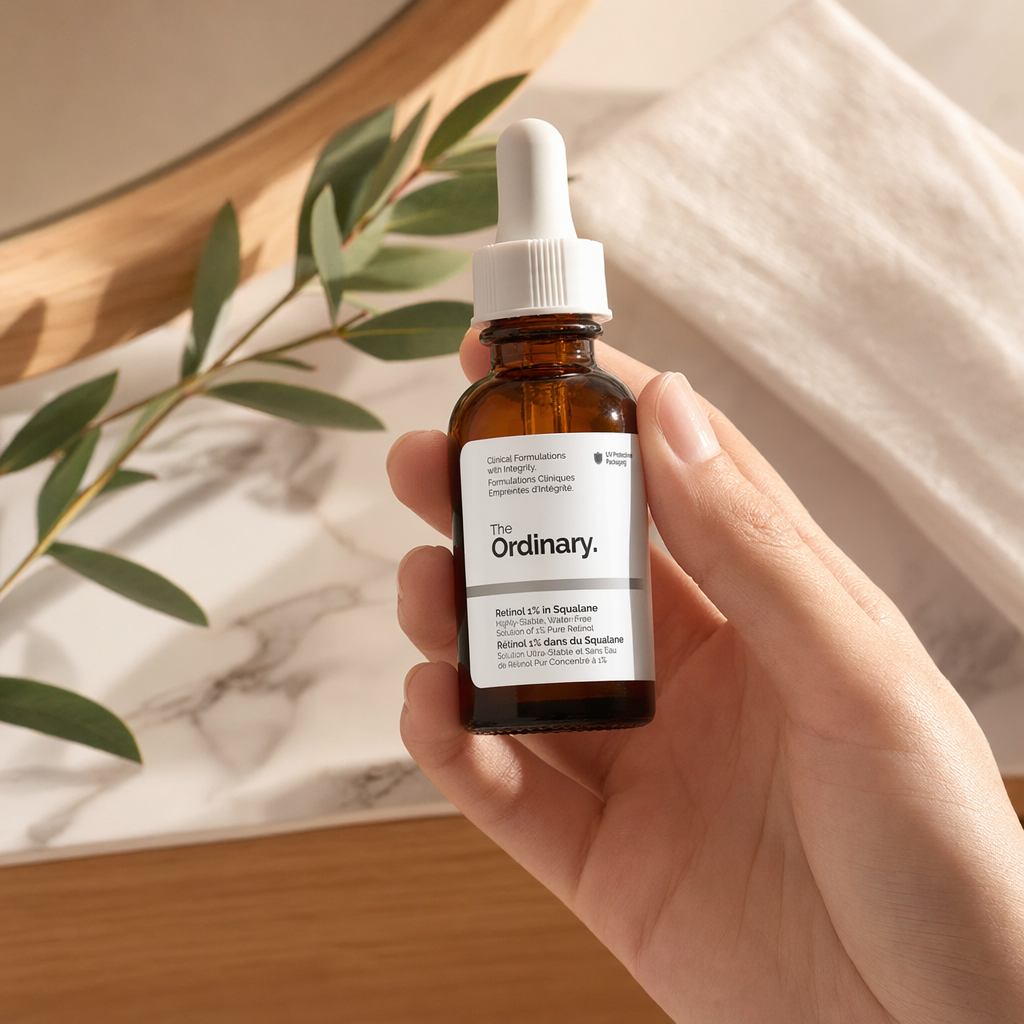
Daily application of The Ordinary Retinol 1% in Squalane: High-Strength Anti-Aging Serum for Fine Lines Smoother Skin — consistency beats concentration.
Side-by-Side Comparison
| Product | Best For | Key Active | Texture | Price Tier | Skip If |
|---|---|---|---|---|---|
| The Ordinary Matrixyl 10% + HA | Firmness, fine lines | Matrixyl peptide complex | Lightweight gel | $ | Need all-in-one coverage |
| The Ordinary Retinol 1% in Squalane | Experienced retinol users | Retinol 1% | Dry-oil finish | $ | Retinol beginners, reactive skin |
| La Roche-Posay Pure Retinol + B3 | Sensitive or reactive skin | Retinol + niacinamide | Lightweight fluid | $$ | High-strength retinol already tolerated |
| Kiehl’s Micro-Dose Retinol | Barrier-compromised skin | Encapsulated retinol + ceramides | Medium-weight serum | $$$ | Budget is a consideration |
| Olay Super Serum | Multi-concern, simplified routine | Niacinamide + vitamin C + AHA | Fast-absorbing fluid | $$ | Already using dedicated exfoliant |
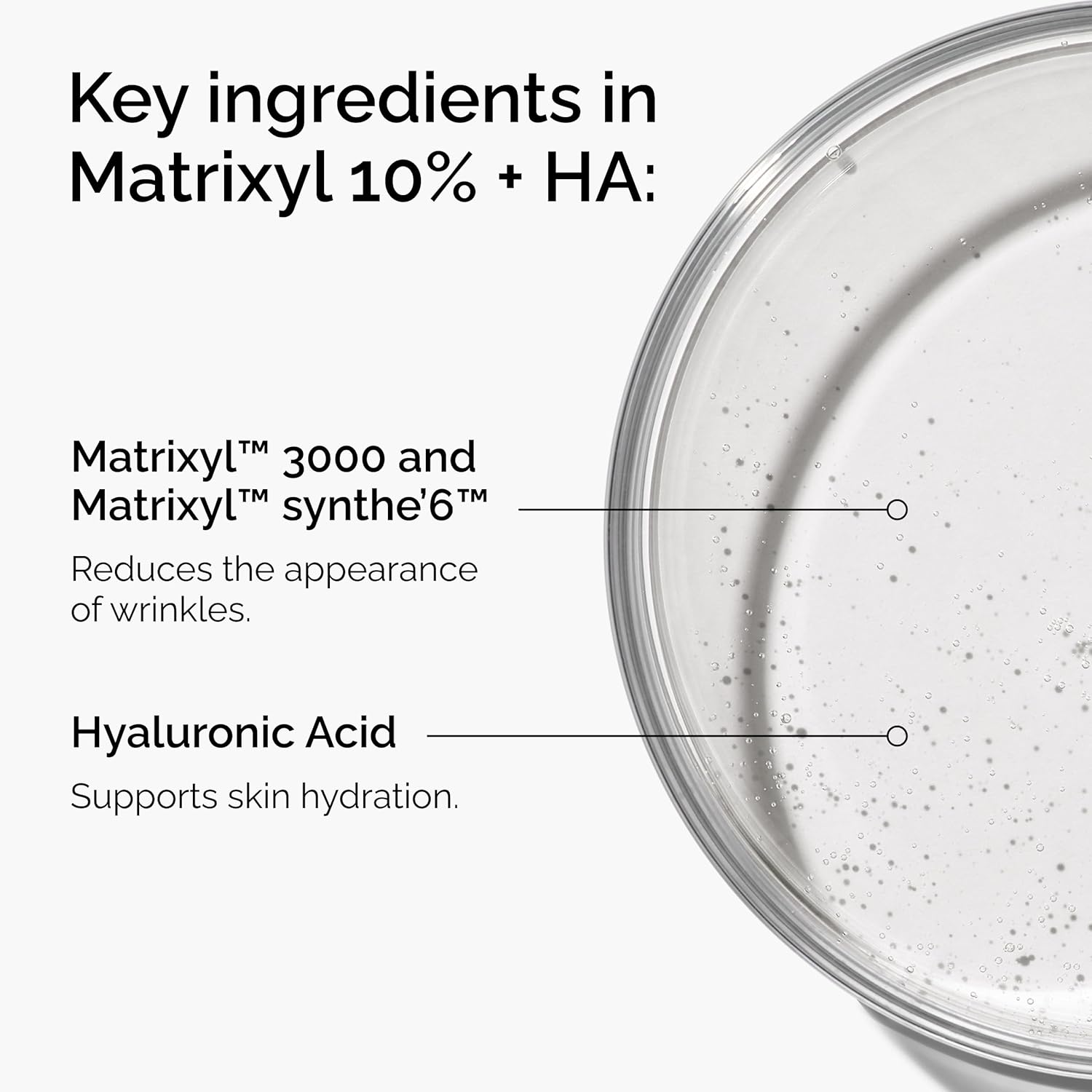
The Ordinary Matrixyl 10% + Hyaluronic Acid Serum — the budget-tier pick that holds its own.
What to Know Before You Buy
Retinol Concentration Isn’t a Bragging Right
Skin in its 50s often has a thinner, more reactive barrier than it did at 35 — which means jumping straight to 1% retinol is a reliable way to trigger peeling and redness that sets your routine back weeks. The Ordinary Retinol 1% in Squalane is a strong formula, but it’s not the right starting point for everyone. La Roche-Posay’s lower-concentration retinol with niacinamide exists specifically for this gap. Start lower, build tolerance, then reassess after 8-12 weeks. Consistent use of a moderate-strength retinol outperforms sporadic use of a high-strength one every time.
Peptides vs. Retinol: Not the Same Job
The Ordinary Matrixyl 10% and the retinol options on this list are not interchangeable — they work through different mechanisms. Retinol accelerates cell turnover and stimulates collagen production at a deeper level. Peptides signal collagen synthesis more gently, without the irritation risk. For 50s skin, the most effective approach is usually both: a peptide serum in the morning, retinol at night. Using the Matrixyl serum as a morning complement to an evening retinol routine is a better strategy than choosing one over the other.
Price Per Ounce: Where the Gap Actually Is
The Ordinary Retinol 1% at $7.24 is the most cost-efficient active on this list — by a significant margin. The Kiehl’s at $65 for a comparable volume is roughly 9x the price. The La Roche-Posay at $35.24/oz lands in a reasonable middle tier for what the formula delivers. The Olay Super Serum at $35.60 for 1.7oz is actually the best volume-to-price ratio in the mid-range. If you’re deciding between the LRP and Kiehl’s options, the formula difference doesn’t justify the price gap for most people — unless barrier support from ceramides is a specific priority.
Layering Logic for 50s Skin
Retinol and AHA in the same PM routine is a common over-exfoliation mistake. If you’re using the Olay Super Serum (which contains AHA), don’t add The Ordinary Retinol 1% on the same night. Alternate them instead: retinol 3-4 nights per week, the multi-active on the others. The Matrixyl peptide serum layers cleanly under any of the retinol options — apply it first, let it absorb fully, then follow with retinol. Kiehl’s micro-dose formula is designed for daily use and is less likely to cause layering conflicts than the higher-concentration Ordinary retinol.
When the Gentler Option Is the Smarter One
La Roche-Posay’s retinol serum is often dismissed as “weak” by people who equate concentration with efficacy. That’s a mistake. For skin that’s become more sensitive in its 50s — particularly around the eye area and jawline — a well-tolerated moderate-strength retinol used consistently will outperform a high-strength formula used sporadically because of irritation. The vitamin B3 addition actively reduces the inflammatory response retinol triggers. If your skin has been reactive to retinol in the past, this is the more intelligent choice, not the consolation prize.
Frequently Asked Questions
How often should I use retinol serum in my 50s?
Start with 2-3 nights per week and build from there. Skin in its 50s has a slower recovery rate, so daily use of high-strength retinol — especially The Ordinary’s 1% formula — often causes more disruption than benefit in the first 4-6 weeks. Once your skin has adjusted over 8-12 weeks, you can increase frequency. The La Roche-Posay option with niacinamide is formulated to be more tolerable at higher frequency for sensitive skin.
Can I use a peptide serum and retinol in the same routine?
Yes — they’re complementary, not competitive. Apply the peptide serum first (The Ordinary Matrixyl, for example), let it absorb for 30-60 seconds, then follow with retinol. Peptides don’t destabilize retinol, and the combination addresses collagen support from 2 different angles. This is one of the more effective pairings for 50s skin and doesn’t require separate AM/PM splitting.
Is The Ordinary Retinol 1% too strong for beginners?
For most people new to retinol, yes. At 1%, it’s at the upper end of what’s available without a prescription, and the squalane base — while helpful — doesn’t fully offset the adjustment period. If you haven’t used retinol before, start with a 0.1% or 0.3% concentration. The best anti-aging routine for beginners covers a more graduated approach worth reading before committing to a high-strength formula.
La Roche-Posay vs. Kiehl’s retinol: which is worth the price difference?
For most people, La Roche-Posay. The Kiehl’s micro-dose system and added ceramides offer real benefits for barrier-compromised skin, but the functional anti-aging outcome from retinol itself isn’t dramatically different between the 2. The $30 price gap is meaningful. The exception: if your skin is chronically reactive or you’ve had consistent barrier issues with other retinol formulas, Kiehl’s ceramide support makes the premium more justifiable.
Final Verdict
For most people navigating anti-aging in their 50s, La Roche-Posay Pure Retinol Serum is the top pick — the niacinamide pairing makes it genuinely more tolerable for skin that’s become reactive with age, and the 17,000+ ratings reflect real-world consistency. On a budget, The Ordinary Matrixyl 10% + HA is the strongest value on the list — high peptide concentration, clean formula, and it layers under anything. Skip the Kiehl’s unless barrier repair is a specific, documented issue for your skin; at $65, it does incremental work the La Roche-Posay handles for half the price. If you want the most potent retinol for the least money and your skin can handle it, The Ordinary Retinol 1% in Squalane is hard to beat.
Related Reading
- Best Anti-Aging Products for Mature Skin — broader look at what actually works across categories, not just serums.
- Best Retinol Creams for Beginners — start here if you haven’t committed to a retinol concentration yet.
- Best Collagen Creams for Wrinkles — worth reading alongside this if you’re building a full anti-aging routine.
- Best Anti-Aging Routine for Beginners — if the serum question is part of a larger routine overhaul.




Write Your Review
No reviews yet. Be the first to share your experience!