Fighting fine lines and stubborn discoloration at the same time is tricky, because the two concerns often call for different actives. Retinol softens wrinkles over months, while vitamin C and niacinamide fade dark spots and even out tone. The good news is that plenty of affordable serums now pair these ingredients in one bottle, so you don’t have to juggle a shelf full of products. We researched dozens of options and narrowed the field to five that balance results, texture, and price. If you’re also sorting out your morning routine, our guide to layering vitamin C and sunscreen pairs nicely with these picks. Here’s what earned a spot and who each one suits best.
Quick answer: The RoC Retinol Correxion serum is our top wrinkle-smoother, while the TruSkin Brightening Vitamin C serum wins for fading dark spots. For a dual-action option, the Neutrogena Rapid Tone Repair combines retinol and vitamin C in one bottle.

Pros
- Retinol paired with mineral complex for hydration
- Non-comedogenic, lightweight serum texture absorbs quickly
- Paraben-free formulation tested by dermatologists
Cons
- No specified retinol concentration listed in data
- Ascorbic acid role and percentage not detailed
Pros
- Retinol paired with mineral complex for hydration
- Non-comedogenic, lightweight serum texture absorbs quickly
- Paraben-free formulation tested by dermatologists
Cons
- No specified retinol concentration listed in data
- Ascorbic acid role and percentage not detailed
- Retinol works with RoC's proprietary mineral complex to support skin renewal while providing additional hydration, suited for users addressing deep wrinkles and uneven tone without excessive dryness.
- Non-greasy serum absorbs without residue, layer under moisturizer in evening routines and pair with broad-spectrum SPF during daytime to protect retinol-sensitized skin.
- Retinol: Supports skin cell turnover to help visibly reduce deep wrinkles and photodamage over time.
- RoC Mineral Complex: Proprietary blend enhances retinol efficacy while supporting moisture retention for improved skin comfort.
- Ascorbic Acid: Vitamin C derivative that may support brightening and antioxidant protection alongside retinol benefits.

Florence Vitamin C Serum with Hyaluronic Acid, Niacinamide & Vitamin E for Brightening
Pros
- Multi-weight hyaluronic acid provides layered moisture retention
- Niacinamide addition supports barrier function and brightness
- Lightweight texture absorbs quickly without residue
Cons
- No concentration disclosed for vitamin C or actives
- Limited review data to verify performance claims
Pros
- Multi-weight hyaluronic acid provides layered moisture retention
- Niacinamide addition supports barrier function and brightness
- Lightweight texture absorbs quickly without residue
Cons
- No concentration disclosed for vitamin C or actives
- Limited review data to verify performance claims
- Stable vitamin C works with low and medium molecular weight hyaluronic acid to help visibly brighten and plump skin while niacinamide supports barrier integrity, suitable for sensitive to oily skin types.
- Fast-absorbing serum texture leaves no oily residue, designed for morning and night application on face, neck, and eye contours before moisturizer or SPF.
- Vitamin C (stable form): Antioxidant that helps visibly brighten and support skin's natural firmness.
- Hyaluronic Acid (low and medium molecular weight): Binds moisture at different skin depths for plumping hydration.
- Niacinamide: Helps visibly improve skin tone evenness and supports barrier function.
- Vitamin E & Jojoba Oil: Antioxidant and emollient blend that helps condition and protect skin.

Pros
- Stable vitamin C form minimizes oxidation and irritation
- Hyaluronic acid adds hydration without heaviness or pilling
- Unscented formula works for reactive or sensitized skin
Cons
- Sodium ascorbyl phosphate converts slowly, results take longer
- No concentration listed for vitamin C or actives
Pros
- Stable vitamin C form minimizes oxidation and irritation
- Hyaluronic acid adds hydration without heaviness or pilling
- Unscented formula works for reactive or sensitized skin
Cons
- Sodium ascorbyl phosphate converts slowly, results take longer
- No concentration listed for vitamin C or actives
- Sodium ascorbyl phosphate provides antioxidant protection and helps visibly reduce dark spots and uneven tone without the stinging common to L-ascorbic acid serums, suited for normal to sensitive skin that reacts to traditional vitamin C.
- Lightweight serum texture absorbs quickly without residue, layers well under moisturizer and SPF in morning routines, and pairs effectively with niacinamide or peptides but should be separated from direct acids.
- Sodium Ascorbyl Phosphate: stable vitamin C derivative that supports collagen and helps visibly brighten uneven tone over time.
- Hyaluronic Acid: humectant that binds moisture to the skin surface, plumping and smoothing dehydrated texture.
- Vitamin E: lipid-soluble antioxidant that works synergistically with vitamin C to neutralize free radicals.
- Jojoba Oil: emollient that mimics skin sebum, supporting barrier function without clogging pores in lighter formulations.

Pros
- Combines multiple antioxidants for comprehensive daily care
- Fast-absorbing formula layers well under sunscreen
- Niacinamide helps support barrier while brightening
Cons
- No customer reviews available to verify performance
- Vitamin C form not specified in product data
Pros
- Combines multiple antioxidants for comprehensive daily care
- Fast-absorbing formula layers well under sunscreen
- Niacinamide helps support barrier while brightening
Cons
- No customer reviews available to verify performance
- Vitamin C form not specified in product data
- Vitamin C complex works with glutathione and niacinamide to help visibly improve dullness and refine texture, suited for those targeting uneven tone or tired-looking skin.
- Lightweight serum texture absorbs without residue, making it ideal for morning application under moisturizer and sunscreen or targeted evening use on specific areas needing extra care.
- Vitamin C Complex: Helps visibly refine skin texture and support a more even-looking tone over time.
- Glutathione: Antioxidant that works synergistically with vitamin C to help protect against environmental stressors.
- Niacinamide: Supports skin barrier function while helping to maintain smoothness and comfort during vitamin C use.
- Vitamin E: Lipid-soluble antioxidant that helps stabilize vitamin C and provides additional environmental protection.
How We Evaluated These Serums
We started by mapping each formula against the two goals shoppers care about most: visible line reduction and a fade in dark spots. That meant checking the active concentration, the supporting cast of hyaluronic acid or vitamin E, and whether the base felt light enough for daily wear. We leaned on published ingredient research, brand documentation, and thousands of verified buyer reviews rather than marketing claims alone.
Price mattered too, since a serum you’ll actually reuse beats a luxury bottle that sits unused. We favored formulas under $25 where possible, flagged any that ran heavy or sticky, and noted which ones play well with sensitive skin. Every pick here is widely available, has a track record with real users, and delivers on at least one of the two concerns without irritating claims we couldn’t verify.
RoC Retinol Correxion — Best For Deep Wrinkles
RoC’s Deep Wrinkle serum is the one dermatologists’ offices have quietly recommended for years, and it’s still hard to beat on value. The star is pure retinol, paired with ascorbic acid to brighten while it smooths. Users report softer forehead lines and crow’s feet after about eight to twelve weeks of nightly use, which tracks with how retinol actually works. The 1 oz bottle lasts months, so the cost per use is low. It can feel slightly drying at first, so start with two nights a week and buffer with moisturizer. If wrinkles are your main worry and you don’t mind a slow build, this is the safe bet.
Florence Vitamin C Serum — Best For Sensitive Skin
Florence keeps things gentle with a stable vitamin C blend, hyaluronic acid, and vitamin E, a trio that hydrates as it brightens. It’s a smart entry point if strong actives usually leave your face red or flaky. The texture sinks in fast without a tacky finish, so makeup goes on smoothly afterward. Reviewers with reactive skin like that it fades mild sun spots over several weeks without stinging. It won’t tackle deep wrinkles the way retinol does, and the antioxidant punch is moderate rather than clinical. Think of it as a daily maintenance serum: dependable, calming, and easy to slot into either your morning or evening lineup.
TruSkin Vitamin C Serum — Best For Dark Spots
TruSkin’s brightening serum is a cult favorite for a reason, racking up hundreds of thousands of positive reviews. It combines vitamin C with hyaluronic acid and botanical extracts, aimed squarely at uneven tone and post-acne marks. People consistently report a visible fade in dark spots and a brighter overall complexion within a month or two of morning use. The lightweight base won’t clog pores, though a few users find the herbal scent noticeable. Because vitamin C degrades in light, store it somewhere dark and don’t panic if the liquid turns amber over time. For discoloration on a budget, it’s the pick we’d reach for first.
ARENCIA Booster Shot — Best For Multitasking
ARENCIA packs the most active variety into one small bottle, layering vitamin C with glutathione, niacinamide, and vitamin E. That combination targets dark spots and fine lines together, which is why it earns the multitasker slot. Glutathione and niacinamide both help calm inflammation and interrupt excess melanin, so it’s a thoughtful choice if your discoloration is stubborn. The concentrated formula means a little goes a long way, and the texture stays light. It sits at a slightly higher price than the others, and results build gradually rather than overnight. If you’d rather run one serum than three, this booster shot covers a lot of ground in a single step.
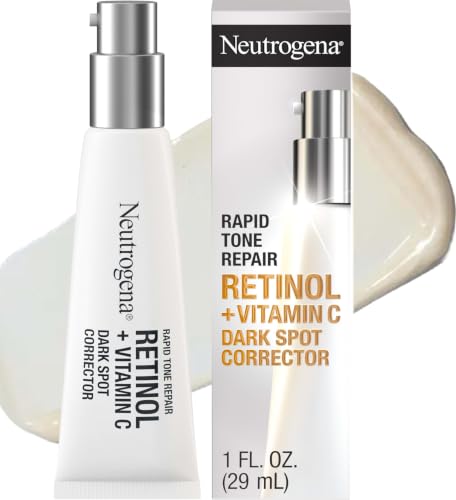
Neutrogena Rapid Tone Repair — Best For Dual Action
Neutrogena’s Rapid Tone Repair is the rare drugstore serum that puts retinol and vitamin C in the same bottle, so you’re smoothing lines and fading spots at once. It’s formulated with a stabilized retinol that’s gentler than prescription strength, making it approachable for beginners. Buyers note brighter skin within a few weeks and softer texture over a longer stretch. The lotion-like consistency spreads easily and layers well under a night cream. A word of caution: retinol raises sun sensitivity, so daily SPF is non-negotiable while you use it. For anyone who wants both concerns handled without buying two products, this one delivers real convenience.
How to Choose the Right Serum
Match the active to your top concern. If wrinkles bother you most, prioritize a retinol serum like RoC or Neutrogena, since retinol is the ingredient with the strongest track record for smoothing lines. If dark spots are the bigger issue, lead with a vitamin C formula like TruSkin. When you can’t decide, a combination bottle such as ARENCIA or Neutrogena lets you address both without doubling your steps. Being honest about your primary goal keeps you from overloading your skin with actives it doesn’t need, which is the fastest route to irritation.
Start slow and build tolerance. Potent ingredients reward patience. Begin retinol two or three nights a week and work up as your skin adjusts, using moisturizer to soften any dryness. Vitamin C is usually gentler, but if you’re new to it, try a small amount first on your jaw before going all in. Redness, peeling, or stinging are signs you’ve pushed too hard, so scale back rather than quitting entirely. Most people find a comfortable rhythm within a month, and that steady approach protects the barrier while the actives do their slow work.
Protect your progress with sunscreen. Retinol and vitamin C both leave skin more vulnerable to UV damage, and unprotected sun exposure will undo the tone improvements you’re chasing. Daily broad-spectrum SPF 30 or higher isn’t optional, it’s the step that makes every other product worth using. Sun is also the number one driver of new dark spots and premature wrinkles, so consistent protection compounds your results over time. Apply it every morning, even indoors near windows, and reapply if you’re outside. Think of sunscreen as the partner that locks in whatever your serum earns.
Frequently Asked Questions
Can I use retinol and vitamin C together?
You can, but timing helps. Many people use vitamin C in the morning for antioxidant protection and retinol at night for repair, which keeps both stable and reduces irritation. If you’d rather use them together, combination products like Neutrogena’s are formulated to play nicely. Introduce them one at a time so you know how your skin reacts, and always layer sunscreen over the vitamin C during the day. Going slow is the difference between glowing results and a flaky, red mess.
How long until I see results?
Patience pays off here. Dark spots from vitamin C typically start fading in four to eight weeks with daily use, while wrinkle improvement from retinol takes longer, often eight to twelve weeks or more. You’ll usually notice brighter, smoother skin before deeper lines shift. Consistency matters far more than strength, so don’t skip nights hoping for a shortcut. If you haven’t seen any change after three months of regular use, it’s worth reassessing the concentration or trying a different active.
Are these serums safe for sensitive skin?
Some are gentler than others. The Florence vitamin C serum is the mildest pick here, with hydrating hyaluronic acid and vitamin E to buffer irritation. Retinol serums like RoC can feel harsh at first, so sensitive types should ease in slowly and moisturize well. Whatever you choose, try a small amount first behind your ear or along your jaw for a couple of days. If you have a skin condition or use prescription treatments, check with a dermatologist before adding strong actives.
Do I need both a wrinkle and a dark spot serum?
Not necessarily. If you’re happy running two products, you can pair a dedicated retinol at night with a vitamin C in the morning for maximum coverage. But plenty of people prefer one combination serum, like ARENCIA or Neutrogena, that addresses both concerns in a single step. A simpler routine is easier to stick with, and consistency beats complexity every time. Start with one bottle, see how your skin responds, and only add a second if you feel a specific concern isn’t being covered.
When should I apply my serum?
Apply serum to clean, slightly damp skin before heavier creams, so it absorbs fully. Vitamin C works best in the morning under sunscreen, where its antioxidants help defend against daily damage. Retinol belongs at night, since it can break down in sunlight and increase sun sensitivity. Give each serum a minute to sink in before layering moisturizer on top. A pea-sized amount is plenty for your whole face, and using more won’t speed things up, it’ll just waste product and risk irritation.
Bottom Line
There’s no single winner for everyone, because the right serum depends on what’s bothering you most. For deep wrinkles, RoC’s retinol serum is the value champion, while TruSkin’s vitamin C formula is our go-to for fading dark spots on a budget. If your skin runs sensitive, Florence keeps things gentle, and ARENCIA’s booster shot layers the most actives into one bottle. When you’d rather not juggle products at all, Neutrogena’s dual-action serum handles both concerns in a single step. Whichever you pick, start slow, wear sunscreen daily, and give it a few months to work.