

TL;DR: Tranexamic acid (TXA) is a synthetic analogue of the amino acid lysine. Topically, it interrupts the inflammatory signaling that drives melanin overproduction — particularly effective for melasma, post-acne hyperpigmentation, and stubborn dark spots that don’t respond to vitamin C or hydroquinone. It does not bleach skin and is considered safe for all skin tones, including darker ones.
Tranexamic acid has been used in medicine since the 1960s — orally, to reduce bleeding (it inhibits the enzyme that breaks down blood clots). Its dermatology application is much newer. Asian markets adopted topical TXA around 2015–2017; Western brands followed in 2020–2022.

The hero pick.
What tranexamic acid actually is
Chemically, TXA is trans-4-(aminomethyl)cyclohexanecarboxylic acid — a small synthetic molecule. In medical use, it binds plasminogen and prevents fibrin breakdown, which stops bleeding. The dermatological mechanism is related but distinct: TXA inhibits the plasmin–plasminogen activation pathway in melanocytes, reducing the inflammatory cascade that drives melanin overproduction.
Simpler version: pigmentation often gets worse because inflammation triggers melanocytes to produce more melanin. TXA breaks that inflammatory loop at the source.
What it earns its place doing
Budget-tier option.
1. Melasma
This is TXA’s best-evidence indication. Melasma — patchy hyperpigmentation typically on the cheeks, forehead, and upper lip, often triggered by hormones — is notoriously resistant to standard brighteners. Hydroquinone works but has side effects. Vitamin C and niacinamide help slowly. TXA has shown the strongest published results for melasma reduction over 8–12 weeks at 2–5% topical strength.
2. Post-acne hyperpigmentation (PIH)
The dark marks left behind after acne breakouts. TXA paired with azelaic acid or niacinamide accelerates the fading process significantly.
3. Stubborn dark spots
Sun-driven spots or spots from inflammation that don’t respond to vitamin C alone often respond to TXA. The mechanism (anti-inflammatory + plasmin inhibition) is complementary to vitamin C’s antioxidant action.
What it does not do
- Does not bleach skin (no risk of going lighter than your natural tone).
- Does not exfoliate.
- Does not affect freckles meaningfully (freckles are genetic; TXA targets inflammation-driven pigment).
How to use it
Apply to clean dry skin, twice daily. Most products formulate at 2–5% TXA. Pairs cleanly with:
- Niacinamide (additive brightening)
- Vitamin C (different mechanism, complementary)
- Azelaic acid (same target, different angle)
- Retinoid (alternate evenings)
- Hyaluronic acid, peptides, ceramides
Expect visible results in 8–12 weeks. Melasma typically responds faster than PIH.
Side effects
Topical TXA at 2–5% has one of the cleanest tolerance profiles in skincare. Rare cases of mild irritation, usually from the formulation vehicle rather than TXA itself.
Oral TXA (prescription dose) has cardiovascular contraindications — but topical doses are too low to enter circulation meaningfully. There is no documented cardiovascular interaction with topical use.
Product picks at a glance

Naturium Tranexamic Topical Acid 5% Serum with Kojic Acid and Niacinamide for Uneven Skin Tone
Pros
- Multi-active formula addresses tone and texture together.
- Sensitive-skin-friendly with barrier-supporting niacinamide included.
- pH-appropriate, fragrance-free, and dermatologist tested.
Cons
- Patch test advised; mild redness possible at first use.
- No texture or finish details specified in product data.

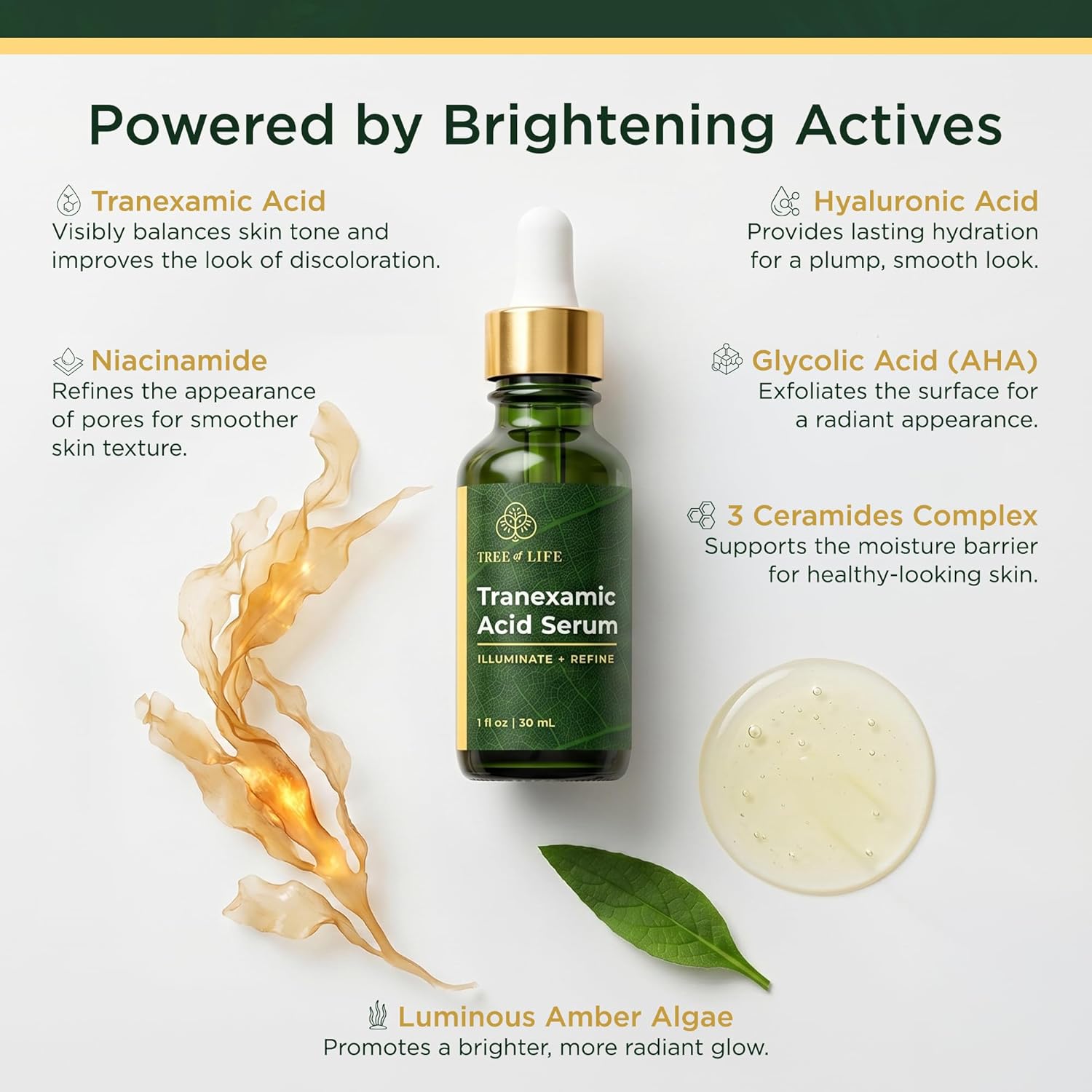
Tree of Life Tranexamic Acid Serum - Brightening Formula with Niacinamide for Dark Spots
Pros
- Pairs two well-studied brightening actives at named concentrations.
- Ceramide and hyaluronic acid cushion sensitive or maturing skin.
- Fast-absorbing, non-sticky texture layers under moisturizer and sunscreen.
Cons
- No clinical or consumer study data provided to support claims.
- Rainbow algae benefit not explained or quantified in product data.
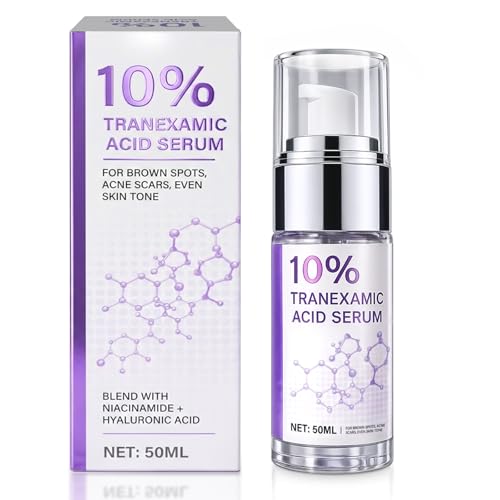
Pros
- Triple brightening actives address discoloration from multiple angles.
- Weightless, non-greasy finish suits all skin types.
- Hydrating base prevents the dryness typical of actives.
Cons
- No concentrations listed for any active ingredients.
- Zero verified reviews to support efficacy claims currently.
Pros
- Triple brightening actives address discoloration from multiple angles.
- Weightless, non-greasy finish suits all skin types.
- Hydrating base prevents the dryness typical of actives.
Cons
- No concentrations listed for any active ingredients.
- Zero verified reviews to support efficacy claims currently.
- Tranexamic acid paired with niacinamide and licorice root extract works to visibly reduce discoloration and refine texture, making it suitable for all skin types including sensitive.
- The fast-absorbing, non-greasy texture leaves no sticky residue and fits into both AM and PM routines, layering cleanly under moisturizer or makeup.
- Tranexamic Acid: Helps visibly reduce the appearance of discoloration and post-blemish marks.
- Niacinamide: Supports skin clarity, helps refine texture, and calms the complexion.
- Licorice Root Extract: Contributes to the brightening blend, helping enhance overall skin tone uniformity.

Pros
- Dual brighteners target discoloration with specific concentrations listed.
- Non-exfoliating formula safe for daily sensitive skin use.
- Barrier-supportive ingredients calm redness alongside brightening actives.
Cons
- No customer reviews available to validate real-world results.
- Single-concern formula may not address signs of aging.
Pros
- Dual brighteners target discoloration with specific concentrations listed.
- Non-exfoliating formula safe for daily sensitive skin use.
- Barrier-supportive ingredients calm redness alongside brightening actives.
Cons
- No customer reviews available to validate real-world results.
- Single-concern formula may not address signs of aging.
- Formulated with 3% Tranexamic Acid and 2% Alpha Arbutin, this serum targets dark spots and uneven tone without exfoliants, making it appropriate for sensitized or reactive skin types.
- The lightweight texture suits both AM and PM routines; avoid layering with strong exfoliating acids, as Tranexamic Acid already provides barrier support alongside its brightening function.
- Tranexamic Acid 3%: helps visibly reduce discoloration and supports the skin's natural barrier.
- Alpha Arbutin 2%: works to fade dark spots and even irregular skin tone.
- Lactobacillus Ferment: fortifies the skin barrier and may help reduce visible redness.
- Diacetyl Boldine & Licorice Complex: helps prevent new dark spots from forming for a brighter appearance.

Pros
- Nine actives cover multiple discoloration pathways at once.
- Fragrance-free gel-lotion absorbs quickly without heaviness.
- 98% of testers saw improvement in discoloration within 8 weeks.
Cons
- Retinol requires nightly use, not suitable for AM routines.
- No reviews yet to confirm long-term real-world results.
Pros
- Nine actives cover multiple discoloration pathways at once.
- Fragrance-free gel-lotion absorbs quickly without heaviness.
- 98% of testers saw improvement in discoloration within 8 weeks.
Cons
- Retinol requires nightly use, not suitable for AM routines.
- No reviews yet to confirm long-term real-world results.
- Encapsulated retinol and mandelic acid work to help visibly fade existing spots, while 3% tranexamic acid and 1% kojic acid help prevent new discoloration, making this suitable for sensitive and spot-prone skin types.
- The lightweight gel-lotion texture absorbs quickly with no residue; use nightly after cleansing and before moisturizing, and avoid layering with other retinol or AHA products to prevent irritation.
- Encapsulated Retinol (0.1%): Helps visibly fade existing dark spots with reduced irritation potential.
- Kojic Acid (1%): Supports more even skin tone by targeting the appearance of new discoloration.
- Tranexamic Acid (3%): Helps prevent new dark spots from forming at the surface level.
- Niacinamide (5%): Supports skin barrier function and helps visibly improve uneven tone.
Frequently asked questions
Tranexamic acid vs hydroquinone — which is safer?
TXA, by a wide margin. Hydroquinone is effective but has documented side effects (ochronosis — permanent skin darkening if overused) and is banned in many markets. TXA has no equivalent serious risk profile.
Can I use TXA with retinoid?
Yes. Alternate evenings or layer same evening (TXA first, retinoid 15 minutes later). The combination is one of the strongest published protocols for melasma.
Is TXA safe for darker skin tones?
Yes. It does not bleach and does not carry the PIH risk of more aggressive brighteners. Increasingly recommended specifically for melasma and PIH in darker skin.
Pregnancy-safe?
Most dermatologists treat topical TXA as low-concern during pregnancy, but the standard advice applies: consult your obstetrician. Oral TXA is contraindicated during pregnancy.




Write Your Review
No reviews yet. Be the first to share your experience!