Breakouts at 50 don’t behave like breakouts at 15. They sit lower on the face, along the jaw and chin and sometimes down the neck, and they arrive as deep tender lumps rather than a scatter of whiteheads. There are fewer of them. They hurt more, and the brown mark left behind hangs around for months.
Most acne products are built for oily teenage skin. That’s why so much of it fails here. Our editors compared full ingredient lists, cross-referenced the research on adult hormonal acne, and read aggregated verified-buyer feedback for repeated patterns rather than one-off raves. Our guide to best skincare for acne covers the wider category. The five below earned their spots.
Quick answer: The Ordinary Azelaic Acid Suspension 10% suits most people. Anua’s serum is better on dry, tight skin, Good Molecules is the lightest daily leave-on, and the Marianp and RE:CIPE creams combine moisturizer and active in one step.

Pros
- 10% azelaic acid visibly addresses uneven texture.
- Gentle enough for rosacea-prone skin daily.
- Compatible with morning and evening routines.
Cons
- Suspension texture can feel heavy on oily skin.
- Ingredient list beyond azelaic acid not specified.
Pros
- 10% azelaic acid targets redness and post-acne marks.
- pH 4.5 formula supports sensitive and rosacea-prone skin.
- Quick-absorbing texture works over other actives seamlessly.
Cons
- No additional brightening actives listed beyond azelaic acid.
- Small 30ml size may not suit long-term daily use.

Pros
- 10% azelaic acid concentration at accessible price point
- Watery texture layers easily under other products
- Naturally derived green tint helps neutralize visible redness
Cons
- Zero reviews make real-world performance difficult to verify
- Requires gradual introduction, limiting immediate routine integration

Pros
- Stable 10% azelaic acid concentration for multiple concerns
- Gentle, non-irritating formula suitable for sensitive skin
- Addresses acne, redness, and pigmentation simultaneously
Cons
- No customer reviews available to verify performance claims
- Ingredient list beyond azelaic acid not specified
Pros
- Stable 10% azelaic acid concentration for multiple concerns
- Gentle, non-irritating formula suitable for sensitive skin
- Addresses acne, redness, and pigmentation simultaneously
Cons
- No customer reviews available to verify performance claims
- Ingredient list beyond azelaic acid not specified
- The 10% azelaic acid concentration helps unclog pores, supports sebum regulation, and may visibly reduce the appearance of post-acne marks on normal to oily skin types.
- Gel-cream texture absorbs without heavy residue, suitable for AM or PM use, and pairs well with hydrating serums on dry or sensitive skin.
- Azelaic Acid 10%: helps visibly reduce acne, supports pore clarity, and may improve the appearance of pigmentation and redness.

How We Evaluated These Treatments
The hardest call was whether to publish a list where all five finalists carry the same active at the same strength. That looks like a shortlist failure. It isn’t. Azelaic acid at 10% is the best-matched molecule for this presentation, and once the real filters went on, everything else fell away. Benzoyl peroxide at teenage strength was out. Strong glycolic and salicylic leave-ons were out. What survived was one ingredient, so the honest job became sorting five versions of it rather than manufacturing variety we don’t believe in.
So the screening was about the vehicle, not the active. We compared ingredient decks for humectant support, fragrance, and film-formers that pill under makeup, and weighed how each sits on skin that’s thinning and slower to repair its barrier. Buyer feedback got read for repeated complaints about grittiness, tackiness, and stinging. We looked at cost per use, since you’ll apply this nightly for months, and required everything in stock and honestly labeled at its stated strength.
The Ordinary Azelaic Acid Suspension 10% — Best overall
This is the version dermatologists end up naming, and the reason is boring: a straightforward 10% azelaic acid in a silicone suspension with nothing competing for attention. That silicone matrix is also the most divisive thing about it. The texture goes on thick and faintly gritty, then dries to a matte, powdery finish that some love under makeup and others find suffocating. It’s fragrance-free. For calming a sore jawline nodule and fading the mark afterward, it’s the one we’d put money on. The catch is pilling. Layer it over a rich cream without waiting and it rolls off in grey balls.
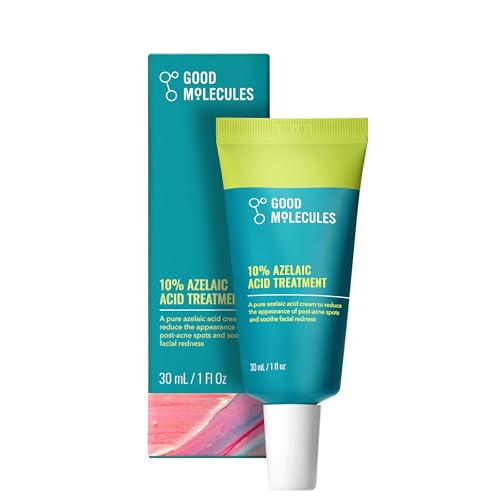
Good Molecules 10% Azelaic Acid Treatment — Best lightweight daily leave-on
Where The Ordinary goes matte and heavy, this one goes thin. It’s a more fluid take on the same 10% that sinks in fast and leaves no dusty film, so it’s the easier choice if you wear foundation daily or your routine already has a moisturizer and sunscreen fighting for space. It’s also more forgiving for a first attempt at azelaic acid, since the thinner vehicle spreads further and you’re less likely to overapply. The tradeoff is that it feels like less is happening. No grip, no film, and people who equate sensation with efficacy quit at week three. Give it eight.
Anua Azelaic Acid 10 Hyaluron Redness Soothing Serum — Best for dry, tight skin
The hyaluronic acid in the name is the actual argument here. Menopausal skin is the odd case where you’re treating oil in individual follicles while the rest of the face is dry, so pairing the azelaic acid with humectants solves both halves at once. It’s a proper serum texture, slippier than the suspension format, and the version we’d hand to someone who tried The Ordinary, found it tight and flaky, and wrote the ingredient off. Redness relief is where readers notice it first. The slip means it can feel tacky if you overapply, and it needs a minute before sunscreen.
Marianp Azelaic Acid 10% Cream — Best moisturizer-and-active in one
Cream vehicles change how azelaic acid behaves. This one carries the same 10% in an emollient base, so it’s your night moisturizer and your treatment at once, which matters when skin is thinner than it was and won’t tolerate a four-step routine. It’s positioned for rosacea as much as acne, which is apt, because flushing plus breakouts is common in this age group. Richer, slower to absorb, no powdery finish. If you’re oily beyond the T-zone it’ll feel heavy, and it’s not one for under makeup. Night use on dry-leaning skin is where it earns its place.
RE:CIPE Azelaic Acid 10% Soothing Cream — Best gentle alternative
RE:CIPE and Marianp are genuinely close. Both put 10% azelaic acid in a cushioned cream aimed at reactive skin, and side by side the difference is finish more than function. We’d buy the Marianp first, because the emollient load is higher and it does more of the moisturizing work alone. Treat RE:CIPE as the fallback: pick it if you want something lighter than a night cream, or if the Marianp is out of stock. Its own argument is comfort, a reasonable landing spot for anyone who’s worked through best acne treatment for sensitive skin without finding a fit.
What to Look For in a Menopausal Acne Treatment
Understand what actually changed. Oestrogen falls while androgens hold relatively steady, so the ratio between them shifts and your sebaceous glands respond to that relative androgen dominance. Barrier repair slows at the same time, total sebum output drops, and the skin thins. That’s the collision: oily in specific follicles, globally dry. It’s why benzoyl peroxide at leave-on teenage strength wrecks this skin, and why azelaic acid fits. It’s anti-inflammatory, anticomedogenic, and it works on leftover pigment, while staying tolerable on thin skin.
Know the short list of other actives worth having. A retinoid does double duty, since adapalene addresses comedogenesis and collagen at once. Niacinamide at 4-5% supports the barrier and moderates sebum without stripping. If you want benzoyl peroxide at all, use it at low strength as a short-contact wash you rinse off, not something you leave on overnight. Skip alcohol astringents, physical scrubs, and the urge to stack three actives in one evening. Slower is faster here.
Sunscreen decides how your skin looks in a year. Post-inflammatory hyperpigmentation lingers longer on mature skin, and every unprotected day sets those marks deeper, so daily broad-spectrum SPF does more for the final result than any brightener on top. Separately, and this is a clinician conversation rather than a shopping one: spironolactone and hormonal options are the standard medical route for hormonally driven adult acne. If topicals aren’t holding, that’s the discussion to book.
Frequently Asked Questions
Why does menopausal acne show up on my jaw and not my nose?
Because the trigger is hormonal rather than surface oil. Follicles along the jaw, chin, and neck are more responsive to androgens, so when the androgen-to-oestrogen ratio shifts they’re the ones that react. T-zone acne fits adolescent sebum patterns better. Jawline distribution is one of the clearest signals it’s hormonally driven.
How long before azelaic acid does anything?
Give it eight to twelve weeks. Redness and inflammation usually settle first, sometimes inside a month. The pigment left by old spots takes longer, since you’re waiting on turnover, and turnover slows with age. Most people who say azelaic acid didn’t work for them stopped around week four.
Can I use azelaic acid and a retinoid together?
Yes, though not on the same night while you’re starting out. Alternate them, azelaic acid one evening and the retinoid the next, until you know how your barrier handles each. After a few weeks, layering is fine for many people. If you’re flaking or stinging, drop the retinoid to twice weekly rather than abandoning either one.
Is my skin oily or dry? It feels like both.
Both, and that’s normal for this stage. Total sebum output declines while individual follicles keep overproducing under androgen influence, so you get deep breakouts on skin that’s tight and dull. Don’t treat it as oily skin. Match the vehicle to the dry part and let the azelaic acid handle the follicles.
Should I ask my doctor about hormonal treatment?
If topicals plus sunscreen aren’t holding after three or four months, that’s a reasonable time to raise it. Spironolactone and hormonal therapies are well established for hormonally driven adult acne, and a dermatologist or GP can weigh them against your history. That decision needs a clinician who knows your health background, not a product guide.
Bottom Line
Five products, one active, and we’d rather say that plainly than pad the list. The Ordinary Azelaic Acid Suspension 10% is where most people should start, if you accept the matte finish and give it room before layering. Anua’s serum is the pick if your skin reads dry and tight, and Good Molecules suits anyone wanting a thin daily leave-on that disappears under makeup. Marianp is right if you’d rather moisturizer and treatment be the same jar, with RE:CIPE as the gentler fallback. Add sunscreen, be patient for eight weeks, and see a clinician if the nodules keep coming.