Timing beats formulation on this one, and it’s the part nobody mentions on the bottle. A humectant-and-occlusive lotion applied within about three minutes of stepping out of the shower holds far more water in skin than the same lotion rubbed onto dry legs three hours later. On older skin that gap is wider than the gap between any two products here.
Which reframes the shopping problem. Our editors compared full ingredient lists, cross-referenced what the research supports for barrier repair and surface scale, and weighed aggregated verified-buyer feedback across seasons rather than single reviews. The five below earned their spots. If you want the richer, slower option, best body oil for dry skin covers that route instead.
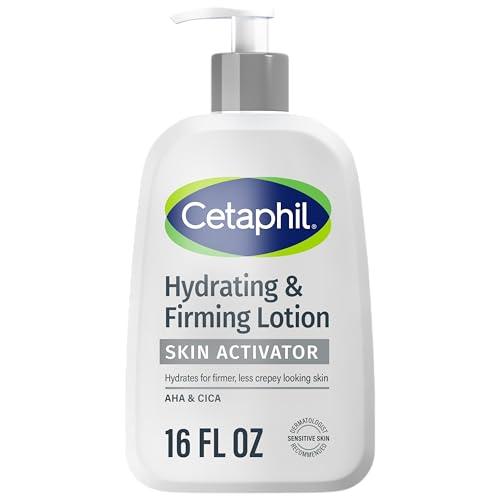
Quick answer: Cetaphil Skin Activator is the best all-round pick, pairing an AHA for surface scale with a soothing base. CeraVe is the everyday barrier choice, Medix 5.5 is the retinol option for crepey arms, Gold Bond targets the same texture more gently, and Olay is the lightest daily finish.
Pros
- Mandelic acid is gentler than glycolic for aging skin
- CICA supports barrier repair and calms surface irritation
- Lightweight texture absorbs quickly without greasy residue
Cons
- No reviews available to confirm real-world firming results
- May require consistent use beyond four weeks for results
Pros
- Mandelic acid is gentler than glycolic for aging skin
- CICA supports barrier repair and calms surface irritation
- Lightweight texture absorbs quickly without greasy residue
Cons
- No reviews available to confirm real-world firming results
- May require consistent use beyond four weeks for results
- Mandelic acid, an AHA with a larger molecular size than glycolic acid, works on surface skin cell turnover without the harsh irritation common in aging, thinning skin prone to sensitivity and barrier compromise.
- Lightweight lotion texture absorbs within seconds, suitable for AM or PM application, and layers well under sunscreen or can be paired with retinol treatments on the body at night.
- Mandelic Acid (AHA): Supports surface exfoliation to help improve the appearance of crepey texture and uneven tone.
- Centella Asiatica (CICA): Helps support skin barrier function and may calm surface inflammation during exfoliation.
- Skin Activator Technology: Proprietary delivery system designed to push actives into surface skin layers for sustained turnover effects.

Gold Bond Age Renew Crepe Corrector Body Lotion with Antioxidants and Omega Fatty Acids
Pros
- Lightweight texture absorbs fast without leaving film
- Fragrance-free formulation suits sensitive and mature skin
- Dermatologist-tested with 24-hour moisture retention claim
Cons
- No ingredient percentages disclosed for key actives
- Limited review data to verify long-term efficacy
Pros
- Lightweight texture absorbs fast without leaving film
- Fragrance-free formulation suits sensitive and mature skin
- Dermatologist-tested with 24-hour moisture retention claim
Cons
- No ingredient percentages disclosed for key actives
- Limited review data to verify long-term efficacy
- Antioxidants and omega fatty acids work to support skin barrier function and help diminish visible signs of crepey texture on dry, aging skin.
- Lightweight, non-greasy lotion absorbs quickly for daily AM or PM use, pairs well with SPF in morning routines or heavier creams at night.
- Antioxidants: Help protect skin from environmental stressors that contribute to visible aging signs.
- Omega Fatty Acids: Support skin barrier repair and help improve moisture retention in mature skin.
- Botanicals: Plant-derived compounds work to soothe and support skin smoothness over time.

Pros
- Niacinamide and collagen peptides address visible firmness.
- Fast-absorbing, weightless texture suits daily use.
- Formulated for all skin types, AM or PM.
Cons
- Added fragrance may not suit sensitive skin types.
- Firming results require consistent 4-week use.
Pros
- Niacinamide and collagen peptides address visible firmness.
- Fast-absorbing, weightless texture suits daily use.
- Formulated for all skin types, AM or PM.
Cons
- Added fragrance may not suit sensitive skin types.
- Firming results require consistent 4-week use.
- Collagen peptides paired with niacinamide and lipids work across all skin types to visibly support firmness and help restore the skin barrier over time.
- The fast-absorbing, non-greasy lotion suits AM or PM use and pairs well with Olay's serum body wash for a layered routine.
- Collagen Peptides: Support the appearance of firmer, more resilient skin with regular use.
- Niacinamide (Vitamin B3 Complex): Helps visibly improve skin texture and supports barrier function.
- Lipids: Replenish the skin barrier, supporting 24-hour moisture retention.

Pros
- Hyaluronic acid and MVE provide 24-hour hydration
- Non-comedogenic and suitable for sensitive, eczema-prone skin
- Works as face, body, and hand lotion
Cons
- No concentration percentages disclosed for key actives
- Large pump bottle less travel-friendly than tubes
Pros
- Hyaluronic acid and MVE provide 24-hour hydration
- Non-comedogenic and suitable for sensitive, eczema-prone skin
- Works as face, body, and hand lotion
Cons
- No concentration percentages disclosed for key actives
- Large pump bottle less travel-friendly than tubes
- Hyaluronic acid helps retain moisture while ceramides 1, 3, and 6-II support barrier function, making this suitable for dry, sensitive, and eczema-prone skin types year-round.
- The lightweight lotion absorbs without greasy finish, layers well under sunscreen in AM routines or over actives at night, and pairs with most ingredients without pilling.
- Hyaluronic Acid: Humectant that helps skin retain moisture and supports plump, hydrated appearance.
- Ceramides 1, 3, 6-II: Lipids that help restore skin barrier and reduce transepidermal water loss.
- MVE Technology: Encapsulation system that releases moisturizing ingredients gradually over 24 hours for sustained hydration.

Pros
- Retinol in a body lotion format is genuinely harder to find at this size and price tier
- Texture works well under clothing without pilling or residue
- Fits into a multi-step Medix routine if you want a coordinated body-care system
Cons
- Retinol concentration is undisclosed, so results will be gradual and modest compared to prescription-strength options
- Not formulated for the face, and the product description pulls focus toward a wider product ecosystem rather than this lotion specifically
How We Evaluated These Body Lotions
Application timing decided the shortlist before any ingredient did. Water in the stratum corneum is what makes skin feel supple, and a lotion’s job is to hold onto some of what the shower just put there, which means the products that matter are the ones you’ll reach for while you’re still damp. That ruled against anything too thick to spread on wet skin and anything so slow to absorb you’d get dressed over it and stop bothering by week two. Texture is a compliance issue, and compliance is most of the outcome.
After that we sorted by which of three jobs each formula does. Scale and rough patches on shins and forearms respond to urea, lactic acid or glycolic acid, because slowed desquamation is what builds them up. Barrier repair needs the lipids skin stops making: ceramides, cholesterol, fatty acids. And overnight water loss needs a genuine occlusive on top. Products got credit for doing one of those honestly and lost it for implying all three plus firming. We also weighted repeated buyer patterns over one-off complaints about scent or pump failures.
Cetaphil Skin Activator Firming Body Lotion — Best overall
An AHA in a body lotion is the smart choice for older skin and it’s still uncommon, which is what puts this first. Desquamation slows with age, so dead cells linger and shins go grey and rough; an alpha hydroxy acid dissolves the bonds holding them there while the CICA component keeps the acid from stinging. That’s two jobs handled in one step, and Cetaphil has decades of formulating for easily annoyed skin behind it. The “firming” claim is the weak part. You’ll get smoother, better-hydrated skin, not tightened skin.
CeraVe Daily Moisturizing Lotion — Best everyday barrier repair
Three ceramides plus hyaluronic acid, and nothing trying to be clever. This is the lotion to use daily and body-wide, because it replaces the specific lipids ageing skin stops producing rather than just coating the surface with something slippery. The lightweight texture spreads on damp skin easily, which matters more than any claim on the bottle, and the fragrance-free formula suits skin that’s turned itchy and reactive over the last decade. It won’t touch rough scale on shins or heels. Pair it with something exfoliating for those areas.
Medix 5.5 Retinol Body Lotion — Best for crepey arms
Retinol on the body is a real intervention rather than a marketing borrow, and this is the strongest option here for the loose, finely wrinkled texture on upper arms and above the knees. The mechanism is the same as on the face: turnover speeds up, collagen synthesis gets a nudge, and the surface reads tighter over three to four months. Two caveats worth respecting. Start twice weekly, because body skin flakes and itches during adaptation just like facial skin does, and use it at night since retinol degrades in sunlight.
Gold Bond Age Renew Crepe Corrector — Gentlest crepey-skin option
Gold Bond built this around a heavy, cushioned base and it’s the pick for anyone who wants to address crepey texture without a retinoid. What it delivers well is immediate plumping: the occlusive layer holds water in the surface, and finely creped skin genuinely looks better hydrated because the creping is partly a dehydration artefact. Honest about the limit, though. Crepey skin on upper arms is elastin damage from decades of sun, and improving how it looks is not the same as reversing it. The thickness also makes it slow to absorb.
Olay Body Lotion with Collagen Peptides — Lightest daily finish
The lightest formula on the list and the easiest to use in summer or under clothes you’re about to put on, which is worth something real. Peptides have modest but genuine data for signalling collagen production, and putting them in a body lotion is a reasonable idea even if the concentrations in this format are unlikely to match a facial serum. Buy it for the texture and the 24-hour moisture claim, both of which hold up. The collagen in the name is a peptide fragment, not something joining your own collagen, so read that part sceptically.
What to Look For in a Body Lotion for Mature Skin
Match the ingredient to the actual complaint. Rough, scaly shins want urea between 5% and 10%, or lactic acid. Itchy, thin, reactive skin wants ceramides and no fragrance. Crepey texture wants retinol if you’ll commit for months, or an occlusive if you want the appearance improved tonight. Buying a lotion that names all four is usually buying token amounts of each.
Read the finish, not the firming claim. No body lotion tightens tissue. What the good ones do is hold water in the outer layer so skin looks fuller and lines read shallower, and that effect is real, immediate and gone by tomorrow if you skip a day. Firming language survives because the temporary version is convincing in a mirror.
Apply it damp, and treat winter as a different season. Towel off lightly and go straight to lotion, since you’re sealing water that’s already there rather than adding it. Cold air and indoor heating both accelerate overnight water loss, so a richer occlusive from November and a lighter one in summer is a sensible two-product habit. best luxury moisturizer for mature skin covers the facial equivalent.
Frequently Asked Questions
Why is my skin itchier now than it was at forty?
Sebaceous output on the limbs falls with age, the barrier thins, and both leave skin losing water faster and more exposed to irritants. Hot showers and soap-based washes make it markedly worse. The usual fix is a shorter, cooler shower, a non-soap cleanser, and a ceramide lotion applied while damp. If itching persists without dryness, that’s worth a doctor’s opinion.
Can a body lotion do anything about crepey upper arms?
It can improve how they look, mostly through hydration and a smoother surface, and a retinol version can genuinely refine texture over three to four months. What it can’t do is rebuild the elastin that UV exposure degraded over decades. Sun protection on arms and chest prevents the next stage, which is the higher-value intervention.
Is urea or lactic acid better for rough shins?
Urea at 5% to 10% is the more reliable choice, because it both humectant-binds water and breaks down the protein bonds holding dead cells together, so it handles scale and dryness at once. Lactic acid is a good second option and often feels more comfortable. Above 10%, urea becomes properly keratolytic and suits heels rather than shins.
Should I use body lotion on my neck and chest?
The chest, yes, and many people should. Décolletage skin sits between facial and body thickness and takes heavy sun exposure, so it shows crepiness early. Use your facial products up to the collarbone if they’re rich enough, or a body lotion with retinol on the chest at night. The neck is thin enough that a facial formulation is the safer choice.
How long before a new lotion makes a difference?
Comfort and softness within days. Rough scale on shins takes two to three weeks with an acid or urea. Retinol texture change on arms takes three to four months, and stopping early is why most people conclude it didn’t work. Consistency matters far more than which of these five you pick.
Bottom Line
Cetaphil Skin Activator is the one to buy if you want a single lotion doing two useful jobs, since the AHA handles the scale that plain moisturisers leave behind. CeraVe is the everyday barrier workhorse, Medix 5.5 is the real intervention for crepey arms if you’ll stay with it, Gold Bond is the gentler route to a similar look, and Olay is the lightest option for daily use. Apply within three minutes of your shower, go richer in winter, and put sunscreen on your arms and chest.