Acne-prone skin needs a moisturizer that won’t block pores, trigger breakouts, or strip the barrier down to nothing. Most people with acne skip moisturizer entirely, which backfires: a compromised barrier produces more sebum as compensation and makes active ingredients like benzoyl peroxide harsher to tolerate. The right face cream doesn’t just avoid making acne worse; it actively supports clearer skin by keeping the barrier intact and delivering ingredients that address the root causes.
We’ve combed through formulations, ingredient labels, and verified-buyer feedback from people managing persistent acne to narrow this list down to five face creams that earn their place in a real acne routine. If your main concern is daily hydration alongside breakout control, our best moisturizer for acne-prone skin guide covers that angle in depth. These five picks are evaluated specifically on acne-fighting credentials.
Quick answer: Cetaphil Gentle Clear Mattifying Acne Moisturizer is the best all-rounder: salicylic acid plus daily hydration without heavy texture. AcneFree Terminator 10 is maximum-strength spot treatment. Neutrogena Rapid Clear Gel handles stubborn individual blemishes fast. CeraVe Acne Control Gel pairs salicylic acid with glycolic acid for a dual-exfoliant approach. Amazon Basics 10% Benzoyl Peroxide is the budget max-strength option.

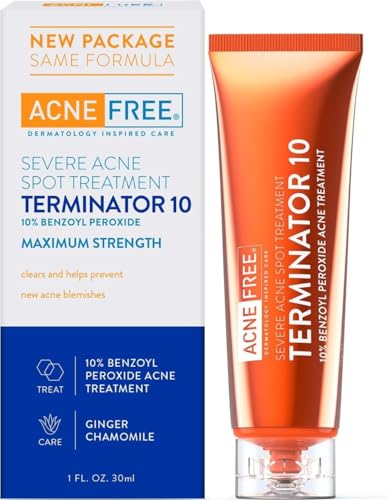
Pros
- Maximum strength formulation for stubborn breakouts
- Ginger and chamomile help reduce visible redness
- Oil-free texture won't clog pores further
Cons
- High concentration may cause dryness or peeling
- No concentration details for soothing botanicals provided
Pros
- Maximum strength formulation for stubborn breakouts
- Ginger and chamomile help reduce visible redness
- Oil-free texture won't clog pores further
Cons
- High concentration may cause dryness or peeling
- No concentration details for soothing botanicals provided
- Benzoyl peroxide at 10% concentration works to help visibly reduce severe acne by targeting bacteria in clogged pores, best suited for oily or acne-prone skin already tolerant to this ingredient.
- Oil-free cream texture absorbs into skin without residue, designed for PM spot application on active blemishes, pair with a non-comedogenic moisturizer to buffer potential dryness.
- Benzoyl Peroxide 10%: helps visibly reduce acne-causing bacteria and supports prevention of new breakouts.
- Ginger: supports skin clarity by helping address active blemishes during treatment cycles.
- Chamomile: soothes skin and helps reduce the appearance of redness from irritation.


How We Evaluated
Evaluating face creams for acne means holding two criteria in tension: acne-fighting efficacy and skin barrier support. We looked at active ingredient concentration and type (salicylic acid, benzoyl peroxide, glycolic acid), formulation texture relative to the stated use (spot treatment vs. all-over moisturizer), fragrance and comedogenic ingredient status, and verified-buyer feedback patterns from people managing mild-to-moderate acne. We also considered how each product fits within a broader routine rather than treating it in isolation. A spot treatment that’s too drying to use without a separate moisturizer isn’t as practical as one that integrates cleanly. Products are researched against independent dermatology sources and long-term buyer reviews, not manufacturer claims.
Cetaphil Gentle Clear Mattifying Acne Face Moisturizer — Best Daily Moisturizer with Active
At 0.5% salicylic acid, this isn’t a spot treatment. It’s a daily moisturizer that does double duty. The formula addresses active breakouts and works to prevent new ones while keeping skin hydrated without a greasy finish. The mattifying effect matters for oily and combination skin types that tend to avoid moisturizer because everything feels too heavy. Cetaphil’s track record of dermatologist recommendations and sensitive-skin tolerability carries over here: the formula is fragrance-free and suits skin that reacts badly to harsh acne products. Buyers who’ve struggled to find an acne moisturizer that doesn’t either dry them out or cause new breakouts consistently flag this as the product that finally resolved that tension.
AcneFree Terminator 10 Acne Spot Treatment — Best Maximum-Strength Spot Treatment
Benzoyl peroxide at 10% is the maximum over-the-counter concentration, and AcneFree Terminator 10 delivers it in a cream format that stays put on a blemish without migrating. The mechanism is direct: BP kills Cutibacterium acnes bacteria and reduces inflammation at the site. At this concentration it works fast, and buyers report visible reduction in 24 to 48 hours on active pustules. It’s drying by design, so it’s best used as a targeted spot treatment rather than an all-over cream. Apply a thin layer directly to a blemish after cleansing; using it across an entire zone will irritate the surrounding skin. For isolated, inflamed breakouts that don’t respond to lower-concentration formulas, this is the product that delivers.
Neutrogena Rapid Clear Stubborn Acne Spot Treatment Gel — Best for Stubborn Blemishes
Where most spot treatments contain 2.5% or 5% benzoyl peroxide, Neutrogena Rapid Clear goes to 10% in a clear gel that dries down invisible. The gel format matters: it absorbs into the skin rather than sitting as a visible white layer, which makes it practical for daytime use under sunscreen or makeup. Buyers who’ve used lower-concentration products without results report clear improvement after switching to this higher concentration. The gel vehicle also makes precise application easier than a cream, reducing the risk of spreading active ingredient to healthy surrounding skin. It’s a targeted treatment to layer over a moisturizer, not a standalone cream. For persistent spots that resist lower concentrations, the 10% benzoyl peroxide earns its place.
CeraVe Acne Control Gel — Best Dual-Exfoliant Formula
CeraVe combines 2% salicylic acid with glycolic acid in a lightweight gel, making this the most actively exfoliating product on the list. Salicylic acid works inside the pore to dissolve sebum and dead-cell buildup causing blackheads and whiteheads; glycolic acid resurfaces the outer layer to reduce post-acne hyperpigmentation. The inclusion of ceramides and niacinamide is what differentiates it from standard acid products: the barrier doesn’t get stripped. Buyers managing both active acne and dark marks from past breakouts consistently call this the product addressing both concerns without adding a second step. At 1.35oz it’s a concentrated gel rather than a heavy moisturizer, fitting best between cleanser and SPF in a full routine.
Amazon Basics 10% Benzoyl Peroxide Acne Treatment Gel — Best Budget Option
At a fraction of the price of name-brand equivalents, Amazon Basics 10% Benzoyl Peroxide delivers the same active ingredient at the same maximum OTC concentration. It’s a gel formula, fragrance-free, and it works. The ingredient list is lean, which suits acne-prone skin that responds badly to unnecessary additives. Buyers who’ve compared it directly to Neutrogena Rapid Clear and AcneFree Terminator 10 report equivalent efficacy for a lower cost per application. The packaging isn’t remarkable, but the formula is. For anyone managing frequent breakouts and going through spot treatment regularly, the cost efficiency here is meaningful without any compromise on active ingredient strength.
How to Choose a Face Cream for Acne
Match the active ingredient to your acne type. Salicylic acid (0.5%–2%) is oil-soluble, meaning it penetrates into pores to dissolve sebum and dead cells, so it’s the right choice for blackheads, whiteheads, and clogged pores. Benzoyl peroxide kills acne-causing bacteria and reduces inflammation, making it more effective for red, inflamed pustules. For skin dealing with both types simultaneously, a routine that uses salicylic acid in a daily moisturizer and benzoyl peroxide as a spot treatment covers both mechanisms without overloading any single product with conflicting jobs.
Consider texture relative to where you’re applying it. A 10% benzoyl peroxide cream works well as a targeted spot treatment on an individual blemish but will over-dry an entire cheek. Gel formats absorb more cleanly and suit oily or combination skin as daily products. Cream formats stay occluded longer and suit dry or sensitive skin that tolerates actives but needs hydration support alongside them. The texture isn’t just a cosmetic preference. It determines how much active ingredient contacts how much skin, which affects both efficacy and irritation risk.
Don’t skip moisturizer when you’re using active ingredients. Cutting out moisturizer because it seems to contribute to breakouts is one of the most common mistakes in acne management. Most breakouts attributed to moisturizer come from comedogenic ingredients, not moisturization itself. A fragrance-free, non-comedogenic moisturizer keeps the barrier intact, which reduces the irritation response from salicylic acid and benzoyl peroxide and improves their long-term tolerability. If your current moisturizer is causing breakouts, switching formulas is worth doing before eliminating the step entirely.
Frequently Asked Questions
Is face cream good for acne?
A face cream can both help and hurt acne depending on its formula. Creams with acne-fighting actives like salicylic acid or benzoyl peroxide address breakouts directly. Plain moisturizers don’t treat acne but support barrier health, which matters when using harsh acne treatments. The key is avoiding comedogenic ingredients like heavy oils, waxes, or emollients that block pores. Look for “non-comedogenic” on the label and check the ingredient list for known pore-cloggers like isopropyl myristate or coconut oil before committing to a new product.
Can I use a face cream for acne every day?
It depends on the formula. A daily moisturizer with 0.5% salicylic acid like the Cetaphil Gentle Clear is designed for everyday use without issue. A 10% benzoyl peroxide spot treatment isn’t, since it’s meant for individual blemishes, not full-face application. High-concentration actives used daily across broad areas cause dryness and barrier damage that worsens acne over time. Match frequency of use to the concentration and application scope described in the product instructions rather than defaulting to daily use for every acne product.
Should I moisturize if I have acne?
Yes. Skipping moisturizer because of acne is a common approach that backfires. A compromised barrier from over-drying produces excess sebum as a compensatory response and makes active ingredients more irritating to tolerate over time. A non-comedogenic, fragrance-free moisturizer keeps the barrier intact without contributing to breakouts. If you’re using benzoyl peroxide or retinol as part of your routine, moisturizer isn’t optional. It’s what makes those actives sustainable for daily use without causing inflammation or peeling.
What’s the difference between salicylic acid and benzoyl peroxide for acne?
Salicylic acid is a beta-hydroxy acid that dissolves the sebum and dead skin cells clogging pores. It’s most effective on blackheads, whiteheads, and congested texture. Benzoyl peroxide kills Cutibacterium acnes, the bacteria responsible for inflamed, red breakouts. It’s most effective on pustules and papules. The two work via different mechanisms and can be used together in a routine, provided the skin is well-moisturized to handle both. Many dermatologists recommend combining them for moderate acne rather than relying on either alone.
How long does it take for acne face cream to work?
Spot formulas with high-concentration benzoyl peroxide can show visible improvement in 24 to 72 hours on an individual blemish. Daily-use products with salicylic acid typically take four to eight weeks to produce meaningful improvement in baseline breakout frequency. Consistent daily use is what generates results, and irregular application means you’re not maintaining the active ingredient concentration at the skin surface long enough to disrupt the acne cycle. Set a realistic four-week minimum before deciding whether a product is working.
Bottom Line
Cetaphil Gentle Clear Mattifying Acne Moisturizer is the most practical daily pick for acne-prone skin: salicylic acid plus barrier support in a single fragrance-free product. For targeted blemish treatment, AcneFree Terminator 10 and Neutrogena Rapid Clear both deliver maximum-strength benzoyl peroxide, with Neutrogena’s gel format offering a cleaner finish for daytime use. CeraVe Acne Control Gel suits skin managing both active breakouts and post-breakout marks. Amazon Basics 10% Benzoyl Peroxide is the budget-smart choice with no compromise on active strength. Choose based on where your acne presents and what your current routine is missing rather than defaulting to the highest concentration by default.