If you’re managing eczema, you’ve probably heard about hyaluronic acid showing up in every serum and moisturizer on the shelf. The short answer is yes: it can genuinely help. Eczema-prone skin struggles to retain moisture, and hyaluronic acid is one of the most efficient humectants available, drawing water into the skin barrier where it’s needed most. That said, formulation matters. A poorly chosen product can irritate compromised skin further. We’ve pulled together the five options most worth your attention, along with guidance on what to look for and how to layer them safely. If you’re also exploring gentle skincare for sensitive skin, that guide pairs well with this one.
Quick answer: Hyaluronic acid is beneficial for eczema because it replenishes moisture without clogging pores or adding fragrance, two common eczema triggers. Look for fragrance-free, alcohol-free formulas layered onto damp skin for best results. The five picks below range from lightweight serums to barrier-focused moisturizers, so there’s a fit regardless of how severe your flares are.
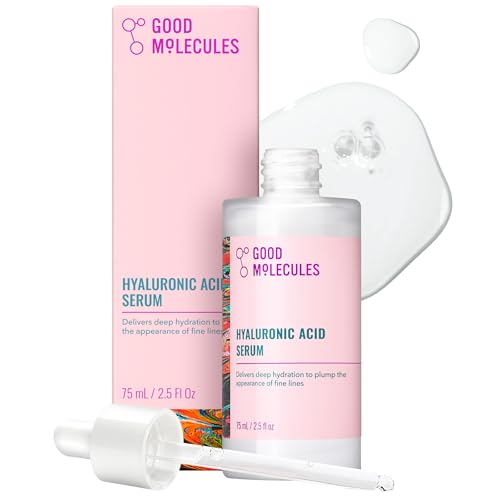
Good Molecules Hyaluronic Acid Serum - Lightweight Hydrating Face Serum for All Skin Types
Pros
- Fast-absorbing texture layers well under moisturizer
- Fragrance-free formulation minimizes irritation risk for sensitive types
- Accessible price point for hyaluronic acid hydration
Cons
- Limited ingredient transparency, no molecular weight specified
- May require occlusive moisturizer to prevent moisture loss
Pros
- Fast-absorbing texture layers well under moisturizer
- Fragrance-free formulation minimizes irritation risk for sensitive types
- Accessible price point for hyaluronic acid hydration
Cons
- Limited ingredient transparency, no molecular weight specified
- May require occlusive moisturizer to prevent moisture loss
- Hyaluronic acid pulls moisture into skin to help visibly plump fine lines and support a smoother surface texture, working across all skin types including oily and dehydrated complexions.
- Lightweight, water-based serum absorbs on contact when applied to damp skin morning and night, best sealed immediately with a moisturizer to lock in hydration and prevent transepidermal water loss.
- Hyaluronic Acid: Humectant that binds up to 1,000 times its weight in water to hydrate and plump skin.
- Water-Based System: Solvent base allows quick penetration and layering without pilling or residue under subsequent products.

The Ordinary Natural Moisturizing Factors + HA - Lightweight Barrier Support Moisturizer
Pros
- Skin-identical ingredients support barrier function without irritation
- Lightweight formula layers well under makeup or sunscreen
- Budget-friendly option for basic barrier repair needs
Cons
- May need additional occlusives in extremely dry climates
- Minimal actives beyond hydration for anti-aging concerns
Pros
- Skin-identical ingredients support barrier function without irritation
- Lightweight formula layers well under makeup or sunscreen
- Budget-friendly option for basic barrier repair needs
Cons
- May need additional occlusives in extremely dry climates
- Minimal actives beyond hydration for anti-aging concerns
- Amino acids, ceramides, and hyaluronic acid replicate the skin's natural moisture composition to hydrate without clogging pores, suited for normal to dry skin that tolerates basic emollients.
- Gel-cream texture absorbs in seconds with no greasy finish, applied morning or night as final step, pairs well under SPF or over active serums like retinoids.
- Amino Acids: Building blocks that help maintain skin's natural moisture balance and barrier integrity.
- Ceramides: Lipids that reinforce the skin barrier and reduce transepidermal water loss over time.
- Hyaluronic Acid: Humectant that binds water to the outer skin layer for plumping hydration.
- Urea: Exfoliating humectant that softens and hydrates while supporting moisture retention in the stratum corneum.

Vanicream Daily Facial Moisturizer with Hyaluronic Acid and 5 Ceramides for Sensitive Skin
Pros
- Hyaluronic acid and ceramides support moisture retention
- pH-balanced formula suitable for morning and evening use
- Dermatologist-recommended brand with no common irritants
Cons
- Basic formulation lacks antioxidants or additional actives
- May require layering for very dry skin types
Pros
- Hyaluronic acid and ceramides support moisture retention
- pH-balanced formula suitable for morning and evening use
- Dermatologist-recommended brand with no common irritants
Cons
- Basic formulation lacks antioxidants or additional actives
- May require layering for very dry skin types
- Hyaluronic acid draws moisture into skin while five ceramides help reinforce the lipid barrier, making this suitable for compromised, eczema-prone, or post-procedure skin that cannot tolerate fragrance or botanical extracts.
- Lightweight, fast-absorbing lotion layers well under sunscreen in the morning or over treatment serums at night without pilling or leaving a tacky finish on combination to normal skin.
- Hyaluronic Acid: humectant that binds water to skin surface, supporting short-term hydration and plumpness.
- Five Ceramides: lipid molecules that help repair and maintain the skin barrier, reducing transepidermal water loss.
- pH-Balanced Base: formulated to match skin's natural pH, minimizing disruption to the acid mantle and microbiome.

How We Evaluated
Narrowing down hyaluronic acid products for eczema-prone skin meant applying stricter criteria than a standard hydration roundup. Each product was vetted for fragrance-free and alcohol-free formulation; both are known irritants that can spike inflammation during a flare. We also weighed molecular weight diversity (a mix of high- and low-molecular-weight HA penetrates more effectively than a single-weight formula), ingredient simplicity, and packaging that limits oxidation. Price-per-ounce mattered too, since eczema management is ongoing, not a one-time purchase. The result is a list that covers serums, daily moisturizers, and even a raw powder option for DIY formulators who want full control over what touches their skin.
Product Reviews
Good Molecules Hyaluronic Acid Serum — Best Lightweight Daily Serum
Good Molecules keeps this serum refreshingly minimal. The formula leans on sodium hyaluronate at multiple molecular weights, which means it doesn’t just sit on top of the skin; it pulls hydration into different layers of the epidermis. At 2.5 fl oz, it’s a generous size for a daily routine, and it’s priced low enough that you won’t ration it. Eczema-prone skin benefits from liberal, consistent application rather than occasional use, so affordability is a real plus here. The texture is thin and absorbs quickly without leaving a tacky film, which makes it easy to layer under a ceramide moisturizer or prescription topical. Fragrance-free, dye-free, and dermatologist-friendly. It checks every box for reactive skin types.
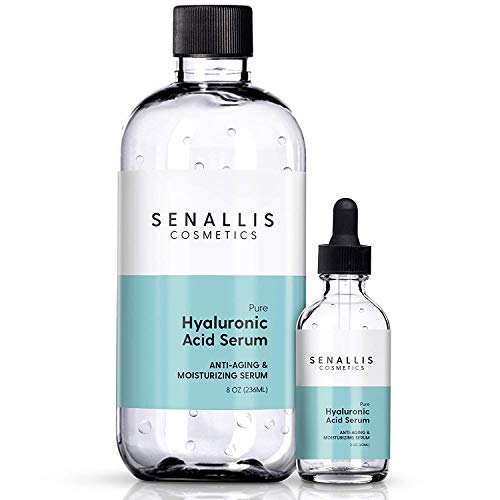
SenAllis Cosmetics Hyaluronic Acid Serum — Best Value for Large-Quantity Use
SenAllis ships in both 2 fl oz and 8 fl oz sizes, and the 8 oz bottle is where the value math really works in your favor. Pure hyaluronic acid with an anti-aging positioning, but the core benefit for eczema sufferers is volume: you can apply it freely morning and night without watching the bottle drain. The formula is built on hyaluronic acid without a long list of additives, which reduces the risk of a sensitization reaction. Texture is slightly more viscous than water-thin serums, which some people with very dry eczema patches find more satisfying. It’s worth noting that the larger bottle should be stored properly (a cool, dark spot) to preserve efficacy over time. If you’ve been rationing your serum because of cost, this one removes that constraint.
The Ordinary Natural Moisturizing Factors + Hyaluronic Acid — Best for Skin Barrier Support
The Ordinary’s Natural Moisturizing Factors formula is a workhorse for compromised skin barriers. It combines hyaluronic acid with a full NMF complex (amino acids, fatty acids, urea, and ceramide precursors) that mimics what healthy skin produces naturally. For eczema patients, whose barrier function is inherently compromised, that added support isn’t a luxury; it’s functional. The texture is a lightweight, non-greasy cream that absorbs without a white cast, suitable for daily daytime use. It doesn’t feel heavy or occlusive, which matters if you’re layering it over a serum. The Ordinary’s commitment to fragrance-free formulation holds here, and the price point makes it accessible for consistent, generous use. This is a strong pick if your skin needs more than just moisture. It needs the building blocks to repair itself.
Vanicream Daily Facial Moisturizer — Best for Flare Days
Vanicream has been a dermatologist-recommended name for decades, and this moisturizer earns that reputation. The 3 fl oz tube combines five key ceramides with hyaluronic acid, creating both an occlusive-adjacent barrier function and a humectant draw. On active flare days, when the skin is raw and reactive, the ceramide component does real work. It’s not just about pulling water in; it’s about stopping transepidermal water loss (TEWL) from breaking the barrier down further. The formula is free of dyes, fragrances, masking fragrances, lanolin, parabens, and formaldehyde releasers. That’s a thorough avoidance list for a product this affordable. It’s also non-comedogenic, which matters if you’re dealing with eczema on the face. Vanicream’s formulation philosophy has always prioritized tolerability over marketing, and this moisturizer reflects that.
APUUFYQC Pure Hyaluronic Acid Powder — Best for DIY Control
For anyone who’s reacted to every pre-made formula on the market, raw hyaluronic acid powder is a different kind of solution. APUUFYQC’s powder uses dual molecular weight HA (both high and low), so you’re getting surface-level hydration and deeper penetration simultaneously. You control the concentration, the carrier, and every other ingredient. That’s meaningful when eczema-prone skin is reactive to preservatives, emulsifiers, or seemingly innocuous additives found even in gentle products. The powder dissolves cleanly in distilled water or aloe vera gel. Start at 0.1% concentration and build slowly; higher percentages aren’t always more effective and can feel tacky. This isn’t the most convenient option, but it’s the most controllable. For skin that doesn’t tolerate anything pre-made, control is the whole point.
How to Use Hyaluronic Acid for Eczema
Getting the most out of hyaluronic acid with eczema means thinking about timing, layering, and occlusion. Here are the three principles that matter most.
Apply to damp skin, not dry. Hyaluronic acid is a humectant; it pulls moisture from its environment. On dry skin in a dry room, it can actually draw water out of the dermis if there’s no external humidity to absorb. Apply your serum or moisturizer immediately after washing, while skin is still slightly damp, so the HA has surface moisture to work with. This is especially important during winter or in low-humidity climates where eczema tends to worsen. You don’t need to be dripping wet; just pat gently and apply within 30 seconds of toweling off. Getting this timing right makes a measurable difference in how well the product performs over a full day.
Seal it with an occlusive or ceramide moisturizer. Hyaluronic acid draws water in, but it doesn’t lock it there. On broken or compromised eczema skin, that moisture can escape quickly through a damaged barrier. Following your HA serum with a ceramide-rich cream or an occlusive like shea butter or petrolatum-based balm creates a physical barrier that traps the hydration in place. Think of the serum as filling a bucket and the moisturizer as putting a lid on it. Skipping this step, especially at night when you’re not reapplying throughout the day, is one of the most common reasons people don’t see the hydration benefit they expect from hyaluronic acid.
Introduce one product at a time. Eczema skin is unpredictable and reactive. Even well-formulated fragrance-free products can trigger a reaction if you introduce too many variables simultaneously. When you start a new HA product, use it alone for at least a week before adding anything else to the routine. Patch-evaluating on the inner arm for 48 hours before applying to your face or an active eczema patch is worth the extra caution. If a reaction does occur, this approach makes it straightforward to identify the culprit. Most people with eczema who have poor luck with new products aren’t reacting to hyaluronic acid itself; they’re reacting to something else in a formula they added at the same time.
Frequently Asked Questions
Can hyaluronic acid make eczema worse?
It can, but the cause is almost never the hyaluronic acid itself. Reactions typically trace back to fragrance, preservatives, alcohol, or other additives in the formula. The other scenario is applying HA to very dry skin in a low-humidity environment; the molecule can draw water out of the skin rather than in when there’s no external moisture available. Using HA on damp skin and sealing it with a moisturizer afterward addresses both concerns. If you’re breaking out in hives or experiencing increased redness, switch to a simpler formula or the raw powder option and see if the reaction resolves. Pure sodium hyaluronate has an extremely low sensitization rate.
What’s the difference between hyaluronic acid and sodium hyaluronate for eczema?
Sodium hyaluronate is the salt form of hyaluronic acid and has a smaller molecular size, which means it penetrates the skin more effectively rather than sitting on the surface. For eczema, where you want hydration to reach the compromised layers of the epidermis, sodium hyaluronate is slightly preferable. Many products labeled “hyaluronic acid serum” actually contain sodium hyaluronate as the active ingredient; they’re referring to the same functional family. The best formulas use both: high-molecular-weight HA for surface moisture and a tactile feel, and low-molecular-weight HA or sodium hyaluronate for deeper penetration. Don’t get too caught up in the naming; look for multi-weight formulas when you can.
How often should someone with eczema use hyaluronic acid?
Twice daily is a reasonable target for most people: once in the morning and once at night. Unlike actives such as retinol or exfoliating acids, hyaluronic acid doesn’t carry a risk of overuse. It’s a moisturizing ingredient, not an active that requires cycling. During active flares, some people find it helpful to apply a thin layer more frequently to affected areas, especially if they’re in a heated or air-conditioned space that strips ambient humidity. There’s no clinical ceiling for daily use. If anything, the biggest mistake with HA in eczema management isn’t using too much; it’s using too little too infrequently to see consistent results.
Is hyaluronic acid safe to use with eczema medications?
Generally yes, but the layering order matters. If you’re using a topical corticosteroid or calcineurin inhibitor like tacrolimus, apply the prescription medication first on clean, dry skin, let it absorb for a few minutes, and then apply hyaluronic acid over it. The concern isn’t that HA interacts with the medication; it’s that applying a hydrating layer underneath can affect how the topical absorbs or spreads. Moisturizers and serums should always go over, not under, prescription topicals unless your dermatologist instructs otherwise. If you’re unsure about a specific product combination, your dermatologist is the right resource; they can review ingredient lists and flag anything that might reduce the efficacy of your treatment.
Can children with eczema use hyaluronic acid?
Children’s eczema is common and managing it often requires the same principle of keeping the skin barrier hydrated and intact. Hyaluronic acid is generally considered safe for children, and fragrance-free formulas like those in this list are appropriate for sensitive pediatric skin. That said, children’s skin differs from adult skin in absorption rates and sensitivity thresholds, so simpler, shorter ingredient lists are preferable. Products with extensive ingredient decks, even when all components are individually gentle, introduce more variables. The Vanicream moisturizer and The Ordinary NMF formula are both commonly recommended for pediatric eczema by dermatologists due to their minimal, well-vetted formulations. Check with your child’s pediatric dermatologist before adding anything new to their regimen.
Bottom Line
Hyaluronic acid isn’t a cure for eczema, but it’s one of the more reliable tools for managing the chronic dryness and barrier compromise that make flares worse and more frequent. The picks above cover a range of formats and budgets, from the generous value of SenAllis’s 8 oz bottle to the full-control flexibility of APUUFYQC’s raw powder. If you’re starting from scratch, Good Molecules’ serum paired with Vanicream’s ceramide moisturizer is a solid, affordable two-step routine that most reactive skin types can tolerate without issue. Consistency matters more than any single product; hyaluronic acid works best when it’s part of a daily habit, not an occasional intervention.