

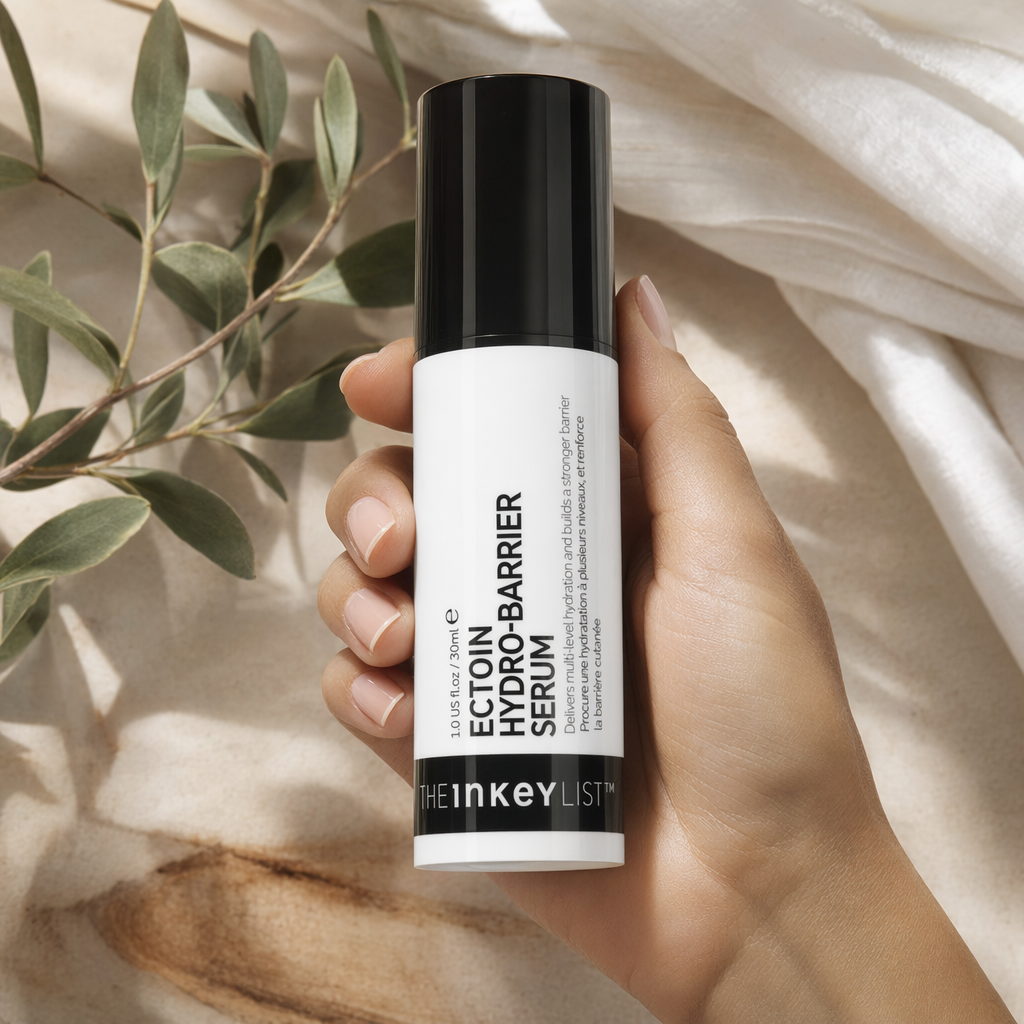
TL;DR: Ectoin is a small amino-acid derivative made by extremophile bacteria — microbes that live in salt flats, hot springs, and other environments where normal cells would die. On your skin, ectoin organizes water around your structural proteins, reducing transepidermal water loss and calming barrier-driven inflammation. It is not an anti-aging active; it is a hydration-and-barrier active with thirty-plus years of dermatology research behind it.
If you have seen “ectoin” appearing on the ingredient lists of Korean lab brands like The INKEY List, Abib, or Good Molecules and wondered what it actually does, this is the short explanation. For the full ingredient profile with product picks, see our ectoin ingredient profile.

The hero pick — quality of formulation and dose justifying the price.
The plain-English mechanism
Imagine the outer layer of your skin as a brick wall. The “bricks” are skin cells (keratinocytes), and the “mortar” between them is a mix of lipids and water. When the wall is intact, water stays inside and irritants stay outside. When the wall is compromised — by over-exfoliation, harsh cleansers, cold weather, or chronic inflammation — water leaks out (transepidermal water loss, or TEWL) and irritants get in. This is what dermatologists mean when they talk about a “compromised barrier”.
Most humectants you have heard of (hyaluronic acid, glycerin) work by adding more water to the mortar — they pull moisture from deeper layers or from the air and hold it in the upper skin. Ectoin works differently. Instead of adding water, it organizes the water already present, forming a structured hydration shell around the proteins in your skin’s bricks. That structured shell shields the proteins from environmental stress — UV, pollution, harsh actives — and helps the wall do its job.
Consistency over twelve weeks is what produces visible results.
Where ectoin comes from
Ectoin was first isolated in 1985 from Halomonas elongata, a salt-tolerant bacterium that thrives in extreme environments. The bacterium synthesizes ectoin to keep its own proteins stable when the surrounding salt concentration would otherwise denature them. German biotechnology companies began producing it industrially in the 1990s, and the molecule entered the pharmaceutical and cosmetic markets through medical-device classifications in Europe — used in nasal sprays, eye drops, and eczema creams long before mainstream skincare picked it up.

Budget-tier option from the picks discussed above.
Why it matters now
Three things converged to bring ectoin into mass-market skincare around 2023:
- Korean lab brands began using it as a centerpiece active to differentiate from the saturated hyaluronic-acid market.
- The barrier-repair conversation in skincare became mainstream — once consumers understood TEWL and barrier function, an active that targeted those specifically had a clear use case.
- Industrial-scale ectoin production made it affordable enough for mass-market formulations (it was once expensive enough to be a prestige-only active).
Common misconceptions
“Ectoin is an anti-aging active”
Not directly. It does not stimulate collagen, exfoliate, or replace a retinoid. What it does do is calm the chronic low-grade inflammation that accelerates extrinsic aging — so on a long enough timeline, a less-inflamed face ages more gracefully. But if your goal is wrinkle reduction in 12 weeks, ectoin is supporting cast. The lead is still retinoid.
“More ectoin is better”
Studies use 1–7% in formulated products. Above 7%, returns diminish. Some brands label “11% ectoin” by counting the supporting complex (panthenol, ceramides, vitamin E) — not pure ectoin. The headline number is less meaningful than the overall formulation and your consistency of use.
“Ectoin replaces my hyaluronic acid serum”
No. They do different jobs and pair well. Hyaluronic acid adds water to the system; ectoin structures the water already present. Most well-formulated ectoin products include hyaluronic acid for this reason.
When ectoin earns its place in your routine
- If you have sensitive, rosacea-prone, or reactive skin.
- If your barrier is compromised from over-exfoliation, retinoid ramp-up, or a recent professional procedure.
- If you live in a polluted urban environment or arid climate where environmental stress is a daily input.
- If you have atopic dermatitis or chronic dryness.
If none of those describe your skin, ectoin is fine to use but you are paying for protection your skin does not particularly need. Spend that budget on retinoid or vitamin C instead.
A few products formulating it well

Pros
- Light microemulsion absorbs instantly without greasy residue
- Rice Lipids paired with Ectoin for sustained hydration
- National Eczema Association acceptance signals gentle formulation
Cons
- Microfluidized texture requires shaking before each use
- Clinical testing measured results after just one application

Pros
- 2% Ectoin actively supports barrier restoration and hydration.
- Fast-absorbing milky texture suits all skin types.
- Addresses dullness, redness, and dryness simultaneously.
Cons
- Clinical studies used small sample sizes, 26 to 31 people.
- No fragrance-free or sensitivity confirmation in available data.
Pros
- 2% Ectoin actively supports barrier restoration and hydration.
- Fast-absorbing milky texture suits all skin types.
- Addresses dullness, redness, and dryness simultaneously.
Cons
- Clinical studies used small sample sizes, 26 to 31 people.
- No fragrance-free or sensitivity confirmation in available data.
- Formulated with 2% Ectoin and 2.5% multi-molecular Hyaluronic Acid, this serum targets dehydration and barrier compromise, making it suitable for all skin types including dry and sensitized.
- The milky, lightweight texture absorbs quickly without tackiness; use as your first serum on damp skin AM and PM, followed by a moisturizer to seal in hydration.
- Ectoin 2%: Supports skin barrier fortification and increases hydration levels.
- Hyaluronic Acid 2.5%: Multi-molecular complex improves moisture retention across skin layers.
- Barrier Complex 1%: Proprietary blend supports visible barrier restoration and skin function.

Pros
- High-percentage hydrating complex at 11% concentration.
- Lightweight texture absorbs without greasiness or heaviness.
- Formulated to support and strengthen the moisture barrier.
Cons
- No fragrance or additional ingredient details specified.
- Zero reviews available to confirm real-world performance.
How ectoin compares to other hydrators in plain terms
If you already use hyaluronic acid, glycerin, or panthenol, ectoin’s job is different — and the comparison helps clarify when it earns its place. Here is the practical breakdown:
Ectoin vs hyaluronic acid
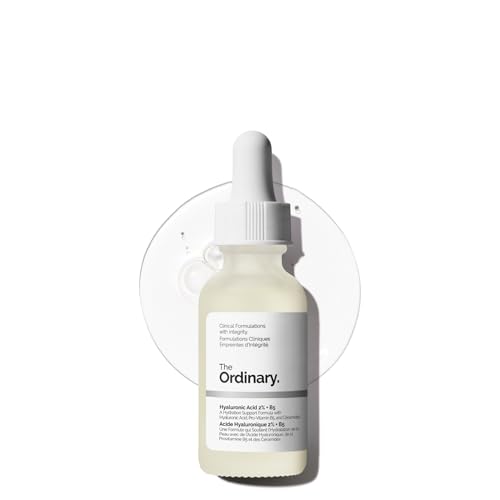
Hyaluronic acid is a humectant — it pulls water into the upper layers of the skin and holds it there as a gel. Ectoin does not add water; it organizes the water that is already present into a stable shell around your skin’s structural proteins. Hyaluronic acid is volumetric (more water in the upper skin); ectoin is structural (better-organized water around the proteins that need protection). They pair well — most good ectoin formulations include hyaluronic acid for the volumetric layer.
Ectoin vs glycerin
Glycerin is the cheapest, most studied humectant in cosmetics. It works similarly to hyaluronic acid (pulls water in) but has a smaller molecule and penetrates deeper into the stratum corneum. Ectoin’s benefit on top of glycerin is the structural protection of proteins, not additional hydration. If glycerin already keeps your skin comfortable, ectoin is a refinement, not a replacement.
Ectoin vs panthenol (provitamin B5)
Panthenol works on a different axis — it supports cell wall integrity and accelerates wound healing through the keratinocyte renewal cycle. It is anti-inflammatory and barrier-supportive. Ectoin and panthenol are complementary, not competitive; many formulations include both because they address different parts of the same barrier-support problem.
Reading the ingredient label for ectoin
Ectoin’s INCI name is simply “Ectoin”. You will see it listed plainly. The position on the ingredient deck matters:
- Listed in the top 5 ingredients: the product is genuinely ectoin-forward. The active is at meaningful concentration.
- Listed in the middle of the deck (positions 6–10): ectoin is present but probably under 1%. May still contribute to the formula but is not the lead actor.
- Listed near the bottom (after preservatives): trace ectoin for marketing purposes. The label is technically accurate but the concentration is too low to matter.
The published efficacy threshold for ectoin is roughly 1%. Below that, the structural water-shell effect is hard to demonstrate. Above 7%, returns diminish. So “1% ectoin in the top 5 ingredients” is functionally as effective as “11% ectoin in the top 5”. Brands inflate the headline percentage by counting supporting actives — read the actual deck, not the marketing claim.
How long ectoin takes to work, in concrete terms
Days 1–7: Skin feels more comfortable on application; afternoon tightness is reduced. This is the immediate hydration shell at work.
Weeks 2–4: Reduced reactivity to other actives. If retinoid stings less, if vitamin C does not flush as red, this is ectoin’s barrier-support effect kicking in.
Weeks 8–12: Baseline sensitivity reduction. The barrier has been consistently supported long enough for cumulative repair. This is when rosacea-prone and sensitive-skin users report the biggest quality-of-life improvement.
Beyond 12 weeks: Maintenance. The effects plateau but persist with continued use. Stopping use returns sensitivity gradually over 2–4 weeks.
Edge cases worth knowing
Pregnancy and nursing
Ectoin has been studied in pediatric atopic-dermatitis treatments and carries no documented contraindication for pregnancy or nursing. Most dermatologists consider it among the safest hydrating actives during pregnancy. Still, run your full routine past your obstetrician.
Eye-area use
Ectoin is the active ingredient in several prescription-grade eye drops for dry eye, which is unusual for a cosmetic active. It tolerates the eye area better than most. Eye creams formulated with ectoin (Abib, The INKEY List) work for the under-eye and crow’s-feet area without the stinging that vitamin C and retinoid can cause.
Stacking with retinoid
Ectoin pairs cleanly with retinoid and is actively recommended in retinoid-ramp routines — the barrier protection reduces the irritation of building retinoid tolerance. Apply ectoin first to damp skin, then retinoid after a 30-second wait.
Authoritative sources
For more on the chemistry and history of ectoin:
- Ectoine — Wikipedia overview of structure and biosynthesis
- Halomonas elongata — Wikipedia on the source bacterium
- Osmolytes — Wikipedia on the broader compatible-solute class
- Extremophiles — Wikipedia on the bacteria class that produce ectoin
- AAD — dry skin and barrier care guidance
- NIH PubMed Central — ectoin in dermatology review
Related reading
- Ectoin ingredient profile — the full deep-dive with research citations and product breakdown
- Best skincare for sensitive skin — the broader routine ectoin fits into
- Best hyaluronic acid serum — the hydrator ectoin pairs with





Write Your Review
No reviews yet. Be the first to share your experience!