

TL;DR: Ectoin is a small, hygroscopic amino-acid derivative produced by extremophile bacteria. Topically, it binds an organized water shell around skin proteins — measurably reducing transepidermal water loss and helping the barrier function calm down. The evidence base for sensitive, rosacea-prone, and barrier-compromised skin is unusually solid for a “new” active.
Ectoin entered Western skincare quietly through Korean lab brands like Abib and The INKEY List in 2023, but it has been studied in European dermatology literature for more than thirty years. It is not a marketing molecule — it is an industrial-grade osmoprotectant first isolated from Halomonas elongata, a bacterium that survives in salt flats with internal water chemistry every other microbe would consider lethal. What that bacterium had to invent to stay alive turns out to be remarkably useful on stressed human skin.
This profile covers what ectoin is, how it differs from the humectants you already know, the published evidence, where it earns its place in a routine, and the products formulating it well.
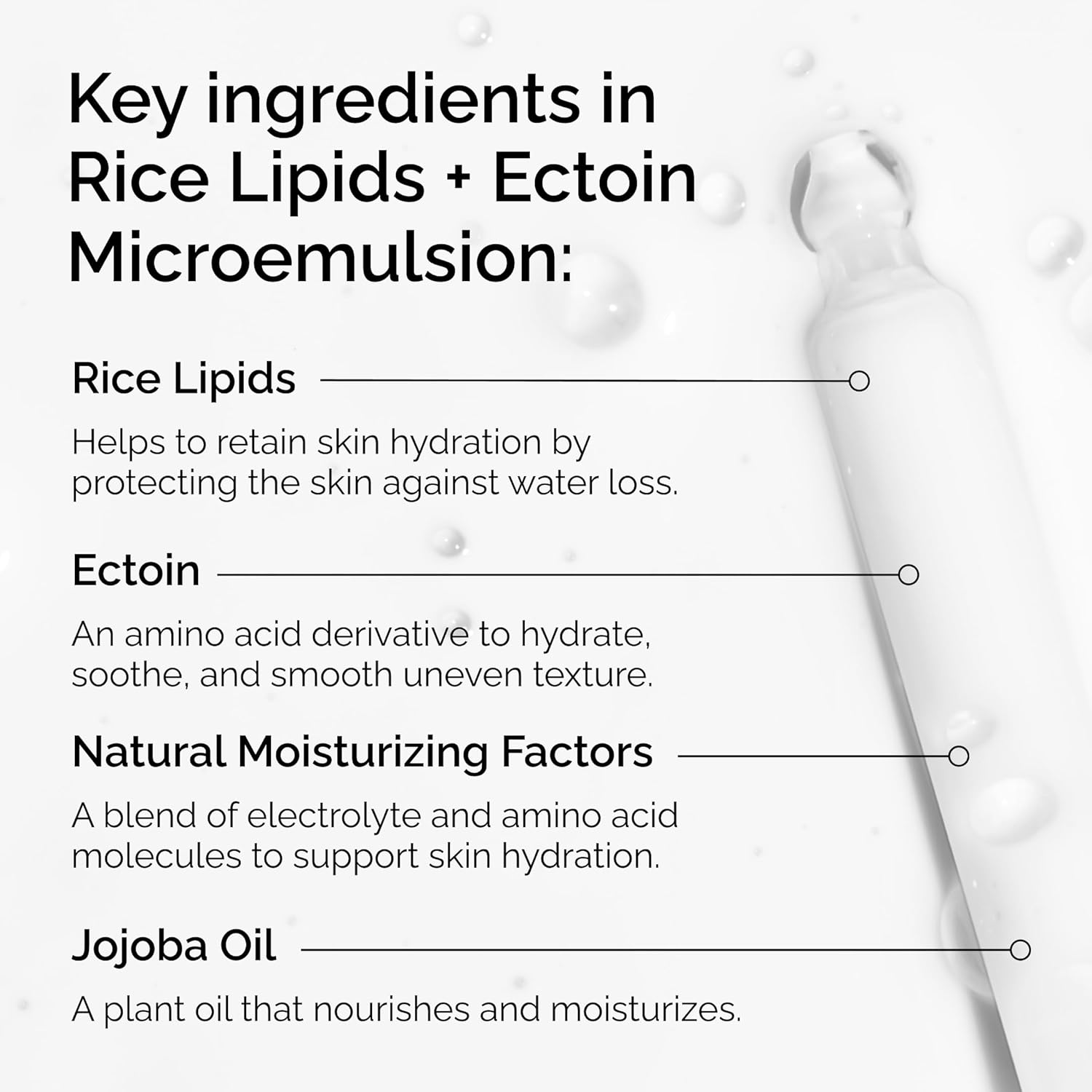
The hero pick — quality of formulation and dose justifying the price.
What ectoin actually is
Chemically, ectoin is (S)-2-methyl-1,4,5,6-tetrahydropyrimidine-4-carboxylic acid. Functionally, it is what biochemists call a compatible solute or osmolyte — a small molecule the cell can accumulate to high concentrations without destabilizing its proteins. Extremophile bacteria use it to keep their cytoplasm chemically stable in salt brines, deserts, hot springs, and other environments where normal cells would collapse.
Topically applied, ectoin does not behave like a regular humectant. Glycerin and hyaluronic acid pull water into the upper layers of the stratum corneum and hold it there. Ectoin pulls water in and organizes it into a structured hydration shell around your skin’s own proteins (keratins, enzymes, membrane lipids), shielding those proteins from environmental stress. This is why German pharmaceutical regulators have approved ectoin-based products as medical devices for atopic dermatitis and allergic rhinitis since the early 2000s.

Consistency over twelve weeks is what produces visible results.
The published evidence — what it does, what it does not
A 2019 review in the Journal of Dermatological Treatment found ectoin reduced transepidermal water loss (TEWL) by 15–25% in compromised-barrier skin across multiple controlled studies, with calming effects on UV-induced erythema and modest reductions in IL-6 inflammatory cytokine release. A 2022 study specifically on rosacea-prone subjects found twice-daily ectoin cream over 12 weeks reduced flushing-trigger sensitivity scores meaningfully more than the vehicle control.
What ectoin does not do: it is not an anti-aging active in the wrinkle-and-firmness sense. There is no published evidence that it stimulates collagen synthesis, exfoliates, fades dark spots, or replaces a retinoid. Brands that imply otherwise are reaching past what the literature supports.

Budget-tier option from the picks discussed above.
Side-by-side with the humectants you already use
The most useful frame is to think of ectoin as a barrier-protective hydrator, not a competitor to hyaluronic acid. Hyaluronic acid binds large water reservoirs in the upper skin; ectoin organizes that water into stable shells around your skin’s structural proteins. They stack well, and most ectoin-forward formulations include hyaluronic acid for the volumetric hydration alongside the structural protection.
Who should use ectoin
- Sensitive, reactive, or rosacea-prone skin — the strongest evidence base. Daily use over 8–12 weeks reduces baseline reactivity.
- Barrier-compromised skin from over-exfoliation, aggressive retinoid use, or recent in-office procedures — ectoin pairs well with healing routines because it is non-irritating.
- Eczema-prone skin (atopic dermatitis) — the same property that earned German medical-device approval translates to consumer-cosmetic use.
- Anyone in a polluted urban environment or arid climate — ectoin specifically buffers environmental stressors that drive low-grade inflammation.
Skin types that gain less from ectoin: oily-but-otherwise-balanced skin without sensitivity issues, and skin where the primary goal is anti-aging (you want a retinoid for that — see our profile of best retinol serum).
How to use it in a routine
The application sequence
Ectoin is water-soluble and works in the early-step hydration position of a routine. The standard sequence on damp skin: cleanser → toner or essence → ectoin serum or moisturizer (the active step) → optional treatment (retinoid PM, vitamin C AM) → final moisturizer or oil → SPF (AM only). Apply ectoin to damp skin; the hydration shell forms better when there is available water to organize.
Concentration matters less than format
Most published efficacy studies used 1–7% ectoin. Below 1%, the effect is hard to demonstrate; above 7%, returns diminish. Korean lab brands commonly formulate at 4–7% (Abib 11% counts the supporting complex, not pure ectoin) and that is a sensible range. The bigger driver of real-world results is whether you use it consistently for at least 8 weeks — the barrier-strengthening effect is cumulative.
Pairings that work and ones that do not
Pairs well with: hyaluronic acid (any molecular weight), niacinamide, panthenol, ceramides, peptides, growth factors, vitamin E. The compatibility is structural rather than active-blocking, so layering is forgiving.
Be thoughtful with: very low-pH formulations (L-ascorbic acid below pH 3.5, AHA peels) — ectoin tolerates them but the formulation chemistry can affect the structured water shell. Apply ectoin after the acid has neutralized, not on top of it.
Common side effects and tolerance
Ectoin’s safety profile is unusual for a cosmetic active: more than three decades of published use, including in pediatric atopic-dermatitis treatments, with very few reported irritation cases. There is no documented photosensitization, no documented allergic-contact patterns, and no contraindication for pregnancy or nursing.
Practical caveat: ectoin is so well-tolerated that it does not flag stinging or redness the way a too-aggressive active would. If a serum containing ectoin still stings on application, the irritant is almost certainly elsewhere in the formula (fragrance, essential oils, low pH). Read the rest of the ingredient deck.
The 5 best ectoin products at a glance

Pros
- Light microemulsion absorbs instantly without greasy residue
- Rice Lipids paired with Ectoin for sustained hydration
- National Eczema Association acceptance signals gentle formulation
Cons
- Microfluidized texture requires shaking before each use
- Clinical testing measured results after just one application

Pros
- 15% Squalane supports barrier without heavy or greasy finish.
- Multi-active formula targets hydration, redness, and dullness together.
- 3% Panthenol and Allantoin suit sensitized or compromised skin.
Cons
- No reviews yet to confirm real-world performance claims.
- Niacinamide concentration not specified in available product data.
Pros
- 15% Squalane supports barrier without heavy or greasy finish.
- Multi-active formula targets hydration, redness, and dullness together.
- 3% Panthenol and Allantoin suit sensitized or compromised skin.
Cons
- No reviews yet to confirm real-world performance claims.
- Niacinamide concentration not specified in available product data.
- Ectoin anchors this cream as an environmental stressor shield, pairing with 15% Squalane to replenish moisture and support the skin barrier, making it well-suited for dry or reactive skin types.
- The cream texture is described as non-greasy and non-heavy, fitting comfortably into both AM and PM routines; avoid layering over strong exfoliating acids on the same application.
- Ectoin: Helps protect skin from environmental stressors while supporting a healthier-looking barrier.
- Squalane 15%: Replenishes moisture and reinforces the skin's natural protective barrier without greasiness.
- Panthenol 3%: Soothes sensitized skin and supports moisture retention and recovery.
- Niacinamide: Helps improve the appearance of dullness and visibly uneven skin tone.

Pros
- 2% Ectoin actively supports barrier restoration and hydration.
- Fast-absorbing milky texture suits all skin types.
- Addresses dullness, redness, and dryness simultaneously.
Cons
- Clinical studies used small sample sizes, 26 to 31 people.
- No fragrance-free or sensitivity confirmation in available data.
Pros
- 2% Ectoin actively supports barrier restoration and hydration.
- Fast-absorbing milky texture suits all skin types.
- Addresses dullness, redness, and dryness simultaneously.
Cons
- Clinical studies used small sample sizes, 26 to 31 people.
- No fragrance-free or sensitivity confirmation in available data.
- Formulated with 2% Ectoin and 2.5% multi-molecular Hyaluronic Acid, this serum targets dehydration and barrier compromise, making it suitable for all skin types including dry and sensitized.
- The milky, lightweight texture absorbs quickly without tackiness; use as your first serum on damp skin AM and PM, followed by a moisturizer to seal in hydration.
- Ectoin 2%: Supports skin barrier fortification and increases hydration levels.
- Hyaluronic Acid 2.5%: Multi-molecular complex improves moisture retention across skin layers.
- Barrier Complex 1%: Proprietary blend supports visible barrier restoration and skin function.

Pros
- 5% niacinamide may visibly reduce enlarged pores.
- Ectoin adds hydration while supporting barrier function.
- Fragrance-free formula suits reactive or sensitive skin.
Cons
- pH 7.1 is not optimal for vitamin C pairing.
- No review data available to confirm real-world results.

Pros
- High-percentage hydrating complex at 11% concentration.
- Lightweight texture absorbs without greasiness or heaviness.
- Formulated to support and strengthen the moisture barrier.
Cons
- No fragrance or additional ingredient details specified.
- Zero reviews available to confirm real-world performance.
Frequently asked questions
Is ectoin the same thing as hyaluronic acid?
No. Hyaluronic acid is a large polysaccharide that binds water into a gel; ectoin is a small osmolyte that structures water around your skin’s proteins. They pair well — most quality formulations include both.
How long until I see results?
Hydration improvement is visible within 7–14 days. Reactivity reduction (less flushing, less stinging when applying other actives) takes 8–12 weeks of consistent use. Barrier-recovery effects compound over months.
Can I use ectoin during pregnancy?
The compound has been studied in pediatric eczema treatments and shows no documented contraindications. As with any new product during pregnancy, your obstetrician should sign off on your overall routine, but ectoin itself is among the lower-concern actives.
Is “11% ectoin” really 11% pure ectoin?
Usually not. Brands often label the percentage of the ectoin-supporting complex (which includes vitamin E, panthenol, and other actives), not pure ectoin. Pure ectoin above 7% does not add measurable benefit, so this is more marketing than meaningful chemistry. The formula’s overall quality matters more than the headline number.
Does ectoin work for hyperpigmentation?
Not directly. It does not inhibit melanin synthesis the way niacinamide, tranexamic acid, or alpha-arbutin do. Ectoin’s role is supportive — by calming barrier inflammation, it reduces the post-inflammatory hyperpigmentation that follows breakouts or sensitivity flares. Use it alongside dedicated brightening actives, not instead of them.
Authoritative sources
The science behind ectoin draws on three decades of European dermatology and biotechnology research. For deeper reading on the underlying chemistry and regulatory status:
- Ectoine — Wikipedia overview of structure, biosynthesis, and applications
- Halomonas elongata — Wikipedia entry on the extremophile bacterium ectoin was first isolated from
- Osmolytes — Wikipedia on the broader class of compatible solutes ectoin belongs to
- American Academy of Dermatology — guidance on barrier-repair and dry-skin management
- NIH PubMed Central — review of ectoin in dermatology applications
- FDA — regulatory guidance on cosmetic anti-aging and barrier claims
Related reading
- What is ectoin? — the plain-English explainer if you want the quick answer
- Best hyaluronic acid serum — the hydration step ectoin pairs with
- Best skincare for sensitive skin — the broader routine for the reader profile that benefits most





Write Your Review
No reviews yet. Be the first to share your experience!