

TL;DR: Mineral sunscreens use zinc oxide and titanium dioxide to physically reflect UV. Chemical sunscreens use organic filters (avobenzone, octinoxate, octocrylene) to absorb UV and convert it to heat. Both prevent skin damage when used correctly. The choice comes down to skin sensitivity, cosmetic finish, and what other actives are in your routine — not which is “better”.
The mineral vs chemical sunscreen debate gets more intense than the underlying science supports. Both approaches work. The differences that matter are practical: how each feels, how it interacts with sensitive skin, and how it pairs with the rest of a modern routine.
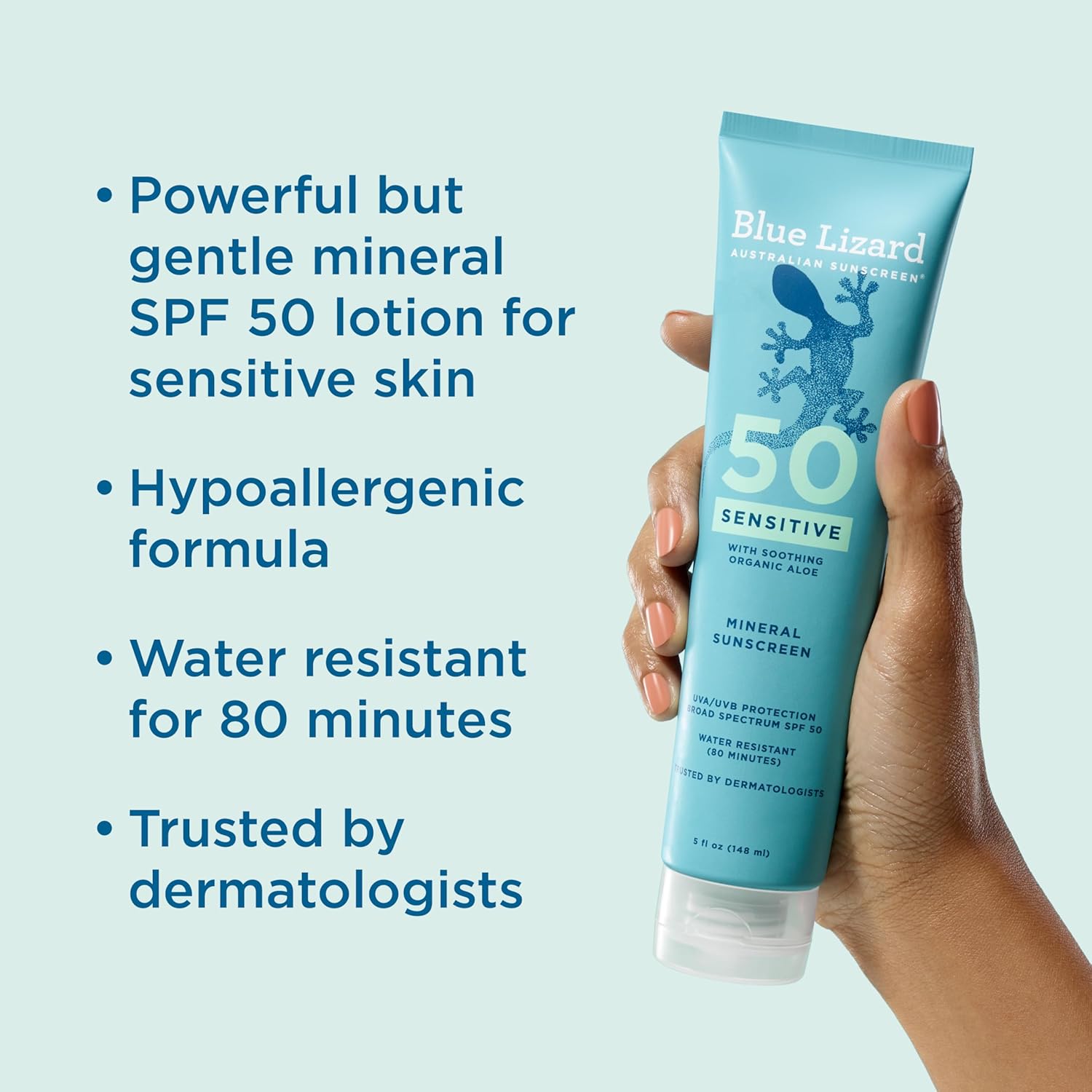
The hero pick — quality of formulation and dose justifying the price.
Side-by-side at a glance
| Mineral Sunscreen | Chemical Sunscreen | |
| Active ingredients | Zinc oxide, titanium dioxide | Avobenzone, octinoxate, octocrylene, oxybenzone, others |
| How it works | Reflects UV | Absorbs UV, converts to heat |
| Protection | Broad-spectrum (zinc esp.) | Filter-dependent (most are full BS now) |
| Photostability | Stable indefinitely | Most modern filters are stable; older avobenzone alone is not |
| White cast | Common (less in modern formulas) | None |
| Texture | Thicker, occlusive | Lighter, layers better |
| Sensitive skin | Generally well-tolerated | Can sting eyes/sensitive areas |
| Reef-safety | Non-nano zinc is reef-safe | Older filters (oxybenzone) are banned in several jurisdictions |
| Acne-prone skin | Can feel heavy | Lighter, usually friendlier |
Consistency over twelve weeks is what produces visible results.
The protection question — are they really equivalent?
For modern formulations, yes. Both mineral and chemical sunscreens achieve broad-spectrum UVA + UVB protection when formulated to meet US FDA or EU regulatory standards. The popular belief that mineral is “stronger” comes from outdated comparisons — modern chemical filters (especially Tinosorb S, Mexoryl SX/XL, Uvinul A Plus available in EU/Asia) are excellent. The US is slower to approve newer chemical filters, which is why some American consumers default to mineral.
Where mineral genuinely wins: zinc oxide is uniquely photostable, requires no booster chemistry to maintain protection across hours of UV exposure, and is the most-tolerated active for sensitized or post-procedure skin. Where chemical genuinely wins: cosmetic elegance — chemical sunscreens layer invisible under makeup and feel lighter on the skin.
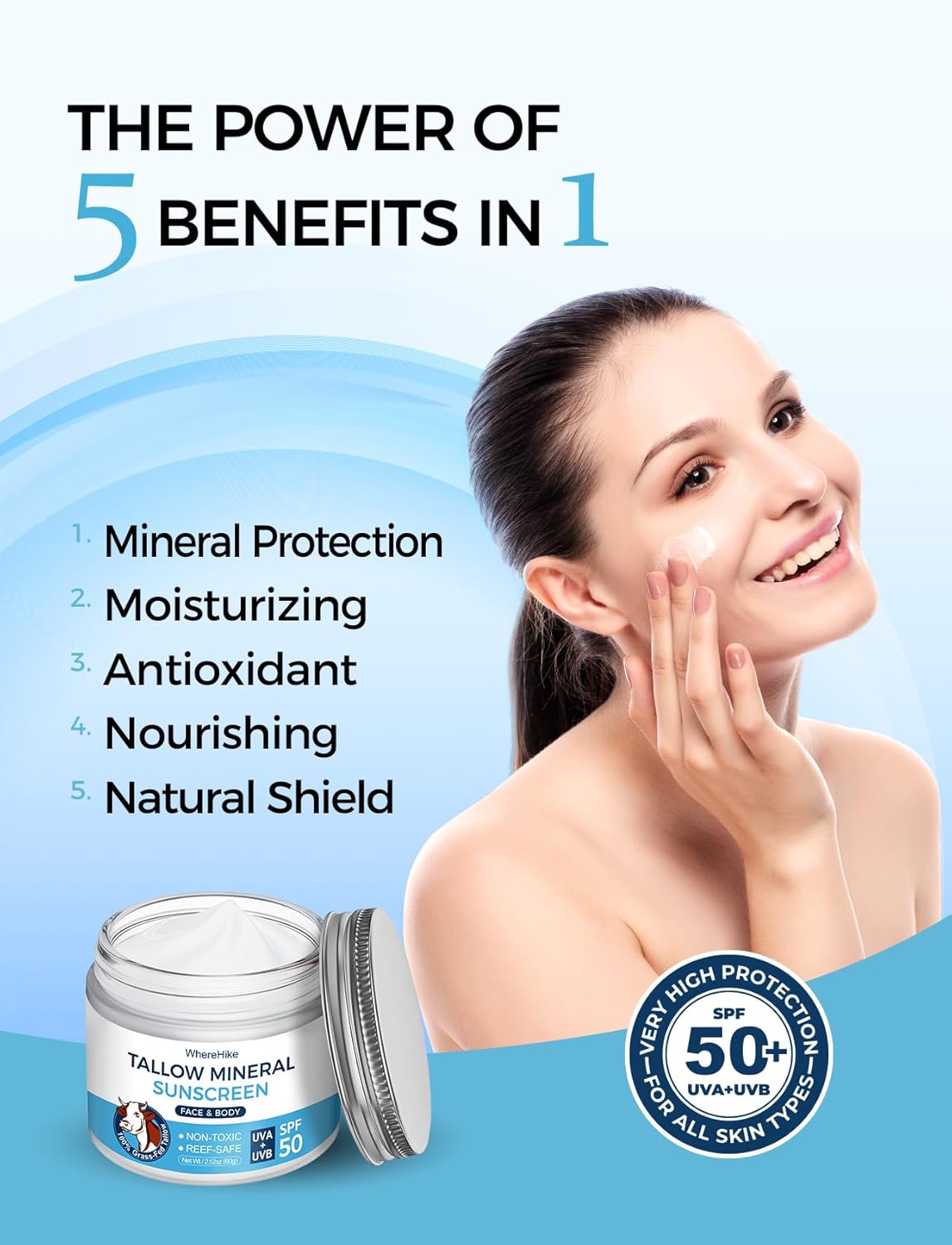
Budget-tier option from the picks discussed above.
When to pick which
Pick mineral if:
- You have sensitive, rosacea-prone, or eczema-prone skin.
- You are post-procedure (laser, peel, microneedling) and need the gentlest UV protection.
- You spend significant time in water (zinc is more water-resistant in many formulations).
- You prioritize reef-safety (zinc oxide is the most marine-safe filter).
- You have a baby or young child in your household (mineral is the recommendation for pediatric use).
Pick chemical if:
- You wear sunscreen daily under makeup and need a cosmetically invisible finish.
- Your skin tolerates organic filters without irritation.
- You live in a humid climate or have oily skin where mineral feels too heavy.
- You want broad-spectrum SPF 50+ in a lightweight texture.
Can you combine them?
Most modern sunscreens already do. Hybrid sunscreens use zinc oxide for the photostable backbone and add chemical filters for cosmetic elegance and additional UVA coverage. Hybrids are increasingly the default in the global market — they get the protection of mineral and the wearability of chemical.
The blanket “all-mineral OR all-chemical” purism is more marketing than chemistry. If a hybrid formulation suits your skin and reaches SPF 30+ broad-spectrum, it is the right pick.
The white cast issue
Modern mineral sunscreens have largely solved white cast on light-to-medium skin tones through micronized (and non-nano) zinc particles. On deeper skin tones, white cast remains a real problem with most US-market mineral SPFs. Korean and Australian brands generally do better on this; American mainstream brands generally worse. If you have deeper skin and have been frustrated by mineral SPF, look at K-beauty mineral formulations or tinted mineral sunscreens specifically formulated for diverse tones.
Best sunscreen options at a glance

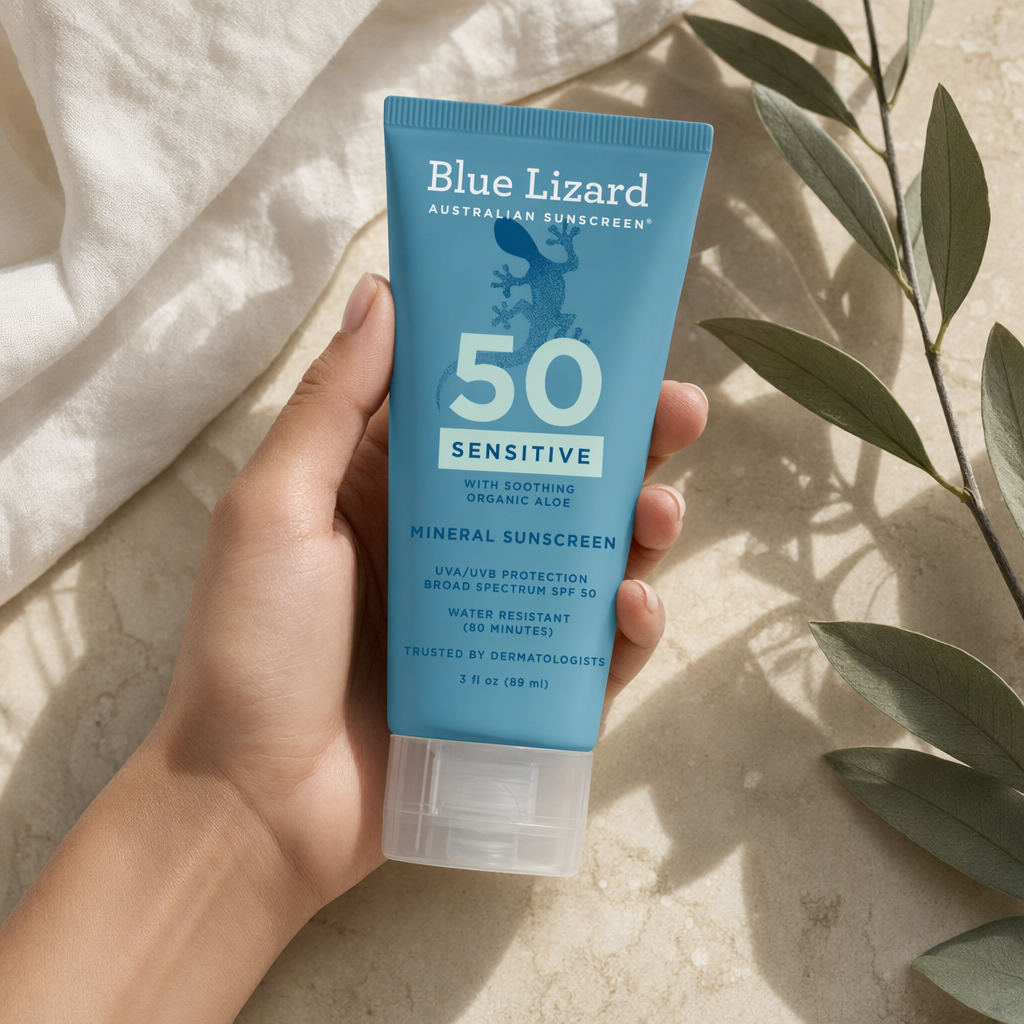
Blue Lizard Sensitive Mineral SPF 50 Sunscreen Lotion - 100% Mineral, Reef-Safe, Aloe Vera Infused, 5 fl oz
Pros
- Ideal for sensitive skin with mineral actives and no irritants
- Reef-friendly and eco-conscious formulation
- Smart Cap UV indicator for easy application reminders
- Long-lasting 80-minute water resistance
- Soothing aloe vera enhances hydration
Cons
- May stain some fabrics
- Typical mineral sunscreen white cast possible
- Consult doctor for children under 6 months
Blue Lizard Sensitive Mineral SPF 50 Sunscreen Lotion is designed for those with sensitive skin seeking reliable sun protection without chemical irritants. This 100% mineral-based lotion uses zinc oxide and titanium dioxide to block 98% of UVB rays and provide broad-spectrum UVA/UVB coverage, making it perfect for beach outings, sports, or daily use.
Standout features include its hypoallergenic formula infused with organic aloe vera for soothing hydration, water resistance up to 80 minutes, and reef-safe composition free from oxybenzone and octinoxate. The innovative Smart Cap changes color in harmful UV light, serving as a visual reminder to apply sunscreen. Dermatologists have endorsed Blue Lizard for over 20 years, highlighting its gentle yet effective performance.
Build quality shines in its non-greasy, easy-to-apply lotion texture that absorbs well, though the mineral nature may leave a slight white cast on some skin tones. It avoids common allergens like parabens, fragrances, and phthalates, prioritizing skin health.
Drawbacks include potential fabric staining and the need for reapplication every two hours or after swimming. It is not intended for children under six months without medical advice.
Overall, this sunscreen earns high marks for sensitive skin protection and eco-friendliness, delivering trusted defense in a user-friendly package. Highly recommended for irritation-prone users prioritizing natural, reef-safe options.
ASIN: B084ZP848Y
Brand: Blue Lizard
Size: 5 fl oz
SPF: 50
Active Ingredients: Zinc Oxide, Titanium Dioxide (100% Mineral)
Water Resistance: 80 minutes
Key Free-From: Parabens, Phthalates, Fragrances, Oxybenzone, Octinoxate

Pros
- Pure mineral protection suitable for sensitive skin
- Water-resistant formula holds up during activity
- Organic aloe vera helps soothe and hydrate
Cons
- Mineral texture may leave white cast
- 3 oz tube requires frequent repurchase
Pros
- Pure mineral protection suitable for sensitive skin
- Water-resistant formula holds up during activity
- Organic aloe vera helps soothe and hydrate
Cons
- Mineral texture may leave white cast
- 3 oz tube requires frequent repurchase
- Zinc oxide provides broad-spectrum mineral protection without harsh chemical filters, suited for sensitive, reactive, or easily irritated skin that cannot tolerate avobenzone or oxybenzone.
- Water-resistant mineral lotion applies with a thicker texture typical of physical blockers, best for AM use before outdoor activity or layered over lightweight moisturizers.
- Zinc Oxide: mineral UV filter that sits on skin surface to reflect UVA and UVB rays without absorption.
- Organic Aloe Vera: soothes irritation and provides lightweight hydration to counterbalance mineral dryness.

Pros
- Non-nano zinc oxide avoids chemical UV filter concerns.
- Tallow base doubles as moisturizer, skipping a step.
- No synthetic fragrance, reef-safe, and preservative-free formula.
Cons
- White cast potential not confirmed absent by independent testing.
- Zero reviews available; real-world performance is unverified.

Pros
- Zinc oxide active avoids oxybenzone and octinoxate.
- Avocado oil and vitamin E support skin hydration.
- Matte, non-greasy finish suits daily wear well.
Cons
- SPF 30 may be insufficient for extended outdoor exposure.
- Scented formula may not suit fragrance-sensitive skin.

Pros
- Non-nano zinc oxide provides broad-spectrum SPF 50 coverage.
- Rubs in clear with no reported white cast.
- Clinically tested safe for sensitive skin types.
Cons
- Beeswax base makes it unsuitable for vegan routines.
- Thick, wax-heavy formula may feel heavy on oily skin.
Frequently asked questions
Is mineral sunscreen safer for pregnancy?
Most dermatologists treat it as the safer default during pregnancy because zinc and titanium do not absorb systemically. Some chemical filters (oxybenzone) have raised endocrine concerns in early studies. The consensus for pregnancy is mineral or a hybrid with the older chemical filters avoided.
Why does chemical sunscreen sometimes sting my eyes?
Avobenzone and octinoxate are notorious for stinging eyes when sweat or tears carry them into the tear film. Mineral filters do not have this problem. If you exercise outdoors, mineral or stick-format chemical sunscreens around the eye area is the comfortable choice.
Do I need a separate sunscreen with retinol?
SPF 30+ broad-spectrum is mandatory with any retinoid, but the choice of mineral vs chemical doesn’t change that requirement. Mineral is often preferred during the first 4–8 weeks of retinoid use because skin is sensitized; you can switch to a preferred chemical formula once tolerance builds.
Are reef-safe and mineral the same thing?
Closely related but not identical. “Reef-safe” usually means free of oxybenzone and octinoxate (banned in Hawaii and several other jurisdictions). Most mineral formulations meet this; some chemical formulations using newer non-marine-toxic filters do too. Read the active ingredient deck if marine safety matters.
The chemistry of UV filters, explained without the marketing
UV radiation reaches your skin in two wavelength bands: UVB (290–320 nm), which drives sunburn and most skin cancers, and UVA (320–400 nm), which drives photoaging, pigmentation, and contributes to immune suppression. A “broad-spectrum” sunscreen must protect against both. The chemistry of how a filter does that varies significantly between mineral and chemical formulations.
How mineral filters actually work
The popular description of mineral sunscreens as “physical blockers that reflect UV like a mirror” is partly outdated. Modern dermatology research has shown that zinc oxide and titanium dioxide primarily absorb UV energy and convert it to heat — the same mechanism as chemical filters — with only a smaller fraction reflected. The “physical block” framing oversimplified what is actually a hybrid absorption-plus-reflection mechanism. The practical takeaway: mineral filters work whether the sun hits them directly or at an angle, and they do not require activation time.
Zinc oxide uniquely covers the full UVA/UVB range with a single molecule. Titanium dioxide covers UVB and the shorter UVA wavelengths but is weaker at long-wave UVA — which is why titanium-only mineral formulations often have lower SPF claims and need supporting filters for full UVA coverage.
How modern chemical filters work
Older chemical filters (avobenzone, octinoxate, oxybenzone) absorb specific UV wavelength bands and convert the energy to heat. Avobenzone is the workhorse UVA absorber in US-market formulations, but on its own it is photo-unstable — it degrades within hours of UV exposure unless paired with a stabilizer like octocrylene or Tinosorb. Newer-generation chemical filters available in EU and Asian markets (Tinosorb S, Tinosorb M, Mexoryl XL, Uvinul A Plus) are both more photostable and offer broader-spectrum coverage than the older US-approved filters. This is why a European or Korean chemical sunscreen often outperforms an American one at the same SPF rating.
The regulatory landscape — why your options differ by region
The US Food and Drug Administration classifies sunscreens as over-the-counter drugs, which means new chemical filters require expensive multi-year approval processes. The EU and Australia classify sunscreens as cosmetics, which has a faster approval pathway. The practical result: the EU has approved more than two dozen modern chemical filters; the US has approved 16, most decades old. Korean and Japanese formulations frequently use the EU-approved filters that American consumers cannot find locally.
If you have access to imported formulations and your skin tolerates chemical filters, you can find sunscreens with cosmetic elegance + protection that the US domestic market does not offer. K-beauty mineral formulations also tend to solve white cast better than US mass-market options.
Tinted sunscreens — the underrated upgrade
Tinted mineral sunscreens add iron oxides on top of zinc or titanium. Iron oxides absorb visible light, particularly blue light from screens and high-energy visible (HEV) wavelengths from the sun. For users with melasma or recurring pigmentation, this is meaningful — visible light contributes to melanogenesis in ways that traditional UV-only sunscreens do not address. Tinted mineral SPF is the dermatology recommendation for melasma management specifically because of the iron oxide layer.
Tinted formulations also solve the white-cast problem on deeper skin tones. The iron oxide pigment harmonizes with skin undertones, replacing the pale film with something closer to skin color. Brands like ILIA, Tower 28, and Supergoop are the easier US-market entry points; Korean tinted SPFs (Mediheal, Some By Mi) cover the broader tone range.
Reef-safety in plain language
The term “reef-safe” usually refers to formulations free of oxybenzone and octinoxate, both of which have been shown to contribute to coral bleaching at environmentally relevant concentrations. Hawaii, Key West (Florida), and several Pacific island nations have banned the sale or use of oxybenzone-containing sunscreens. Most modern mineral sunscreens are reef-safe by default; many newer chemical sunscreens have phased out the problem filters.
If reef safety matters to you, the safer-default move is to look for non-nano zinc oxide formulations (the “non-nano” specification means particle size is large enough to settle out of coastal waters rather than being absorbed by coral). Brands like Badger, Stream2Sea, and Blue Lizard formulate explicitly for this.
Authoritative sources
Sunscreen chemistry and regulation differs across global markets. Primary sources:
- Sunscreen — Wikipedia overview of filter chemistry and SPF
- Zinc oxide — Wikipedia on the workhorse mineral filter
- FDA — sunscreen monograph and approved active ingredients
- AAD — sunscreen FAQs and dermatologist-vetted guidance
- Avobenzone — Wikipedia on the primary chemical UVA filter
- AAD — skin cancer prevention and SPF use
Related reading
- Best sunscreen to use with retinol — the AM step for active routines
- Best non-greasy mineral sunscreen for face
- Best sunscreen for oily acne-prone skin





Write Your Review
No reviews yet. Be the first to share your experience!