Retinol has earned its place as one of skincare’s most researched ingredients, and if you’re dealing with acne, you’ll find it does a lot more than fight wrinkles. It accelerates cell turnover, which means dead skin cells don’t pile up inside pores as quickly. That unclogging effect directly reduces the frequency of breakouts. It also regulates sebum production over time, so oily skin becomes more manageable. For post-acne marks and hyperpigmentation from acne scars, retinol helps fade discoloration faster by stimulating fresh cell growth. If you’re new to retinol, starting slow is the smartest approach. The four products below have been vetted for acne-prone skin at different stages and budgets.
Quick answer: Retinol fights acne by speeding cell turnover, unclogging pores, and reducing sebum over time. It also fades post-acne marks. Start at a low concentration, apply at night, and don’t skip sunscreen during the day.


Pros
- High-dose retinol buffered with soothing Vitamin E
- Fragrance-free and pregnancy-safe per brand claims
- Lightweight texture absorbs without greasy residue
Cons
- Zero verified customer reviews to assess real-world performance
- Requires gradual introduction, not suitable for daily immediate use
Pros
- High-dose retinol buffered with soothing Vitamin E
- Fragrance-free and pregnancy-safe per brand claims
- Lightweight texture absorbs without greasy residue
Cons
- Zero verified customer reviews to assess real-world performance
- Requires gradual introduction, not suitable for daily immediate use
- Pure Vitamin A at 500,000 IU concentration targets visible fine lines and rough texture while Vitamin C brightens post-inflammatory marks and uneven tone, suited for combination to sensitive skin types.
- Lightweight serum texture absorbs quickly without residue, designed for nighttime application after cleansing and before moisturizer, starting 2-3 nights weekly then building frequency as tolerance develops.
- Retinol (500,000 IU): Pure Vitamin A helps visibly smooth fine lines and refine skin texture over consistent use.
- Vitamin C: Antioxidant that supports brightening of dark spots and helps even out discolored areas from sun exposure.
- Vitamin E: Buffers retinol irritation and provides soothing support for sensitive or reactive skin during retinoid adjustment.
How We Evaluated These Retinol Products
Every product on this list was researched with acne-prone skin in mind. We looked at retinol concentration and delivery method (encapsulated vs. standard), compatibility with sensitive skin, ingredient synergies (tea tree, niacinamide, salicylic acid), and value per use. We also considered whether the formulation suits teens as well as adults, since acne doesn’t discriminate by age. Packaging matters too: airtight or pump dispensers protect retinol from light and air oxidation, a silent killer for this ingredient’s potency. Each product here has something distinct to offer, whether you’re dealing with active breakouts, stubborn post-acne marks, or both.
MegustaMe Resurfacing Retinol Serum for Acne Scars and Pores — Best for Sensitive Acne-Prone Skin
The MegustaMe Resurfacing Retinol Serum stands out because it uses encapsulated retinol, a delivery format that releases the active ingredient gradually rather than all at once. For people who’ve had irritation issues with traditional retinol serums, this is a meaningful distinction. Encapsulation reduces the likelihood of redness and peeling during the adjustment phase, which is especially relevant for anyone with combination or reactive skin. The formula targets both active pores and the shadowy marks left behind after a breakout clears. It’s packaged in a compact 30ml bottle designed to minimize air exposure. You’ll want to use it consistently for at least six weeks before expecting visible changes to scar texture. Pair it with a fragrance-free moisturizer to keep the barrier intact while the retinol does its work.
PatchRx Pimple Patches with Retinol Hydrocolloid Acne Stickers with Tea Tree Oil — Best for Overnight Spot Treatment
PatchRx takes a format most people associate with basic blemish stickers and layers in real active ingredients. Each patch combines hydrocolloid (which draws out fluid from a blemish), tea tree oil (a well-researched antimicrobial), and retinol (to speed local cell turnover). The result is a targeted overnight treatment that works without covering your entire face in actives. This approach is smart for those who don’t want a full-face retinol routine but still want the ingredient’s benefits concentrated on problem spots. The pack contains 120 patches, so it’s reasonable value for daily use. They’re thin enough to wear under makeup if you’re managing a breakout during the day. The adhesive holds well through sleep, which isn’t always a given with thinner formats.
MDacne 3-Step Retinol Acne Treatment Kit for Teens and Adults — Best Complete Acne System
MDacne’s kit earns its spot by offering a coordinated three-step routine rather than a single product. That structure matters because retinol works best when it’s part of a routine that includes gentle cleansing and consistent moisturization. The kit is formulated with both teens and adults in mind, reflecting a real understanding that these two skin types don’t always respond the same way to retinoids. The retinol concentration is calibrated to be effective without overwhelming a first-time user. If you’re helping a teenager navigate their first retinol experience or you’re new to it yourself, this system removes a lot of the guesswork around sequencing and pairing. The included moisturizer helps offset the dryness that can accompany the adjustment period, which is the most common reason people quit retinol before it delivers results.
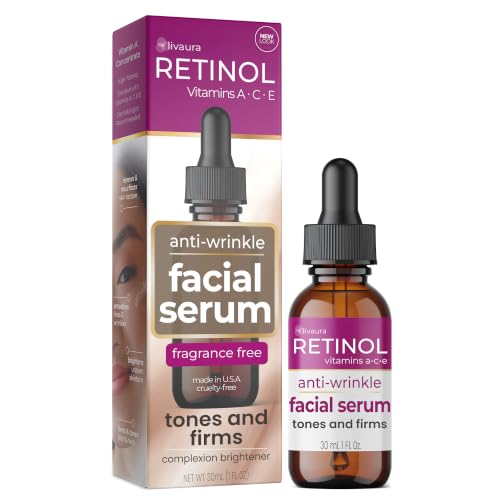
LIVAURA Retinol Face Serum for Women — Best for Post-Acne Dark Spots
LIVAURA’s Retinol Face Serum is positioned as an anti-aging formula, but its benefit for post-acne discoloration is just as relevant. Retinol’s ability to accelerate epidermal turnover means dark spots (post-inflammatory hyperpigmentation) fade faster with consistent use. This serum delivers that benefit in a lightweight, fast-absorbing base that doesn’t feel heavy on acne-prone skin. It’s a practical pick for someone whose active breakouts are under control but who’s left with a patchwork of brown or red marks that won’t fade on their own quickly. Women in their late 20s and 30s dealing with hormonal acne marks will find it addresses both texture concerns and discoloration in a single product. Apply a pea-sized amount across the full face rather than spot-treating only, since sun-exposed areas often carry uneven pigmentation alongside acne marks.
How to Use Retinol for Acne Without Wrecking Your Skin Barrier
Start at the lowest effective concentration. If you’re new to retinol, you don’t need 1%. A 0.025% to 0.1% formula applied three nights per week produces real results without the dramatic peeling some beginners experience. Building up slowly lets your skin’s enzyme systems adapt to the faster cell turnover rate. It typically takes two to four weeks before your skin stops flaking and four to twelve weeks before acne frequency noticeably drops.
Always apply retinol at night and follow with sunscreen in the morning. Retinol makes freshly exposed skin more reactive to UV damage. Skipping SPF during a retinol routine doesn’t just slow progress on acne marks, it can deepen them. A broad-spectrum SPF 30 or higher applied every morning is non-negotiable. At night, cleanse thoroughly, let skin dry for a few minutes, then apply retinol before your moisturizer.
Don’t layer retinol with AHAs, BHAs, or vitamin C in the same session. These combinations stack irritation risk without proportionally improving results. If you’re using an exfoliating acid for acne (salicylic or glycolic), alternate nights rather than combining. Vitamin C works better in a morning routine anyway, making separation easy. Keeping the schedule simple is what makes it sustainable.
Frequently Asked Questions
Does retinol clear active pimples?
Retinol isn’t a spot treatment in the traditional sense. It won’t flatten a pimple overnight the way benzoyl peroxide or salicylic acid can. What it does is reduce the conditions that lead to breakouts over time: excess sebum, slow cell turnover, and clogged pores. Most people see a reduction in breakout frequency after six to twelve weeks of consistent use. For an active blemish, a hydrocolloid patch or a targeted benzoyl peroxide product will give you faster relief.
Can you use retinol if you have sensitive acne-prone skin?
You can, and it’s worth it, but the form matters. Encapsulated retinol releases more slowly than standard retinol, which lowers the risk of immediate redness and peeling. Starting with a lower concentration and using it two or three nights per week rather than daily also makes the adjustment period much more manageable. Moisturizing well after application further reduces irritation for reactive skin types.
How long before retinol improves acne scars?
Post-acne marks are stubborn. For shallow post-inflammatory hyperpigmentation (the flat brown or pink spots), you’ll typically see meaningful fading in eight to sixteen weeks of consistent nightly retinol use paired with daily SPF. Deeper atrophic scars (the indented kind) respond more slowly and may need professional treatments alongside retinol to see significant improvement.
Is retinol safe for teen skin?
Retinol at low concentrations is generally considered safe for teenagers dealing with acne. The MDacne kit is specifically formulated to suit teen skin. The main concern isn’t safety but tolerance: younger skin can be reactive, so starting low and slow is especially important. A parent’s or dermatologist’s input is worth having before a teenager introduces any new active ingredient into their routine.
Can retinol make acne worse at first?
Yes, this is a real and common experience called the “purge.” When retinol speeds up cell turnover, it can push clogged material to the surface faster than it would otherwise appear. This can look like a temporary increase in breakouts, usually within the first two to four weeks. It typically resolves on its own as the skin adjusts. If breakouts are severe or persist beyond six weeks, that may signal an intolerance rather than a purge, and reducing frequency or concentration is a reasonable response.
Bottom Line
Retinol is one of the most reliable ingredients you can add to an acne routine if you’re willing to be patient with it. It doesn’t clear skin overnight, but consistent use reduces breakout frequency, unclogs pores, regulates sebum, and fades the marks acne leaves behind. The four products here cover the range from targeted overnight patches to full multi-step kits, so there’s a practical entry point regardless of your skin type or how much of a routine you’re ready to commit to. Start low, stay consistent, and you’ll see a real difference.