

Ask ten Korean beauty editors which brands actually define best Korean luxury skincare brands and you’ll get ten variations of the same shortlist: Sulwhasoo, Sooryehan, The History of Whoo, IOPE, AmorePacific, O HUI. What that shortlist often misses is the second tier — the brands that have quietly grown out of pharmacy or specialty channels and now sit comfortably alongside the heritage houses on Korean department-store floors.
This guide picks five complete skincare moments from across that landscape, anchored by brand sets you can actually buy. Sooryehan’s ginseng-driven heritage range (two formats), Anua’s heartleaf-focused glass skin kit that’s redefining what “approachable luxury” looks like, ISA KNOX’s collagen complex from LG Household & Health Care, and Beauty of Joseon’s dynastic-rice formula that bridges traditional ingredients and modern dermatology.
What makes Korean luxury different
Korean luxury skincare doesn’t operate the same way Western prestige does. Where La Mer leans on a single hero ingredient and an air of mystery, Korean luxury houses lean into traditional ingredient narratives — ginseng, hanbang (Korean herbal medicine), fermented botanicals — combined with very modern lab work. The result is product lines that feel rooted (a 4,000-year ginseng-cultivation tradition) while delivering on benchmarks (stability, sensorial finish, clinical testing) that Sephora-tier consumers expect.
Price points sit in a wide band: a Sulwhasoo First Care Activating Serum runs $96, a Whoo Bichup Self-Generating Anti-Aging Concentrate climbs past $230, and yet the same shelf will display a $20 Beauty of Joseon ampoule that delivers a clinical-grade niacinamide concentration. The “luxury” lens in Korean skincare is partly about brand heritage, partly about formulation refinement, and partly about ingredient sourcing — but rarely about the price tag alone.
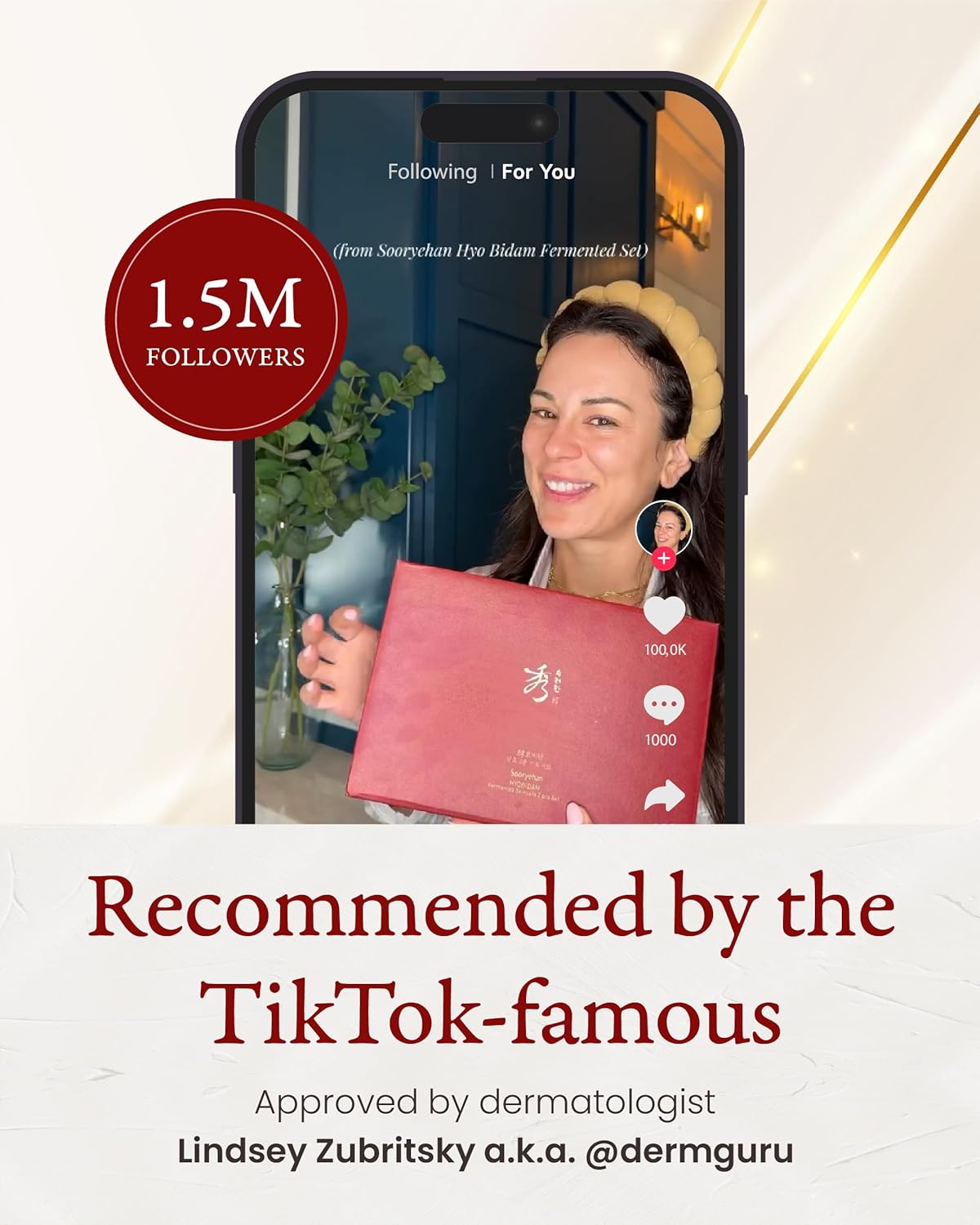
Sooryehan Hyobidam — LG Household’s heritage-ginseng line, sister-positioned to Sulwhasoo.
The 5 best Korean luxury skincare brands at a glance

Pros
- Fermented actives support deeper absorption into skin.
- Includes six product formats for a full routine.
- Lightweight texture suits layering without residue.
Cons
- Mini sizes for most steps limit long-term assessment.
- Baekhyodan ingredient data not publicly detailed.

Pros
- Complete layered routine in one set.
- Fermented ginseng supports elasticity and radiance.
- Whole-plant extraction retains full active potential.
Cons
- Cream and eye cream sizes are trial-scale.
- No ingredient list available to verify formulation depth.

Pros
- Beginner-friendly three-step system with clear usage order
- TXA serum addresses post-acne marks and uneven tone
- Gentle foam cleanser balances hydration during double cleanse
Cons
- 30ml serum size may require frequent repurchasing
- No ingredient percentages disclosed for active concentrations
Pros
- Beginner-friendly three-step system with clear usage order
- TXA serum addresses post-acne marks and uneven tone
- Gentle foam cleanser balances hydration during double cleanse
Cons
- 30ml serum size may require frequent repurchasing
- No ingredient percentages disclosed for active concentrations
- Tranexamic acid and niacinamide work to visibly reduce dark spots and even skin tone, while heartleaf extract calms sensitivity during the cleansing steps, suited for combination and acne-prone skin.
- The oil cleanser emulsifies for thorough removal, followed by low-pH foam, then fast-absorbing serum applies morning or night before moisturizer without pilling under sunscreen.
- Tranexamic Acid: helps visibly fade post-inflammatory hyperpigmentation and supports brighter, more uniform tone.
- Niacinamide: works alongside TXA to improve skin barrier function and reduce discoloration appearance.
- Heartleaf Extract: soothes irritation and supports gentle cleansing without triggering sensitivity or dryness.

Pros
- Ultra-low molecular weight collagen aids surface-level absorption.
- Complete layering routine included in one purchase.
- Vitamin C and E pairing may support more even complexion.
Cons
- Gel-cream provided only in a small trial-size format.
- No full ingredient list specified in available product data.
Pros
- Ultra-low molecular weight collagen aids surface-level absorption.
- Complete layering routine included in one purchase.
- Vitamin C and E pairing may support more even complexion.
Cons
- Gel-cream provided only in a small trial-size format.
- No full ingredient list specified in available product data.
- Formulated with micro hydrolyzed collagen at 1-6 kDa, significantly smaller than standard collagen molecules, making it suitable for mature or elasticity-depleted skin seeking a plumper appearance.
- The gel-cream texture closes the three-step routine; layer after toner and emulsion in an AM or PM regimen, and follow with sunscreen if used during the day.
- Micro Hydrolyzed Collagen (1-6 kDa): Extra low molecular weight supports absorption and helps visibly improve skin plumpness.
- Vitamin C: Antioxidant ingredient that may help improve the appearance of uneven skin tone.
- Vitamins B12 and E: Work alongside Vitamin C to support a more even-looking complexion over time.

Pros
- Dual actives niacinamide and squalane balance skin effectively.
- Firm, dense texture leaves a visible dewy finish.
- Suitable for both face and delicate eye area.
Cons
- Dense texture may feel heavy on oily skin.
- No SPF included, separate sun protection still needed.
Brand profiles

Korean essence layering rewards patience — each tap-and-press takes 30–60 seconds to absorb before the next step.
1. Sooryehan Hyobidam Fermented Skincare — Heritage Pick ($95)
Sooryehan sits inside LG Household & Health Care’s prestige portfolio and competes directly with Sulwhasoo for the “heritage Korean luxury” position. The Hyobidam line centers on a fermented wild ginseng extract — wild Korean ginseng has been cultivated for medicinal use since the Goryeo dynasty, and the fermentation step is what transforms it into a topical-skincare-compatible active. The gift set format is how most readers experience the brand for the first time: full-sized toner, essence, and lotion in a single box.
Texture across the line is on the richer side compared to mid-tier Korean brands. If you’re transitioning from a Western luxury moisturizer like Crème de la Mer or Augustinus Bader, the texture won’t feel foreign. Apply at night, take 90 seconds to massage the essence in, and the formula does most of its work during the deeper-stage sleep windows when skin permeability peaks.

Beauty of Joseon Dynasty Cream — heritage ginseng + niacinamide, mid-tier price.
2. Sooryehan Bon Extra Moisture Set — Best for Dry Skin ($89)
The Bon line is Sooryehan’s hydration-first range, distinct from the anti-aging Hyobidam set above. The formulation leans on a different botanical complex — rice, peony, and licorice extracts — that targets the surface moisture barrier rather than the deeper signaling pathways. For readers in dry climates or during winter, this is the more useful Sooryehan pickup.
The 13.01 fl oz total volume across the set is genuinely generous for the price — most direct-import Korean luxury kits at this tier run $130–$180 for similar volume. If Sooryehan’s brand presence in the US wasn’t smaller than Sulwhasoo’s, this set would likely cost considerably more. Treat the price gap as an opportunity. Pair it with our guide to the best moisturizer for dry skin for a complete routine.
3. Anua 3-Step Glass Skin Beginner Kit — Best Modern K-Beauty ($45)
Anua earns the “luxury” label not through price but through formulation discipline. The brand’s identity is built around the heartleaf (Houttuynia cordata) extract — a traditional Korean medicinal plant with documented anti-inflammatory effects — paired with rigorous low-irritation formulating. The three-step beginner kit gives you a heartleaf oil cleanser, a foam wash, and the brand’s signature niacinamide ampoule, which is the SKU that earned Anua its TikTok and r/AsianBeauty cult status.
This is the pick for readers who want to enter the Korean luxury category without committing to a $200 essence on day one. Anua’s formulating standard is genuinely at the prestige level — fragrance-free, minimal ingredient lists, dermatologically tested — and the price reflects efficient distribution rather than cheap formulation. Our guide to the best Korean anti-aging products for your 50s covers complementary brands.
4. ISA KNOX Age Focus Vital Collagen Gift Set — Best Anti-Aging Set ($69)
ISA KNOX is LG Household & Health Care’s clinical-anti-aging line, sitting one tier below Sulwhasoo and Sooryehan in the same portfolio. The Age Focus Vital Collagen range targets the firmness and elasticity decline that becomes the primary skincare concern in the 40+ demographic. The collagen complex is paired with a peptide blend in the essence step, which is where the line does its most differentiated work.
This is a gift-set-first brand for Western consumers — ISA KNOX prices individual SKUs steeply ($45–$120 per item) but bundles them aggressively for the holiday and Mother’s Day windows. The 370ml total volume of this set is roughly what you’d pay $150–$200 for if buying SKUs separately on the brand’s direct site.
5. Beauty of Joseon Dynasty Cream — Best Cult Mid-Tier ($18.24)
Beauty of Joseon sits at the affordable end of Korean luxury — and is included here because the brand has become so consistently recommended on r/AsianBeauty, r/KoreanBeauty, and Vogue’s K-beauty coverage that excluding it would feel like a snobbery problem rather than a quality problem. The Dynasty Cream pairs ginseng and niacinamide in a lightweight rich-cream texture that works year-round for most skin types.
The brand earns its place specifically because it executes the Korean luxury formulating playbook — heritage ingredients, gentle delivery, fragrance-free — at a price point that gets the formulation into many more hands. If you’re new to the category, start here, and graduate to Sooryehan or ISA KNOX after a season or two when you know what your skin actually responds to.
How to layer Korean luxury skincare
The Korean 10-step routine is a popular meme but rarely how Korean consumers actually use these products. The functional sequence is closer to: oil cleanser → water cleanser → toner → essence → serum → eye cream → moisturizer → SPF. Five to seven steps in practice, not ten. Each step uses a small amount, applied to slightly damp skin, with 30–60 seconds between layers.
Essences are the step most Western consumers skip and most Korean consumers consider non-negotiable. An essence is functionally between a toner and a serum — lighter than a serum, more active than a toner — and its job is to prime the deeper layers for the active steps that follow. Sulwhasoo’s First Care, Whoo’s Bichup, and Sooryehan’s Hyobidam essence are all in this category.
Frequently asked questions
Are Korean luxury skincare brands actually better than Western luxury?
Different, not better. Korean luxury formulations tend toward gentler textures, multi-step routines, and heritage-ingredient narratives. Western luxury (La Mer, La Prairie, Augustinus Bader) tends toward single-hero formulations with heavier textures and clinical-trial marketing. Both can deliver excellent results — the choice is largely about what experience you want from your routine.
How do I tell if a Korean brand is “luxury” vs. mass-market?
Three signals: price tier (typical “luxury” Korean essence runs $60+ for 50ml), distribution channel (department-store counters in Korea vs. drugstore/Olive Young), and ingredient narrative (heritage/hanbang ingredients vs. generic actives). The brands on this list all sit at the prestige tier in the Korean domestic market, even where the US import price is moderate.
Can I mix Korean and Western luxury brands in the same routine?
Yes, and most readers do once they’ve been in skincare for a while. A common stack: Western vitamin C in the AM (because L-ascorbic stability is where Western brands lead), Korean essence and serum, Western retinoid in the PM, Korean cream or oil to seal. Skin doesn’t care about the country of origin — it cares about ingredient compatibility.
Where can I buy Korean luxury brands in the US?
Sephora carries Sulwhasoo and a subset of AmorePacific. Olive Young Global, YesStyle, and Stylevana handle the broader spectrum. Amazon carries the brands on this list with US-warehouse fulfillment, which is the fastest route for most readers.
What’s the difference between K-beauty and Korean luxury?
K-beauty is the broader cultural category — everything from Olive Young drugstore brands to department-store prestige. Korean luxury sits at the top tier of that pyramid: heritage brands like Sulwhasoo, Whoo, and AmorePacific that compete with Western prestige houses on positioning and price. The brands in this guide all sit at the prestige tier in the Korean domestic market, even where the US import price keeps some of them affordable.
Should I start with an essence or a serum?
Both, if you’re committing to a Korean-style routine. An essence is the first hydration-and-active layer after toner, and a serum is the more concentrated treatment that follows. In a Western-style routine, you’d skip the essence and use a single serum — that works, but you’ll miss the cumulative hydration the essence step provides, which is part of why Korean luxury routines deliver the “lit-from-within” glow on photographs.
Related reading
- Best Korean anti-aging skincare for your 50s
- Best skincare for sensitive skin — many Korean luxury lines excel here
- Best anti-aging routine for beginners
- Best vitamin C serum — pairs with the Korean essence step




Write Your Review
No reviews yet. Be the first to share your experience!