SkinCeuticals Retinol 0.3 has a reputation that precedes it. It’s the entry point into a professional-grade retinol line that dermatologists have recommended for years, and the 0.3% strength is pitched as the sensible starting dose for people who want real results without the raw, flaking introduction that stronger formulas can bring. If you’ve been curious whether the hype matches the price, you’re not alone.
Here’s the honest issue: it’s a premium product, and it isn’t the only well-formulated 0.3-ish retinol on the shelf. Our editors evaluated it head to head against a handful of respected alternatives, judging each on retinol quality, supporting ingredients, and aggregated feedback from thousands of verified buyers. Below you’ll find our take on the SkinCeuticals formula plus four alternatives that suit different budgets and skin types. If you’re still deciding between actives, our retinol vs bakuchiol guide is worth a look.
Quick answer: The SkinCeuticals Retinol 0.3 is the polished, professional-grade pick, but CeraVe’s encapsulated retinol is the smarter value for most people. Paula’s Choice suits retinol-nervous skin, celimax leans on gentle retinal, and SkinMedica is the splurge for advanced anti-aging.

Pros
- Effective at reducing wrinkles and sun damage
- Gentle enough for sensitive skin types
- Lightweight serum texture absorbs quickly
- Enriched with Vitamin B3 for added soothing
- High user satisfaction for visible glow and confidence
Cons
- Requires gradual introduction to prevent irritation
- Best used at night to avoid sun sensitivity
- Results may take weeks of consistent use
La Roche-Posay Pure Retinol Face Serum with Vitamin B3 is a targeted anti-aging serum ideal for those with sensitive skin seeking to combat fine lines, wrinkles, and sun damage. This lightweight formula combines pure retinol, a potent form of Vitamin A, with soothing Vitamin B3 to promote skin turnover while minimizing irritation, making it suitable for beginners.
Standout features include its ability to resurface and hydrate skin, delivering smoother texture and a radiant glow over time. Users report increased confidence from visible improvements in skin tone and firmness, especially when paired with the brand's complete routine of cleanser, moisturizer, and SPF.
The serum boasts a non-greasy, fast-absorbing texture that feels comfortable on all skin types. Its dermatologist-backed safety profile ensures broad appeal, though build quality emphasizes stability for nightly use.
Potential drawbacks include initial sensitivity requiring a slow start of one to two applications per week. Overall, this serum earns strong recommendation for effective, gentle anti-aging results.
Introduce retinol slowly: apply a pea-sized amount 1-2 times per week at night after cleansing, gradually increasing as tolerance builds. Follow with a moisturizer and always use broad-spectrum SPF during the day.
Integrate into the full routine: cleanse with Gentle Hydrating Cleanser, treat with this serum, moisturize with Double Repair, and protect with Anthelios Ultra SPF 60.

CeraVe Retinol Serum with Encapsulated Retinol, Niacinamide & Ceramides for Fine Lines
Pros
- Encapsulation may reduce irritation during retinol adjustment
- Ceramide blend supports barrier during active use
- Non-comedogenic texture suitable for oily skin types
Cons
- Retinol concentration not specified in product data
- Requires evening-only application and gradual tolerance building
Pros
- Encapsulation may reduce irritation during retinol adjustment
- Ceramide blend supports barrier during active use
- Non-comedogenic texture suitable for oily skin types
Cons
- Retinol concentration not specified in product data
- Requires evening-only application and gradual tolerance building
- Encapsulated retinol with niacinamide helps visibly refine texture and diminish fine lines while hyaluronic acid maintains hydration, suited for combination to oily skin building retinol tolerance.
- Fragrance-free serum absorbs without heavy residue, designed for evening use only with gradual frequency increase, pairs well with barrier-supporting moisturizers but avoid layering with other actives initially.
- Encapsulated Retinol: MVE Technology supports slow release to help visibly reduce fine lines while minimizing irritation.
- Niacinamide: Helps visibly calm and soothe skin, supporting barrier function during retinoid adjustment.
- Hyaluronic Acid: Humectant that locks moisture into skin for lasting hydration and plumping effect.
- Ceramides 1, 3, 6-II: Lipid blend helps restore and maintain the skin's protective barrier during active use.


celimax The Vita A Retinal Shot Tightening Booster with 0.1% Retinal for Pores and Wrinkles
Pros
- High-strength retinal concentration for advanced anti-aging results
- Micro-particle delivery system targets pores directly
- Combines retinal with peptides for comprehensive firming
Cons
- Night-only use requires strict sunscreen compliance next day
- May cause temporary yellow tint on skin after application
Pros
- High-strength retinal concentration for advanced anti-aging results
- Micro-particle delivery system targets pores directly
- Combines retinal with peptides for comprehensive firming
Cons
- Night-only use requires strict sunscreen compliance next day
- May cause temporary yellow tint on skin after application
- 0.1% retinal works faster than retinol to visibly reduce wrinkles and pore size, with A-Shot micro-particles 16 times smaller than pores enhancing penetration for normal to oily skin types seeking firming results.
- Lightweight booster texture applies after toner but before moisturizer in PM routines only, pairs well with niacinamide moisturizers to buffer potential irritation and strengthen barrier function.
- Retinal 0.1%: Advanced retinoid form that converts to retinoic acid faster than retinol for wrinkle and pore appearance.
- A-Shot Micro-Particles: Refined particles 16 times thinner than pores enhance ingredient penetration and reduce surface irritation.
- Matrixyl 3000: Peptide complex supports skin's structural proteins for visible firmness in elasticity-compromised areas.
How We Evaluated These Retinol Serums
We didn’t slather each one on for a month and call it science. For a category this sensitive, comparing formulas tells you more. We read full ingredient lists closely, looking at the retinol type and percentage, whether it’s stabilized or encapsulated, and what soothing or hydrating ingredients ride alongside to blunt irritation. We then cross-referenced those formulas against published research on topical retinoids, which supports steady collagen and texture benefits over 12 or more weeks of consistent use.
From there we aggregated verified-buyer feedback, weighting recurring patterns over isolated raves or rants. When hundreds of people flag the same peeling or the same glow, that signal matters. We weighed price per ounce too, because a serum you’ll repurchase beats a luxury bottle that stalls after one jar. Everything here had to be in stock, honestly labeled, and worth what it asks.
SkinCeuticals Retinol 0.3 — Best Professional-Grade Pick
This is the one people graduate to when a drugstore retinol stops feeling serious. The 0.3% dose sits in the sweet spot for building tolerance, and the formula is stabilized to stay potent, which is a real differentiator since retinol degrades easily with light and air. What stands out is the restraint: it’s built to deliver a clinical result without piling on filler. The trade-off is obvious, it costs considerably more than the field, and the packaging plus concentration mean you commit before you know how your skin responds. For someone who wants a dermatologist-favored formula and will use it faithfully, it earns the reputation.
CeraVe Resurfacing Retinol Serum — Best Value
If SkinCeuticals is the aspiration, this is the pick we actually hand most people first. It pairs encapsulated retinol with niacinamide and CeraVe’s signature ceramides, so it works on texture and tone while quietly reinforcing the barrier. That combination is why it punches so far above its price. The encapsulation releases retinol gradually, which keeps irritation lower than you’d expect for the strength. It’s fragrance-free and forgiving enough for beginners. The honest caveat is that it’s a subtle worker, not a dramatic one, so patience is required. For the money, nothing here competes with it.
Paula’s Choice CLINICAL 0.3% Retinol + 2% Bakuchiol — Best for Sensitive Skin
Reach for this when your skin balks at retinol but you still want the benefits. It matches the 0.3% retinol strength but adds bakuchiol, a plant-derived ingredient that behaves like a gentle retinoid alternative and appears to soften the sting of the real thing. That pairing is the whole pitch, and reactive or rosacea-prone users are the happiest with it. It’s thoughtfully buffered with soothing extracts, so the introduction tends to be smoother than a bare retinol. The downside is that gentleness can mean slower visible change. For skin that flushes at the first sign of a retinoid, that’s a fair trade.
celimax The Vita A Retinal Shot — Best K-Beauty Retinal
This is the interesting outlier, and it swaps retinol for retinal, a form that converts to the active state in fewer steps and often works faster. It’s a K-beauty booster designed to layer into an existing routine rather than replace it, so it suits tinkerers who like to customize. The texture is lightweight and the formula leans hydrating, which keeps the stronger active feeling comfortable. Because retinal can be more potent, we’d steer true beginners elsewhere first. For someone already comfortable with vitamin A who wants a quicker-acting option, it’s a smart, modern choice.
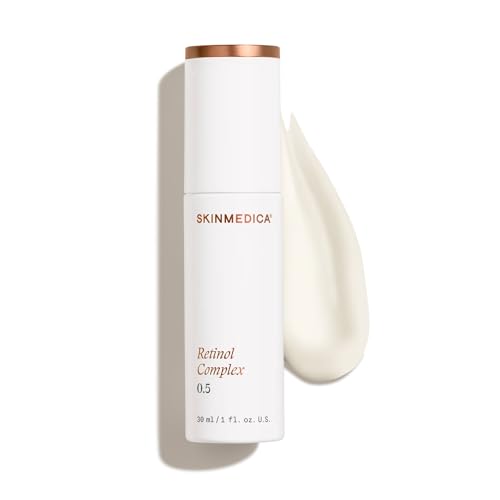
SkinMedica Retinol 0.5 Complex — Best Advanced Formula
When 0.3% has run its course and your skin is asking for more, this is the step up. At 0.5% with a complex of supporting antioxidants and conditioning ingredients, it’s built for experienced users chasing firmer, more refined skin. Feedback skews toward people who’ve used retinoids for years and want measurable anti-aging muscle without a prescription. It’s the priciest option here, and the strength means newcomers should not start with it. But for a seasoned routine that’s plateaued on gentler formulas, it delivers the kind of results that justify the investment.
What to Look For in a Retinol Serum
Strength: start low and climb slowly. A 0.3% retinol is the standard entry dose for good reason, giving you real benefits while your skin builds tolerance. Jumping straight to 0.5% or 1% often means weeks of peeling that discourages people from sticking with it. If you’re new, begin at 0.3% two or three nights a week, then increase frequency before you increase strength.
Stabilization and supporting ingredients decide comfort. Retinol breaks down with light and air, so encapsulated or well-packaged formulas hold their potency longer. Look for niacinamide, ceramides, or hyaluronic acid in the ingredient list, since they cushion the active and keep the barrier intact. Bakuchiol pairings are worth considering if your skin runs reactive.
Texture and routine placement. Retinol belongs in your nighttime routine, applied to clean, dry skin before moisturizer. Lightweight serums layer more easily and pill less under a cream. Always follow with sunscreen the next morning, because retinol makes skin more sun-sensitive and undoing your progress with UV damage defeats the point.
Frequently Asked Questions
Is SkinCeuticals Retinol 0.3 worth the price?
For someone who values a stabilized, dermatologist-favored formula and will use it consistently, it’s a defensible splurge. That said, encapsulated drugstore options like CeraVe deliver comparable everyday results for a fraction of the cost, so the value case depends on whether you want the professional pedigree or just the outcome.
What strength of retinol should a beginner use?
Start at 0.3% or lower. It’s strong enough to show benefits over 12 weeks while giving your skin time to adjust, which keeps peeling and redness manageable. Once you tolerate it several nights a week, you can consider moving up to 0.5%.
How long does retinol take to work?
Expect texture and brightness changes in about four to six weeks, with firmer, more even skin needing roughly 12 weeks of steady use. Retinol rewards consistency, so nightly or every-other-night application matters far more than strength.
Can I use retinol with vitamin C?
Yes, though many people prefer to split them: vitamin C in the morning for antioxidant protection, retinol at night for renewal. Using both at once is fine for resilient skin, but sensitive types often find the combination too much in a single session.
What’s the difference between retinol and retinal?
Retinal, sometimes called retinaldehyde, sits one conversion step closer to the active form your skin uses, so it often works faster than retinol. It can also be a touch more potent, which is why beginners usually start with retinol and consider retinal once their skin is comfortable.
Bottom Line
SkinCeuticals Retinol 0.3 lives up to its professional reputation, and if you want a stabilized, clinical-grade formula and will stay consistent, it’s a worthy investment. For most people, though, CeraVe’s encapsulated retinol serum delivers similar everyday results at a far friendlier price. Sensitive skin does best with the Paula’s Choice retinol-bakuchiol blend, celimax offers a faster-acting retinal for the curious, and SkinMedica is the advanced pick when a seasoned routine needs more muscle. Choose based on your budget and tolerance, go slow, and never skip morning sunscreen.