Melasma is stubborn, and if you’ve watched brown patches creep across your cheeks or upper lip, you know how frustrating it feels. Retinol won’t erase pigment overnight, but it speeds up cell turnover so discolored skin fades faster while newer, more even skin surfaces. Paired with niacinamide, vitamin C, or gentle acids, it’s one of the most reliable ingredients for chipping away at those patches. We researched dozens of formulas and picked five that balance real strength with skin comfort. If you’re new to actives, our guide to building a retinol routine pairs well with this list. Here’s what we’d reach for.
Quick answer: For most people fighting melasma, a retinol serum backed by brighteners like vitamin C or niacinamide works best. Start low, go slow, and never skip sunscreen. Our top overall pick is the Neutrogena Rapid Tone Repair serum for its accessible price and proven combo, though prescription-strength users may prefer Paula’s Choice.


Pros
- High 1% retinol with supporting peptides and antioxidants
- Hyaluronic acid balances potentially drying retinol formula
- Fragrance-free formulation reduces irritation risk for sensitive users
Cons
- Retinol strength may require gradual introduction for beginners
- Texture and absorption details not specified in data
Pros
- High 1% retinol with supporting peptides and antioxidants
- Hyaluronic acid balances potentially drying retinol formula
- Fragrance-free formulation reduces irritation risk for sensitive users
Cons
- Retinol strength may require gradual introduction for beginners
- Texture and absorption details not specified in data
- The 1% retinol works with peptides to visibly reduce fine lines and improve elasticity, while vitamin C and licorice extract help fade post-acne marks and discoloration on normal to oily skin.
- Formula absorbs quickly for nighttime use and can be mixed with 2-3 drops of facial oil for added hydration, layered after cleanser and toner.
- Retinol 1%: supports cell turnover to help visibly reduce wrinkles and refine enlarged pores over time.
- Peptides: skin-firming compounds that may improve the appearance of elasticity and texture with consistent use.
- Vitamin C: antioxidant that helps brighten discoloration and protect against environmental stressors when used at night.
- Hyaluronic Acid: humectant that draws moisture into skin to counterbalance retinol's potential drying effects.

Pros
- Nine actives cover multiple discoloration pathways at once.
- Fragrance-free gel-lotion absorbs quickly without heaviness.
- 98% of testers saw improvement in discoloration within 8 weeks.
Cons
- Retinol requires nightly use, not suitable for AM routines.
- No reviews yet to confirm long-term real-world results.
Pros
- Nine actives cover multiple discoloration pathways at once.
- Fragrance-free gel-lotion absorbs quickly without heaviness.
- 98% of testers saw improvement in discoloration within 8 weeks.
Cons
- Retinol requires nightly use, not suitable for AM routines.
- No reviews yet to confirm long-term real-world results.
- Encapsulated retinol and mandelic acid work to help visibly fade existing spots, while 3% tranexamic acid and 1% kojic acid help prevent new discoloration, making this suitable for sensitive and spot-prone skin types.
- The lightweight gel-lotion texture absorbs quickly with no residue; use nightly after cleansing and before moisturizing, and avoid layering with other retinol or AHA products to prevent irritation.
- Encapsulated Retinol (0.1%): Helps visibly fade existing dark spots with reduced irritation potential.
- Kojic Acid (1%): Supports more even skin tone by targeting the appearance of new discoloration.
- Tranexamic Acid (3%): Helps prevent new dark spots from forming at the surface level.
- Niacinamide (5%): Supports skin barrier function and helps visibly improve uneven tone.
How We Evaluated These Retinol Formulas
We didn’t just chase the highest retinol percentage. Melasma reacts badly to irritation, and inflammation can actually darken patches, so we weighted gentleness alongside potency. We looked at the supporting cast first: does the formula pair retinol with brighteners like vitamin C, niacinamide, or tranexamic-adjacent actives that target pigment directly? Next, we checked concentration and delivery, since encapsulated or time-release retinol tends to cause less flaking. We reviewed thousands of verified buyer reports, focusing on people who specifically mentioned melasma or hormonal discoloration rather than general anti-aging. Texture, absorption, and how well each layered under sunscreen mattered too, because compliance is everything with slow-fading pigment. Finally, we balanced cost against expected results so there’s a fit for both drugstore and clinical budgets.
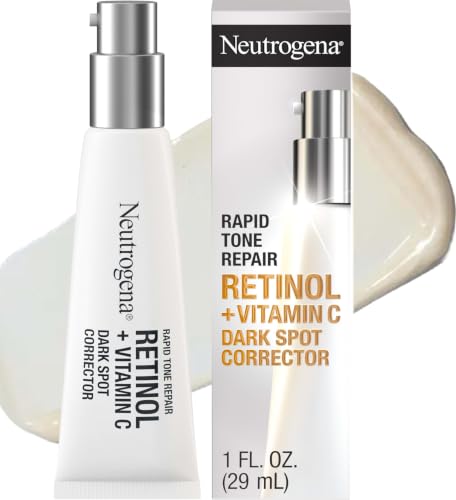
Neutrogena Rapid Tone Repair Retinol + Vitamin C Serum — Best Overall
This Neutrogena serum earns its spot because it pairs retinol with a stable vitamin C derivative, and that combination hits melasma from two angles at once. Retinol accelerates turnover while vitamin C interrupts excess pigment production, so patches look softer over several weeks of consistent use. The lightweight texture sinks in fast and doesn’t pill under moisturizer or SPF, which makes daily use easy to stick with. At a drugstore price, it’s accessible enough to keep repurchasing without guilt. Reviewers with mild to moderate melasma report gradual, believable fading rather than dramatic overnight claims. It’s not the strongest option here, and very sensitive skin may still feel some tingle, so ease in slowly. For a first melasma serum, though, it’s tough to beat on value.
HANYWIL Dark Spot Remover with Retinol & Niacinamide — Best for Body Spots
HANYWIL built this serum around correction, and it’s one of the few here that specifically markets itself for melasma, sun spots, and age spots on both face and body. The retinol-niacinamide duo is smart: niacinamide calms redness and helps block pigment from surfacing, while retinol keeps skin renewing underneath. Because it’s sized and priced for generous use, you’ll feel comfortable applying it to chest, hands, or shoulders where discoloration also shows up. Buyers like that it doesn’t leave a greasy film, and the niacinamide cushions some of retinol’s usual dryness. Results are gradual, so don’t expect a quick fix, and the fragrance may bother the most reactive skin. If your dark spots aren’t limited to your face, this one stretches further than most.
Pharmlitalia Melasma Treatment Cream — Best Rich Cream
Pharmlitalia takes a cream-based approach, which suits anyone whose skin turns tight and flaky on thinner serums. This melasma treatment targets discoloration, post-blemish marks, and scarring with a richer base that buffers actives and keeps the barrier comfortable. Drier and mature skin types tend to appreciate the extra cushion, since retinol can feel harsh when your skin already runs parched. The cream texture layers nicely at night and leaves skin feeling nourished rather than stripped. Reviewers dealing with hormonal melasma note steady improvement when they stay consistent for a couple of months. It’s thicker than a lightweight serum, so oily or acne-prone folks might find it heavy. For a comforting, do-it-all night cream aimed at pigment, it’s a solid choice.
Paula’s Choice CLINICAL 1% Retinol Treatment with Peptides — Best High-Strength
When you want serious potency, Paula’s Choice delivers a clinical 1% retinol backed by peptides and soothing plant extracts. That’s a high concentration, so it’s really meant for people who’ve already built tolerance to lower-strength retinol and want to push results further. The peptides support skin repair while the stabilized retinol drives turnover hard, which can shorten the timeline on stubborn patches. The formula is elegant and fast-absorbing despite its strength, and Paula’s Choice keeps the ingredient list clean and fragrance-free. It’s the priciest option here, and beginners will likely find 1% too aggressive out of the gate. If you’ve plateaued on gentler serums and your skin can handle it, this is the upgrade that moves the needle.
REMEDY Advanced Discoloration Correcting Serum with Retinol — Best for Sensitive Skin
Remedy Science formulated this correcting serum to tackle dark spots while staying kind to reactive skin, and that balance is its strength. The retinol is paired with soothing, brightening support so you get pigment-fading action without the raw, flaky reaction that scares people off actives. Reviewers with sensitive or combination skin say they can use it more frequently than harsher options, which matters because consistency drives melasma results. The texture is silky and layers well under daytime SPF or nighttime moisturizer. Fading is gradual and understated, exactly what you want for skin that overreacts to aggression. It won’t match the raw strength of a 1% retinol, and true results demand patience. For anyone who’s given up on retinol because it stung too much, this is worth another try.
How to Use Retinol for Melasma Safely
Start low and build slowly. Melasma punishes irritation, so jumping straight to a strong retinol can backfire and darken patches instead of fading them. Begin with a lower concentration two or three nights a week, applied to dry skin after cleansing. Watch how your skin responds over the first two weeks, then gradually increase frequency. If you notice stinging, redness, or peeling, scale back rather than pushing through. Buffering with moisturizer, either before or after your retinol, softens the introduction. Slow and steady genuinely wins here, because consistent low-level use beats aggressive on-off cycles that inflame your skin and stall progress.
Never skip broad-spectrum sunscreen. This is the single most important step, full stop. UV exposure is the main driver behind melasma, and retinol makes your skin more sun-sensitive, so unprotected days undo weeks of work. Apply a broad-spectrum SPF 30 or higher every single morning, and reapply if you’re outdoors. Tinted mineral sunscreens add a bonus, since visible light also aggravates melasma and iron oxides help block it. Think of sunscreen as the foundation your whole routine sits on. Without it, even the best retinol serum can’t hold its ground against fresh pigment triggered by daily sun.
Pair retinol with targeted brighteners. Retinol works faster when it’s backed up by ingredients that attack pigment directly. Vitamin C, niacinamide, azelaic acid, and tranexamic acid all interrupt melanin production or calm the inflammation that feeds it. Layering a vitamin C serum in the morning and reserving retinol for night is a proven, low-conflict rhythm. If your skin tolerates it, a formula that already blends retinol with niacinamide simplifies things. Just don’t stack too many strong actives at once, since overloading your skin invites the irritation that worsens melasma. Build your routine deliberately, one supporting ingredient at a time.
Frequently Asked Questions
How long does retinol take to fade melasma?
Melasma responds slowly, so patience is essential. Most people notice subtle improvement around eight to twelve weeks of consistent nightly use, with more meaningful fading closer to three or four months. Retinol works by accelerating turnover, and skin simply doesn’t renew overnight. If you’re pairing it with vitamin C or niacinamide and staying diligent with sunscreen, you’ll likely see results on the faster end. Stopping and starting resets your progress, so consistency matters more than intensity when the goal is lasting change.
Can retinol make melasma worse?
It can, but usually only through irritation. When retinol is too strong or used too often, it can inflame your skin, and that inflammation sometimes triggers more pigment, especially in medium to deep skin tones. The fix is going slow, buffering with moisturizer, and never skipping SPF. Sun exposure while using retinol is the bigger risk, since your skin is more photosensitive. Used sensibly at a tolerable strength, retinol helps far more than it hurts. If patches darken, ease off frequency and reassess your sun protection first.
Should I use prescription tretinoin instead of retinol?
Prescription tretinoin is stronger and works faster, so a dermatologist may recommend it for stubborn melasma, often alongside hydroquinone or other brighteners. That said, over-the-counter retinol is gentler and easier to tolerate, which makes it a smart starting point for many people. If you’ve been consistent with a strong retinol for months without enough progress, that’s a good moment to ask a professional about tretinoin. For mild to moderate melasma, the serums on this list can deliver real improvement without a prescription.
Do I need to use retinol every night?
Not at first, and maybe not ever. Beginners should start with two or three nights a week to let skin adjust, then build up as tolerance allows. Some people work up to nightly use, while others get great results staying at three or four nights a week indefinitely. With melasma, avoiding irritation matters more than maxing out frequency. Listen to your skin: if it’s calm and comfortable, you can increase gradually. If it’s flaky or red, hold steady or pull back until things settle.
Can I use retinol with vitamin C for melasma?
Yes, and it’s one of the most effective pairings for pigment. The common approach is vitamin C in the morning to brighten and protect, then retinol at night to drive turnover. Some serums, including a few on this list, combine both in one formula, which simplifies your routine. If you layer them separately and notice irritation, space them out by using one in the morning and the other at night. Together they hit melasma from complementary angles, so the combination tends to outperform either ingredient alone.
Bottom Line
Retinol won’t work miracles on melasma overnight, but it’s one of the most dependable tools you’ve got when you use it consistently and protect your skin from the sun. For most people, the Neutrogena Rapid Tone Repair serum offers the best mix of affordability and proven retinol-plus-vitamin-C results. If your skin runs sensitive, Remedy Science is worth a look, while experienced users chasing maximum strength should reach for Paula’s Choice. Whichever you pick, start slow, layer in a brightener, and treat daily sunscreen as non-negotiable. Stay the course for a few months and you’ll give those patches a real fight.