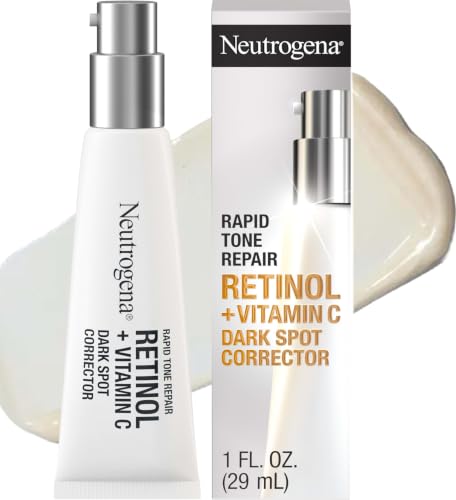
Strictly speaking, prescription retinol doesn’t exist. Retinol is the over-the-counter member of the family and always has been. What a dermatologist actually writes you is tretinoin, tazarotene, or trifarotene, and those are retinoic acid itself or close relatives of it, already in the shape your skin’s receptors can read without help. So the search is a good instinct wearing the wrong name. You want the strongest thing that genuinely works, and you’ve noticed the drugstore shelf is evasive about strength.
This isn’t a roundup, because prescription retinoids aren’t sold on Amazon and any page implying otherwise is quietly selling you something weaker. What follows is the ladder in order, with the honest gap between each rung named. Three things you can buy today sit beside the step they belong on, and one of them is a real prescription-strength retinoid that stopped needing a prescription back in 2016. If old marks and texture are your actual concern rather than active breakouts, retinol for acne scars goes deeper on that.
Quick answer: There is no prescription retinol; the prescription drugs are tretinoin, tazarotene, and trifarotene. The one exception you can buy right now is adapalene 0.1%, a genuine prescription-strength retinoid sold over the counter, and a well-formulated retinol at 0.5% or higher will earn you a real share of the same benefit if you actually stay with it.
The Retinoid Ladder, Weakest to Strongest
Every topical retinoid in this family ends up doing one thing: converting, inside the skin, into retinoic acid, which is the molecule that binds the receptor and changes how cells behave. The rungs differ only in how many conversion steps stand between the bottle and that active form. Each step costs potency, and none of them run at anything close to full efficiency.
Retinyl esters sit at the bottom. Retinyl palmitate and retinyl propionate have to shed a fatty acid before they’re even retinol, and then they still face retinol’s remaining two steps. They’re stable, cheap, and mild enough for skin that flares at everything, which is the honest argument for them. Read them as an on-ramp, not a treatment.
Retinol is the workhorse rung, two conversions out from the active form. Most serums land between 0.25% and 1%, and the upper half of that range is where a long, consistent run starts producing results that resemble a low-strength prescription. Cos De BAHA’s 2.5% solution pushes past where most brands stop, which is either the appeal or the problem depending on how your barrier behaves. Don’t start here if your skin has never met a retinoid.

Pros
- High retinol concentration at accessible price point
- Niacinamide and arginine help minimize irritation
- Clear gel texture layers well under moisturizer
Cons
- May require gradual introduction for retinol beginners
- Evening-only application limits routine flexibility
Pros
- High retinol concentration at accessible price point
- Niacinamide and arginine help minimize irritation
- Clear gel texture layers well under moisturizer
Cons
- May require gradual introduction for retinol beginners
- Evening-only application limits routine flexibility
- Retinol works with niacinamide, hyaluronic acid, and arginine to help visibly reduce fine lines while supporting skin barrier function, suited for normal to dry skin types addressing early aging signs.
- Clear gel-serum texture absorbs within seconds, designed for PM application after cleansing, apply 1-2 drops three times weekly and follow with a nourishing moisturizer to buffer potential dryness.
- Retinol 0.135% (4,455 IU): Pure retinol powder in 2.5% complex helps accelerate cell turnover and supports collagen synthesis.
- Niacinamide: Vitamin B3 derivative helps strengthen skin barrier and may reduce retinol-related sensitivity.
- Hyaluronic Acid: Humectant draws moisture into skin to counterbalance retinol's drying effects.
- Vitamin E: Antioxidant helps stabilize retinol formula and provides additional skin-conditioning benefits.
Retinaldehyde sits one step from retinoic acid, and that single step matters more than the label numbers suggest. Typical formulas run 0.05% to 0.1% and behave closer to a prescription than a 1% retinol does. It’s less common on shelves and less stable in a jar, so you pay for it. Worth knowing about if retinol stopped moving the needle for you.
Retinoic acid is the top rung. Tretinoin is retinoic acid, no conversion required, which is exactly why it works faster and why it stings. That’s also why it needs a prescription in the United States.
What Actually Needs a Prescription
Three topical retinoids are prescription-only here: tretinoin, usually dispensed between 0.025% and 0.1%; tazarotene, a receptor-selective retinoid that tends to be stronger and considerably less forgiving than tretinoin at equivalent-sounding strengths; and trifarotene, a newer 0.005% option with real data on chest and back acne rather than the face alone. All three are regulated as drugs, which is the actual reason for the gatekeeping. They have to prove what they claim.
Isotretinoin belongs to a different conversation entirely. It’s oral rather than topical, it’s managed through the iPLEDGE program with mandatory monitoring, and nothing on this page applies to it. That one is a dermatologist’s call from start to finish.
What the prescription rungs buy you is speed, a higher ceiling on both photoaging and stubborn acne, and decades of published dosing research. What they cost you is the retinization period: roughly 4 to 12 weeks of tightness, flaking, and occasional genuine peeling before skin settles down. Plus the visit, the refills, and a strength you can’t easily dial back once it’s in the tube.
One line that isn’t negotiable. Retinoids are contraindicated in pregnancy, oral and topical alike, and the same caution generally extends to actively trying to conceive. If that’s you, stop here and ask your doctor first. None of this is medical advice, and the decision to put you on a prescription retinoid belongs to a clinician who can look at your skin and your history.
Adapalene: The One That Went Over the Counter
Here’s the fact worth the whole page. In 2016 the FDA moved adapalene 0.1% gel to over-the-counter status, and it has stayed there since. A third-generation retinoid that spent years behind a prescription pad now sits on a shelf next to face wash, and nothing about the molecule changed in the move.
Adapalene is receptor-selective, which is why head-to-head research has generally placed it in the same range as lower-strength tretinoin on inflammatory acne while producing noticeably less redness and flaking. It’s also chemically stable alongside benzoyl peroxide, which almost no other retinoid manages, so those two can share a routine without one degrading the other. ProactivMD’s gel is that same 0.1% adapalene, packaged for acne rather than aging.
The caveat is specific rather than vague. Adapalene is an acne drug first, and its wrinkle and photoaging evidence is thinner than tretinoin’s. If fine lines are your only target, a strong retinol or a retinaldehyde is the more sensible spend.

Pros
- Prescription-strength retinoid now available over the counter
- Addresses multiple concerns including blackheads and clogged pores
- Can be used on face and body
Cons
- Small 0.5 oz size may require frequent repurchasing
- Retinoids may cause initial dryness or irritation
Pros
- Prescription-strength retinoid now available over the counter
- Addresses multiple concerns including blackheads and clogged pores
- Can be used on face and body
Cons
- Small 0.5 oz size may require frequent repurchasing
- Retinoids may cause initial dryness or irritation
- Adapalene 0.1% is a third-generation retinoid that helps visibly reduce acne lesions, blackheads, and clogged pores while supporting skin cell turnover in acne-prone and sensitive skin types.
- Gel texture absorbs quickly without residue, best applied at night after cleansing and before moisturizer, with daily SPF use required during treatment.
- Adapalene 0.1%: Prescription-strength retinoid that helps normalize skin cell turnover and may visibly reduce acne lesions.
- Paraben-Free Base: Formulated without parabens to minimize potential irritation in sensitive, acne-prone skin.
Getting the Most From an OTC Retinoid
The comparison that matters isn’t tretinoin versus retinol at full strength. It’s tretinoin used twice and abandoned versus a well-formulated 0.5% to 1% retinol used three nights a week for a full year. The second one wins, and it isn’t close. A year of consistent retinol delivers a meaningful fraction of what tretinoin delivers over the same stretch. Two nights and a drawer deliver nothing at all.
Start twice weekly and hold there for a month before adding a third night. Pea-sized for the entire face, applied to dry skin, since damp skin drives penetration up and tolerance down. Stay off the eye orbit and out of the nasal folds, where irritation concentrates and lingers. If you sting easily, sandwich it: a layer of bland cream or retinol moisturizer, then the retinoid, then cream again. You give up a little strength and keep the habit.
Two things not to stack casually. Benzoyl peroxide in the same application will oxidize most retinoids, adapalene excepted, so split them across morning and night. And leave glycolic and salicylic acid out of the routine while you’re retinizing, because they’re working on the same barrier from the opposite direction. Sunscreen every morning isn’t optional advice here either. Retinoids thin the stratum corneum early on, and unprotected sun quietly undoes the collagen work you’re paying for.
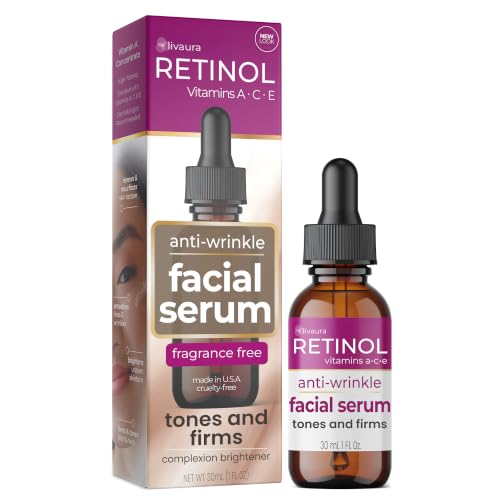
LIVAURA’s serum is the softer landing of the three here, and it’s also the one where you’re trusting the formulation rather than a number, because the front of the bottle doesn’t commit to a percentage. That’s common here, and worth knowing going in.
Pros
- High-dose retinol buffered with soothing Vitamin E
- Fragrance-free and pregnancy-safe per brand claims
- Lightweight texture absorbs without greasy residue
Cons
- Zero verified customer reviews to assess real-world performance
- Requires gradual introduction, not suitable for daily immediate use
Pros
- High-dose retinol buffered with soothing Vitamin E
- Fragrance-free and pregnancy-safe per brand claims
- Lightweight texture absorbs without greasy residue
Cons
- Zero verified customer reviews to assess real-world performance
- Requires gradual introduction, not suitable for daily immediate use
- Pure Vitamin A at 500,000 IU concentration targets visible fine lines and rough texture while Vitamin C brightens post-inflammatory marks and uneven tone, suited for combination to sensitive skin types.
- Lightweight serum texture absorbs quickly without residue, designed for nighttime application after cleansing and before moisturizer, starting 2-3 nights weekly then building frequency as tolerance develops.
- Retinol (500,000 IU): Pure Vitamin A helps visibly smooth fine lines and refine skin texture over consistent use.
- Vitamin C: Antioxidant that supports brightening of dark spots and helps even out discolored areas from sun exposure.
- Vitamin E: Buffers retinol irritation and provides soothing support for sensitive or reactive skin during retinoid adjustment.
Frequently Asked Questions
Is there such a thing as prescription-strength retinol?
No, and that phrasing is mostly marketing. Retinol is a cosmetic ingredient with no prescription version of itself; the prescription products are retinoic acid and its close relatives. The closest honest answer is adapalene 0.1%, which is prescription-strength by history and over-the-counter by regulation.
How does adapalene compare with tretinoin?
On inflammatory acne, adapalene 0.1% lands in the same neighborhood as tretinoin 0.025%, with less redness and peeling in most published comparisons. Tretinoin pulls clearly ahead on photoaging and fine lines, where its evidence base runs much deeper. Different tools, overlapping jobs.
Can I use benzoyl peroxide with a retinoid?
Not in the same application, with one exception. Benzoyl peroxide oxidizes tretinoin and most retinols, so put one in the morning and the other at night. Adapalene is the outlier, since it stays stable alongside BPO, which is why fixed combinations of the two exist at all.
How long does the retinization period last?
Usually 4 to 12 weeks, and it’s worst somewhere around weeks two through four. Tightness, flaking around the mouth and nose, a dull patchy stretch before things improve. If you’re still raw and stinging past three months, the strength or the frequency is wrong for your skin, and pushing through isn’t the answer.
Are retinoids safe during pregnancy?
No. Oral isotretinoin is a known teratogen, and topical retinoids including tretinoin, tazarotene, adapalene, and retinol are avoided during pregnancy and while trying to conceive as standard caution. Ask your doctor about a pregnancy-appropriate alternative such as azelaic acid instead.
Bottom Line
If you came looking for prescription retinol, the useful redirect is adapalene 0.1%: a genuine prescription-strength retinoid you can buy without an appointment, strongest on acne, and the sensible first move if breakouts are the real problem. If the top rung for photoaging is what you want, that’s tretinoin, and it requires a clinician. And if you’d rather stay over the counter entirely, a high-strength retinol or a retinaldehyde used steadily for a year will carry you further than a prescription you quit in February.