

TL;DR: Palmitoyl tripeptide-1 (also written as pal-GHK) is the GHK signaling tripeptide attached to a fatty-acid “tail” that helps it penetrate skin. It is the foundational molecule in the Matrixyl family and one of the most studied collagen-signaling peptides in cosmetic chemistry. The evidence supports modest, cumulative anti-aging effects — most visible at 12+ weeks of consistent use.
Palmitoyl tripeptide-1 is the same GHK peptide discussed in our profile of copper tripeptide-1, with one structural change: a palmitic-acid chain attached to the glycine end. That fatty-acid tail does two things — it makes the peptide more lipophilic (so it penetrates the stratum corneum better than naked GHK), and it changes how the peptide interacts with cell signaling pathways.
This profile covers how palmitoyl tripeptide-1 differs from copper peptide, what the published research supports, where it fits in a routine, and how to pair it.
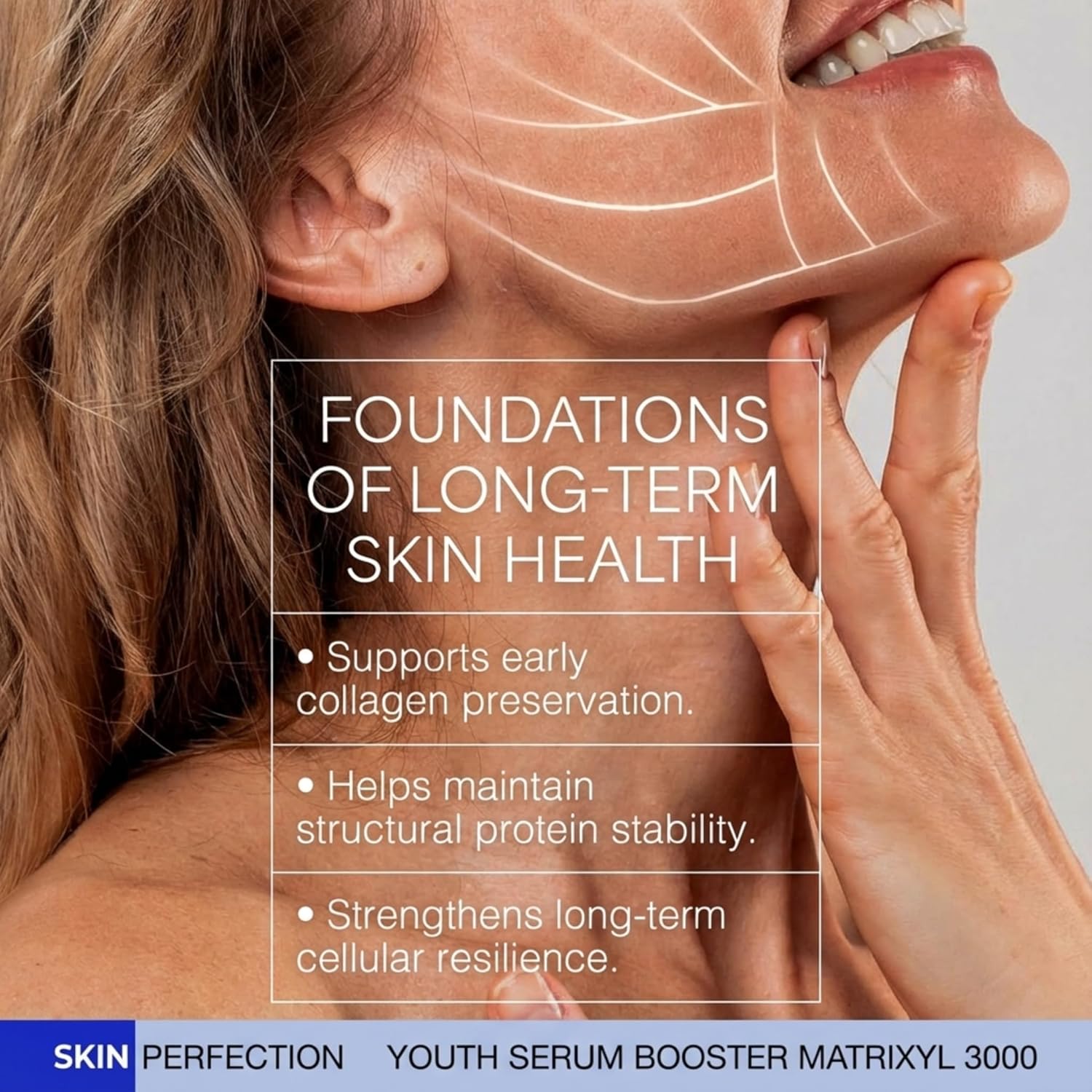
The hero pick — quality of formulation and dose justifying the price.
What palmitoyl tripeptide-1 is, and how it differs from copper peptide
The pure GHK tripeptide is water-soluble and does not penetrate skin well on its own. Cosmetic chemists have invented two workarounds: bind it to copper (giving you GHK-Cu, which we cover separately), or attach a fatty-acid “delivery tail” (giving you palmitoyl tripeptide-1). The two approaches achieve roughly the same biological end — fibroblast signaling for collagen and extracellular matrix repair — through different delivery mechanisms.
Marketing literature sometimes implies these are competing actives. They are not. Many high-end anti-aging formulations include both because they signal through slightly different receptor pathways and the effects stack.

Consistency over twelve weeks is what produces visible results.
The published evidence
- Collagen synthesis — controlled studies show fibroblast upregulation of types I and III collagen at 0.5–5 ppm palmitoyl tripeptide-1.
- Elastin and glycosaminoglycan signaling — same dose range, with measurable increases in elastin and hyaluronic-acid precursor synthesis.
- Wrinkle reduction — a 2009 study in International Journal of Cosmetic Science measured statistically significant crow’s-feet depth reduction at 12 weeks of twice-daily use, with effects compounding to week 24.
- Excellent tolerance — the safety profile across published studies is unusually clean, with very few documented irritation cases.
What the evidence does not support: dramatic fast results. The peptide signaling effect is cumulative and slow. Most users see visible improvement at the 8–12 week mark, not at 4 weeks.

Budget-tier option from the picks discussed above.
Who should use it
- 30s–60s anti-aging routines — the standard demographic. Pairs cleanly with retinoid actives.
- Skin types that do not tolerate retinol well — peptides give you collagen signaling without the photosensitivity, dryness, or purging of retinoid actives. Not equivalent in potency, but useful when retinoid is off the table.
- Mature skin focused on firmness and elasticity rather than tone or texture — pal-tripeptide-1 specifically supports elastin synthesis, which retinoid actives do not directly stimulate.
How to use it
Apply to clean dry skin, once or twice daily (no tolerance ramp-up needed). Most products formulate at 1–5% palmitoyl tripeptide-1 in a stabilized matrix. Pea-sized amount for the full face plus neck. Wait 60 seconds before the next routine step.
Unlike copper peptide, palmitoyl tripeptide-1 does not conflict with vitamin C. The fatty-acid form is more stable across pH and does not oxidize the way GHK-Cu does in the presence of L-ascorbic acid. That makes it the more “set and forget” peptide choice for AM routines where vitamin C is the priority.
Pairings
- Pairs cleanly with: hyaluronic acid, niacinamide, vitamin C, retinoid (alternate evenings), ceramides, ectoin, growth factors.
- Stacks well with other peptides: matrixyl 3000 (palmitoyl tripeptide-1 + palmitoyl tetrapeptide-7), matrixyl synthe 6 (which includes a different palmitoyl peptide variant), and signal peptides like Argireline (acetyl hexapeptide-8).
- Avoid layering wet-on-wet with: very low-pH formulations (under pH 3.0) — the palmitoyl link tolerates acidity but can hydrolyze faster. Sequence them with a 30-second wait.
Side effects and tolerance
Palmitoyl tripeptide-1 is among the gentlest anti-aging actives in regular use. Stinging is rare and usually indicates a different irritant in the formula (fragrance, essential oils, ethanol). No documented photosensitization. No pregnancy contraindication beyond standard “consult your obstetrician” caution.
The 5 best palmitoyl tripeptide-1 products at a glance
Pros
- High-purity GHK-Cu in a multi-peptide complex.
- Niacinamide and Vitamin C derivative SAP address discoloration.
- Lightweight, fast-absorbing formula suitable for sensitive skin.
Cons
- No independent clinical study data specified in product listing.
- Collagen water concentration context not fully detailed in source.
Pros
- High-purity GHK-Cu in a multi-peptide complex.
- Niacinamide and Vitamin C derivative SAP address discoloration.
- Lightweight, fast-absorbing formula suitable for sensitive skin.
Cons
- No independent clinical study data specified in product listing.
- Collagen water concentration context not fully detailed in source.
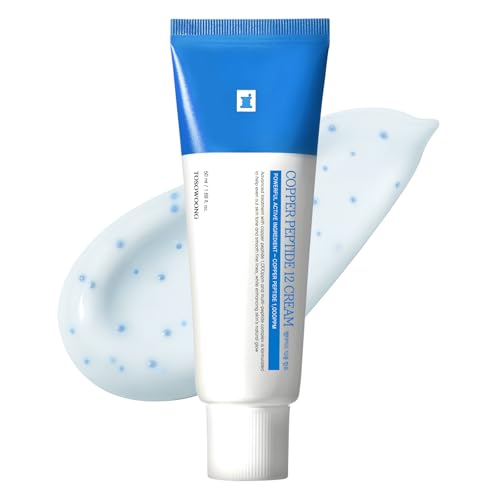
- Copper Tripeptide-1 (GHK-Cu) at 99% purity anchors a 12-peptide blend, including Palmitoyl Pentapeptide-4, suited for aging or elasticity-compromised skin seeking firming support.
- Lightweight cream texture absorbs quickly without heaviness, fits AM or PM routines, and pairs well with a hydrating serum; avoid layering with strong exfoliating acids.
- Copper Tripeptide-1 (GHK-Cu) 99% purity: supports collagen and elastin production, helping reduce fine lines and sagging.
- Acetyl Hexapeptide-8 and Palmitoyl Pentapeptide-4: peptide signals that may improve the appearance of wrinkles and skin texture.
- Niacinamide and SAP (Sodium Ascorbyl Phosphate): KFDA-approved actives that help visibly reduce dark spots and support even tone.
- Hyaluronic Acid: draws moisture into skin, contributing to a plumper, smoother surface feel.

Skin Perfection Matrixyl 3000 Serum Booster with Palmitoyl Tripeptide-1 and Tetrapeptide-7
Pros
- Two-peptide complex targets wrinkles and firmness.
- Fragrance-free and paraben-free suits sensitive skin.
- Versatile use across multiple skincare product types.
Cons
- Not for direct skin application, requires formulation step.
- Small 0.5 oz size limits large-batch DIY production.
Pros
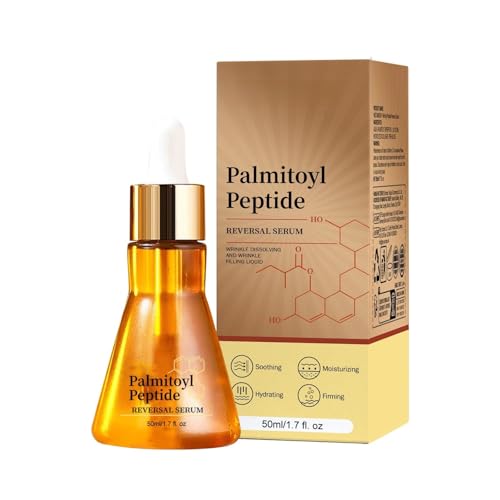
- Palmitoyl Tripeptide-1 supports firming and texture refinement.
- Dual humectants glycerin and panthenol provide sustained hydration.
- Lightweight texture noted as gentle on sensitive skin.
Cons
- Zero verified reviews limit real-world performance insight.
- No concentration data disclosed for any active ingredient.

Pros
- Peptide-forward formula suited for DIY customization.
- Flexible 2% use rate across many base formulas.
- Compatible with a wide range of active ingredients.
Cons
- Requires DIY mixing; not a ready-to-use serum.
- No third-party testing or concentration data provided.

Pros
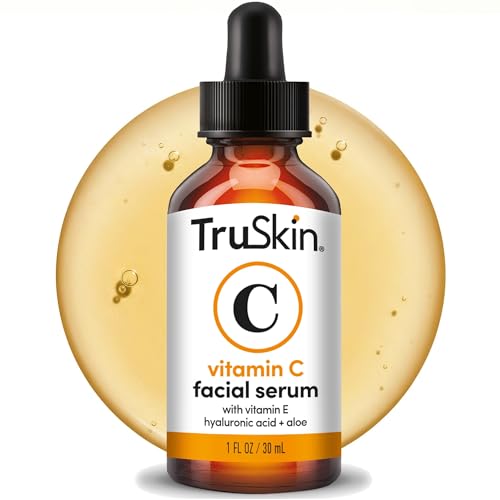
- Three active ingredients address firmness and antioxidant defense.
- Glass dropper bottle allows precise, controlled application.
- Lightweight texture suits both morning and evening routines.
Cons
- No review data available to confirm real-world results.
- Heat-sensitive formula requires careful storage conditions.
Frequently asked questions
What is the difference between palmitoyl tripeptide-1 and Matrixyl 3000?
Matrixyl 3000 is a trade-name complex that contains palmitoyl tripeptide-1 alongside palmitoyl tetrapeptide-7. The two peptides signal through complementary pathways — pal-tripeptide-1 for collagen and elastin, pal-tetrapeptide-7 for anti-inflammatory cytokine modulation. Matrixyl 3000 is essentially “pal-tripeptide-1 plus extra”.
Can I use palmitoyl tripeptide-1 with retinol?
Yes. The two stack well — many luxury anti-aging serums include both. The peptide does not photosensitize, but the retinoid does, so SPF in the AM is non-negotiable when retinoid is in your PM step.
How long until I see results?
Hydration and surface texture improvement: 4–6 weeks. Fine-line softening and firmness: 12–16 weeks. The curve is gradual, which is why peptide skincare is sometimes called “slow skincare”. If you stop at 6 weeks expecting nothing, you are stopping too early.
Are peptides destroyed by the digestive system or are they only effective topically?
Both — but only topical application is relevant here. Oral peptides break down in the stomach into their constituent amino acids and lose their signaling function. The topical pathway works because the fatty-acid tail delivers the intact peptide through the stratum corneum.
Authoritative sources
Palmitoyl tripeptide-1 (the Matrixyl-family peptide) has been studied in cosmetic chemistry since the early 2000s. Primary references:
- Matrixyl — Wikipedia overview of the peptide complex family
- Peptide chemistry — Wikipedia background
- Collagen — Wikipedia on the protein peptides signal the synthesis of
- American Academy of Dermatology — anti-aging guidance
- NIH PubMed Central — peptides in cosmetic dermatology review
- FDA — anti-aging claim framework
Related reading
- Copper tripeptide-1 — the other GHK delivery system
- Best anti-aging serum for your 50s
- Best retinol serum — the active to alternate with





Write Your Review
No reviews yet. Be the first to share your experience!