

TL;DR: Salicylic acid (a beta hydroxy acid) is oil-soluble and penetrates pores to clear oil, dead skin, and acne-causing buildup. Azelaic acid is a dicarboxylic anti-inflammatory acid that calms redness, reduces post-acne marks, and targets the bacteria implicated in inflammatory acne. They address different layers of the same acne picture and are commonly combined in dermatology routines.
These two acids appear together in many anti-acne formulations because they hit acne from different angles. Knowing which one to prioritize depends on what kind of breakouts you have and where your skin’s primary discomfort lies.
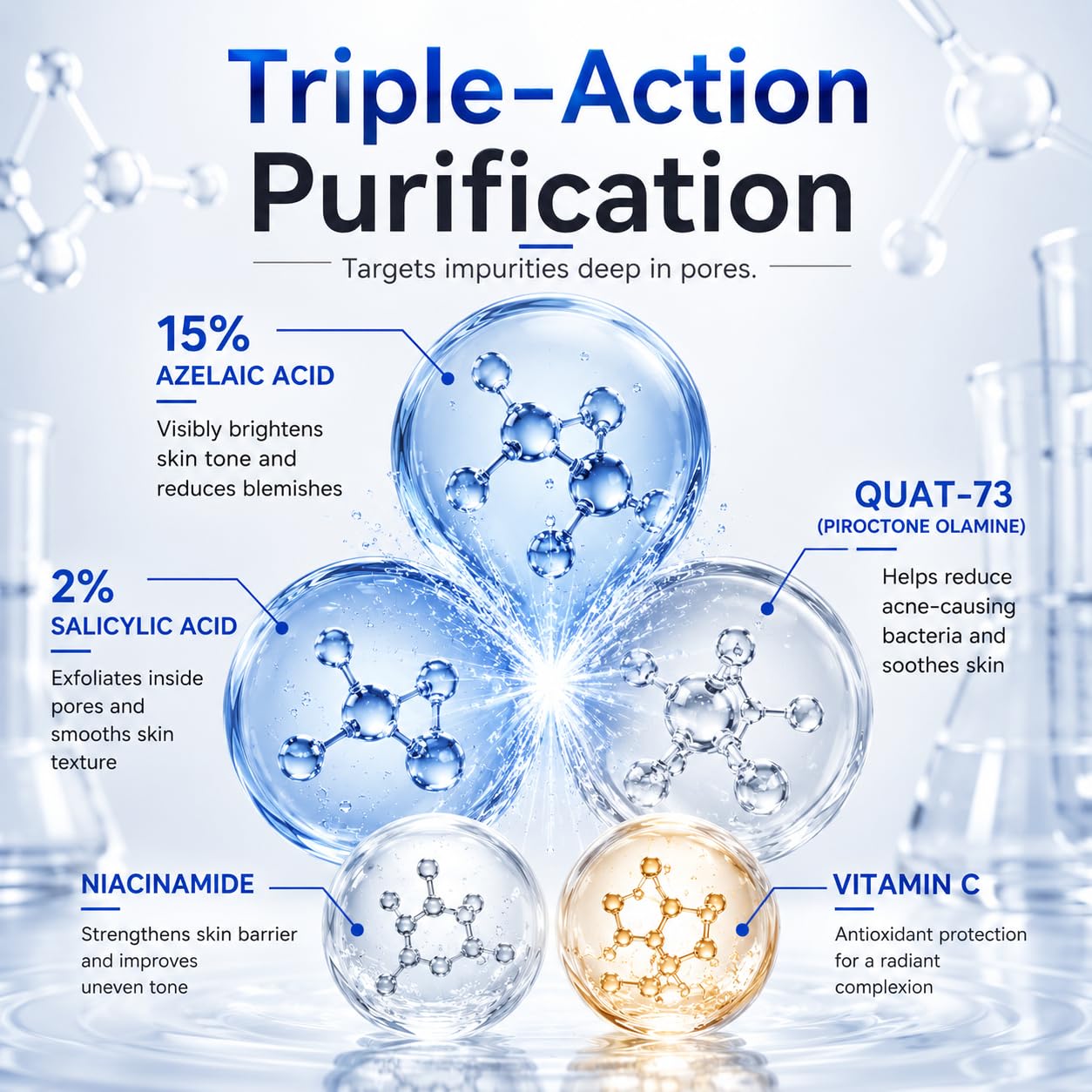
The hero pick — quality of formulation and dose justifying the price.
Side-by-side at a glance
| Salicylic Acid | Azelaic Acid | |
| Type | Beta hydroxy acid (BHA) | Dicarboxylic acid |
| Solubility | Oil-soluble | Water-soluble |
| Where it works | Surface + inside pores | Surface — anti-inflammatory action |
| Best for | Blackheads, comedones, oily acne | Inflammatory acne, rosacea, PIH |
| Skin types | Oily, combination, congested | All — incl. sensitive and dry |
| Strength OTC | 0.5–2% | 10% |
| Use frequency | 1–3x daily depending on tolerance | Twice daily |
| Combine with | Niacinamide, hydrators, retinoid (alt) | Niacinamide, vit C, peptides |
| Pregnancy-safe | Topical OK in low doses | ✓ Yes (dermatology default) |

Consistency over twelve weeks is what produces visible results.
How they work
Salicylic acid — the only common BHA
Salicylic acid is oil-soluble, meaning it can travel down into sebum-filled pores and dissolve the keratin debris, dead cells, and oil that drive blackheads, sebaceous filaments, and comedonal acne. It is also chemically related to aspirin, which gives it mild anti-inflammatory action useful around active inflammatory breakouts.
Azelaic acid — anti-inflammatory + antibacterial
Azelaic acid does not penetrate pores or exfoliate. It works on the surface and just below, with three distinct actions relevant to acne: anti-inflammatory (reduces redness around active spots), antibacterial (targets Cutibacterium acnes, the species implicated in inflammatory acne), and tyrosinase inhibition (fades the post-inflammatory marks acne leaves behind).
When to pick which
Pick salicylic acid if:
- You have blackheads, whiteheads, or congested pores you can feel under the skin.
- Your skin is oily and the breakouts are mostly comedonal (small, non-inflamed).
- You have sebaceous filaments on the nose and chin.
Pick azelaic acid if:
- Your breakouts are inflamed (red, painful, hormonal cysts) rather than congested.
- You have rosacea or persistent facial redness.
- Acne has left dark marks (PIH) that fade slowly.
- You are sensitive to most actives.
Combining them — the smart way
This is one of the most powerful combinations in dermatology for inflammatory acne with congestion. The pairing:
- AM: Cleanser → azelaic acid (anti-inflammatory layer) → moisturizer → SPF
- PM: Cleanser → salicylic acid (pore-clearing layer) → moisturizer (no retinoid for first 4 weeks of pairing)
The two acids handle different acne pathways. Azelaic reduces inflammation and bacteria; salicylic clears the physical blockage that causes new comedones. After 8–12 weeks, most users see both fewer breakouts and fewer marks.
Product picks at a glance

Pros
- Gel-cream texture melts into skin without sticky residue
- Multi-acid formula supports surface texture refinement
- Niacinamide delivers matte, shine-controlled finish
Cons
- No customer reviews available to validate performance
- Aufdzceh brand lacks established reputation
Pros
- Gel-cream texture melts into skin without sticky residue
- Multi-acid formula supports surface texture refinement
- Niacinamide delivers matte, shine-controlled finish
Cons
- No customer reviews available to validate performance
- Aufdzceh brand lacks established reputation
- Azelaic acid paired with salicylic acid and niacinamide targets blemish-prone skin with visible bumps and uneven texture. The water-based gel-cream is suited for oily and combination skin types.
- Apply to targeted areas or all over as part of a comprehensive skin-clearing routine. Pair with hydration-focused products; novices should test locally first or use every other day.
- Azelaic Acid: Supports surface clarity and helps reduce textural irregularities.
- Salicylic Acid: Gently exfoliates dead skin cells to polish texture.
- Niacinamide: Regulates surface oils and minimizes enlarged pore appearance.

Pros
- 15% azelaic acid targets dark spots and uneven tone.
- Triple-active formula pairs azelaic acid, niacinamide, salicylic acid.
- Lightweight texture suited for daily, comfortable wear.
Cons
- No reviews available to confirm real-world performance.
- Vitamin C concentration and full ingredient list not specified.
Pros
- 15% azelaic acid targets dark spots and uneven tone.
- Triple-active formula pairs azelaic acid, niacinamide, salicylic acid.
- Lightweight texture suited for daily, comfortable wear.
Cons
- No reviews available to confirm real-world performance.
- Vitamin C concentration and full ingredient list not specified.
- This cream leads with 15% azelaic acid alongside niacinamide and salicylic acid, making it a practical option for acne-prone or redness-prone skin seeking visible tone correction.
- The lightweight formula suits AM or PM use and pairs well with a simple moisturizer; avoid layering with other exfoliating acids to prevent irritation.
- Azelaic Acid 15%: helps visibly reduce dark spots, redness, and rough skin texture.
- Niacinamide: supports the appearance of refined pores and more balanced skin tone.
- Salicylic Acid: helps improve the look of congestion and uneven surface texture.
- Vitamin C: supports a brighter-looking complexion; concentration not specified.

La Roche-Posay Effaclar A.Z. Gel with Azelaic Acid and Salicylic Acid for Acne and Aging
Pros
- Dual actives address acne and visible aging together.
- Lightweight gel-cream texture absorbs without greasy residue.
- Non-comedogenic and allergy-tested for sensitive skin.
Cons
- Small 1.35 oz size may not last long.
- Salicylic acid may increase sun sensitivity with daily use.
Pros
- Dual actives address acne and visible aging together.
- Lightweight gel-cream texture absorbs without greasy residue.
- Non-comedogenic and allergy-tested for sensitive skin.
Cons
- Small 1.35 oz size may not last long.
- Salicylic acid may increase sun sensitivity with daily use.
- Azelaic acid pairs with 1.2% salicylic acid to help visibly reduce breakouts, post-acne marks, and fine lines, making it suited for acne-prone skin with early aging concerns.
- The hydrating gel-cream texture absorbs quickly with a smooth, firming finish, best placed in a PM routine and kept away from additional exfoliating acids to avoid over-sensitizing skin.
- Azelaic Acid: Helps visibly fade post-acne marks and may improve uneven skin tone.
- Salicylic Acid 1.2%: Oil-soluble BHA that penetrates pores to help control breakouts and prevent new blemishes.
- Hydrating Agents: Support a lightweight, non-greasy finish while helping maintain skin hydration throughout wear.

Pros
- Dual actives target texture and blemish-prone skin.
- Tocopherol and chamomile add soothing, balancing support.
- Lightweight, non-greasy finish absorbs quickly into skin.
Cons
- No review data available to confirm real-world results.
- Salicylic acid 2% may not suit sensitive or dry skin.

Pros
- High-concentration azelaic acid with no fragrance added.
- BHA exfoliant addresses pore congestion and texture.
- Duo format covers two complementary active concerns.
Cons
- Layering two actives requires careful routine placement.
- Travel size BHA offers limited long-term supply.
Frequently asked questions
Will using both irritate my skin?
Less than you would expect. Both acids are well-tolerated at OTC concentrations. The most common irritation source is layering them in the same step — split them by AM/PM and irritation drops to near zero for most users.
Which one for hormonal acne?
Azelaic acid as the lead. Hormonal acne is typically inflammatory cysts rather than comedones, and azelaic’s anti-inflammatory action targets that. Salicylic helps as a supporting AM cleanser if you have congestion alongside.
Can I use them with retinoid?
Yes, but introduce gradually. Start with azelaic + salicylic only for 6–8 weeks. Once barrier is steady, add retinoid alternate evenings with salicylic. Azelaic in the AM, retinoid PM with salicylic on non-retinoid evenings.
Which one for sebaceous filaments?
Salicylic acid. Sebaceous filaments are an oil-and-debris issue inside the pore — exactly what BHA addresses. Azelaic does not affect them.
Related reading
- AHA vs BHA — where salicylic fits in the broader acid family
- Azelaic acid vs glycolic acid
- Sebaceous filaments vs blackheads
- How often to use azelaic acid





Write Your Review
No reviews yet. Be the first to share your experience!